18 core research projects to cover autonomous tractors, harvest drones and precision weeding robots
57.2 billion won ($37.5 million) to be invested through 2030 to speed commercialization of unmanned farms
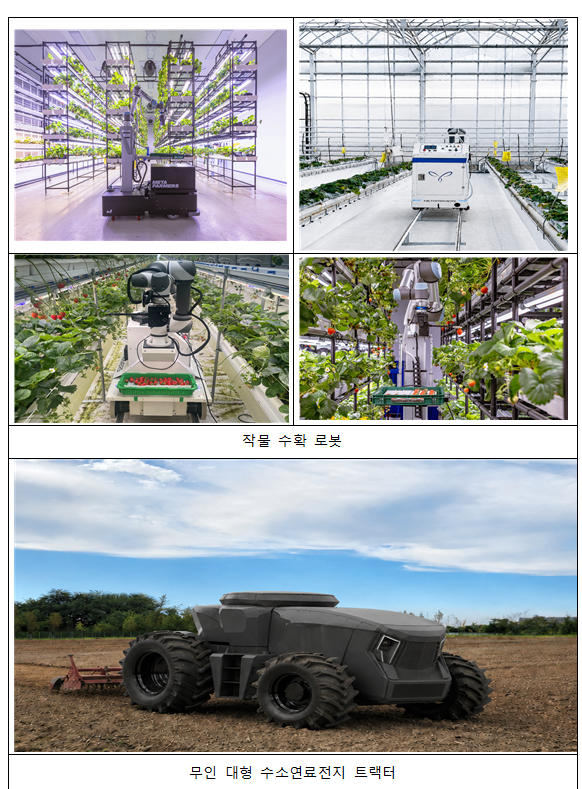
The South Korean government is moving to develop agricultural robots and drones to address chronic labor shortages and an aging workforce in the farming sector.
The Ministry of Agriculture, Food and Rural Affairs and the Rural Development Administration announced Monday that they will launch a joint public-private agricultural robot research consortium in Jeonju, North Jeolla Province, on Tuesday, holding its inaugural meeting the same day.
The consortium brings together universities, research institutes and companies participating in the Agriculture Ministry's "AI transformation-based intelligent farm work collaboration industrialization technology development project" and the Rural Development Administration's "intelligent farm work robot core technology development project."
Labor-intensive tasks on farms — including seeding, transplanting, weeding, pest control and harvesting — are becoming an increasing burden as worker shortages and rising labor costs mount. Securing automation and unmanned-operation technologies using AI, robots and drones has emerged as a central challenge for maintaining agricultural competitiveness.
The two agencies plan to invest a total of 57.2 billion won ($37.5 million) from 2026 through 2030 to develop autonomous farm machinery, agricultural robots, farm-work drones and intelligent decision-making technologies.
The consortium encompasses 18 core research projects, including autonomous tractor swarm collaboration, an open robot platform covering the full cycle of upland farming, unmanned collaborative and precision weeding systems, orchard cultivation and logistics robots, precision pest control and seeding technologies, and physical AI-based autonomous harvest drones.
At the inaugural meeting, participants will share plans for establishing agricultural AI transformation data standards and pilot projects, and discuss data standardization approaches needed for autonomous farm machinery and agricultural robot development. The meeting will also review the division of roles among research institutions, technology demonstration strategies and plans for disseminating results.
The Agriculture Ministry expects the consortium to strengthen cooperation between research institutions and companies and accelerate the deployment of advanced technologies in the field.
"Agricultural robots and drones are core technologies that can solve the labor shortage on farms and boost productivity," said Kim Go-eun, director of the ministry's science and technology policy division. "We will actively support stronger collaboration between research institutions and companies so that research outcomes can reach the field as quickly as possible."
Yun Nam-gyu, head of the Rural Development Administration's smart agriculture team, said AI and robotics-based farm work automation is "a core area that will determine the competitiveness of future agriculture," adding that the agency would accelerate efforts to secure Korean-developed agricultural robot technologies and advance the digital transformation of farming.
adastra@heraldcorp.com