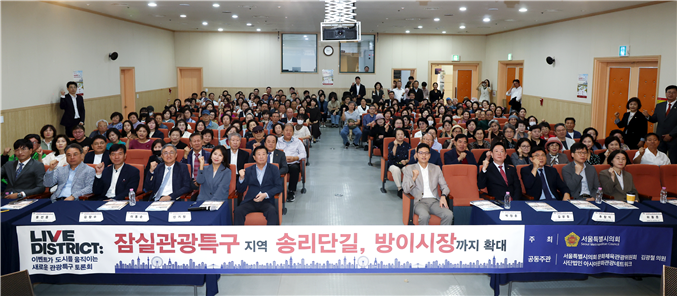
Gangwon governor-elect Woo Sang-ho meets Jeongseon County chief Choi Seung-jun in Chuncheon
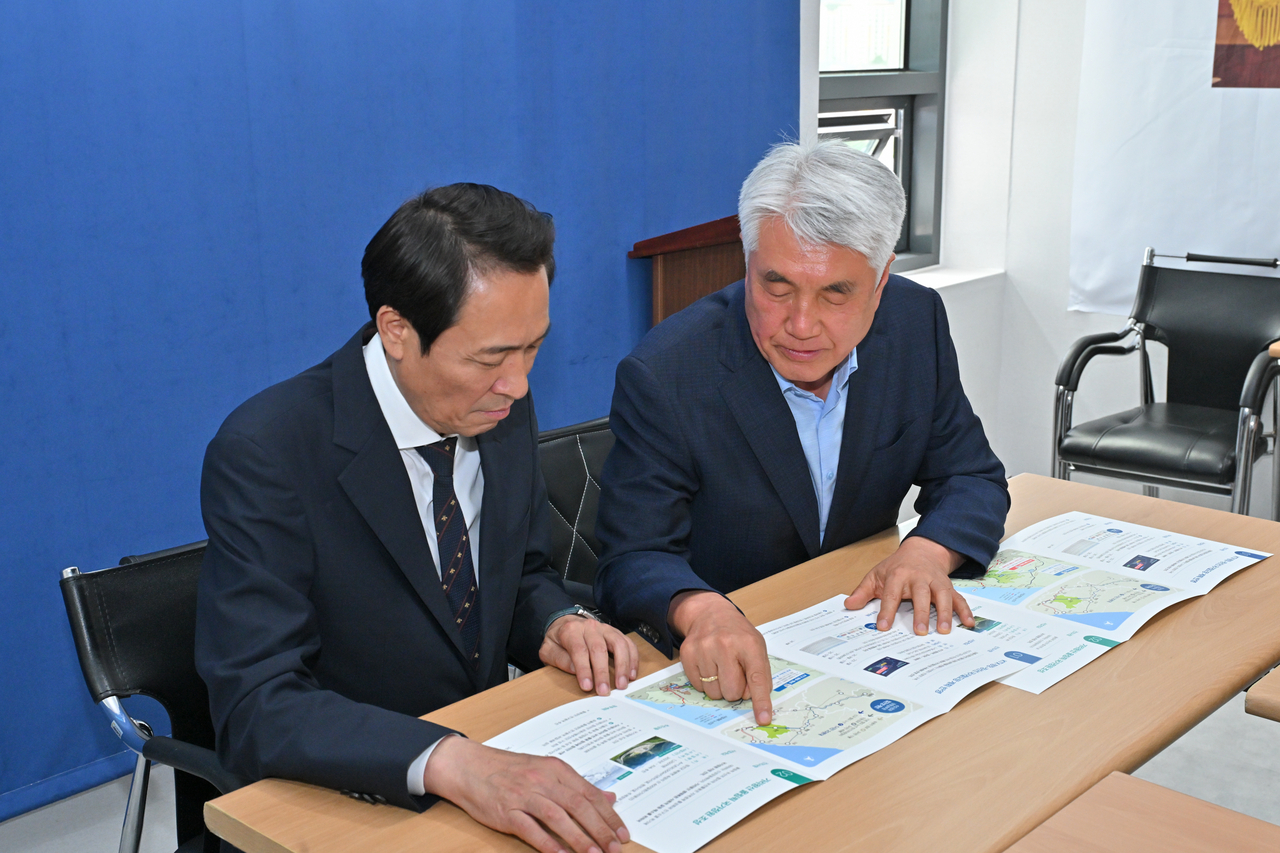
Woo Sang-ho, governor-elect of Gangwon Special Self-Governing Province, met with Jeongseon-gun County Chief Choi Seung-jun on Wednesday at the Onui Building in Chuncheon.
Neighboring Pyeongchang and Yeongwol show signs of change and momentum, but Jeongseon — which once hosted the Olympics — has little to show beyond Kangwon Land when it comes to a genuine breakthrough.
Excessive dependence on Kangwon Land is itself a problem. The casino resort supports seven cities and counties across the country, not Jeongseon alone.
Still, Jeongseon has been making efforts — pushing for a KTX rail line and proposing an Olympic garden — and continues to look for ways forward.
County Chief Choi held a policy consultation with Governor-elect Woo, requesting active provincial support for key projects Jeongseon-gun has been pursuing and for the county's broader development.
Choi outlined three priorities he called essential to Jeongseon's next 100 years: inclusion of the KTX Pyeongchang–Jeongseon line in the national railway network plan, development of an Olympic national garden on Gariwangsan, and deregulation of Kangwon Land alongside its development into a global integrated resort.
On the KTX proposal, Choi explained the need for a high-speed rail link connecting the Greater Seoul area with southern Gangwon Province, and asked the provincial government to push actively for the line's inclusion in the Fifth National Railway Network Construction Plan.
If the KTX Jeongseon line is built, travel from Cheongnyangni to Jeongseon would take roughly 80 minutes — a connection the county expects would boost tourism, improve living conditions and invigorate the local economy.
On the Gariwangsan Olympic national garden, Choi said national-level support is needed to preserve and make use of the 2018 Winter Olympics legacy in a balanced way, revitalize the local economy, restore the mountain's ecosystem and resolve lingering social conflicts over the site.
The Gariwangsan Olympic National Garden project is to be developed in the Bukpyeong-myeon area of Jeongseon-gun. It carries a total budget of 125 billion won ($81.3 million) and is being pursued as a flagship initiative to strengthen the county's tourism competitiveness and secure new growth drivers.
On Kangwon Land, Choi described the shifting landscape of the domestic and international integrated resort industry and called for regulatory and institutional reforms to revitalize the former coal-mining region's economy and sharpen Kangwon Land's global competitiveness.
"I will work closely with the new provincial administration so that the key issues that will determine Jeongseon's future can advance to the next level," Choi said. He also asked for the province's active attention and support to help the county overcome the threat of regional depopulation and build a foundation for sustainable development.
What seems missing from Jeongseon-gun's press materials, however, is any version of the line: "We did this much with our own limited budget."
When a local government first shows what it has tried to do on its own — small initiatives, soft programs, whatever it could manage — and then makes the case for something bigger, that track record becomes important evidence for higher authorities deciding whether to commit additional public funds. Asking the provincial or central government for major infrastructure without that foundation is a different matter entirely.
Jeongseon has done a great deal — developing Mindungsan, redeveloping Najeon Station, maintaining the Untan Highland Road, rolling out outreach services and building careful local governance. But if the county wants to ask for something big, it may need to do a better job of documenting how far it has already come on its own.
Even when a central government agency, a metropolitan authority or a public enterprise delivers a major project, the benefit often goes to waste because the local government fails to make full use of it — through community enthusiasm, software development or marketing. For the higher authority, that is money thrown away. For taxpayers, it is cause for anger at a local government that has failed in its duty.
Jeongseon-gun would do well to ask itself whether it has ever produced a low-cost content hit — something that captured national attention through sheer creativity rather than spending.
If there was once such a hit that has since faded from the memory of domestic and foreign visitors alike, that is a failure of marketing. The smartest working group in any locality is the staff of the city or county office. If the energy has gone out of a place, there is no other way to put it: those smart people have not been doing their jobs.
abc@heraldcorp.com