Charged under Public Official Election Act for spreading false information
Convicted at trial, acquitted on appeal
Supreme Court upholds acquittal
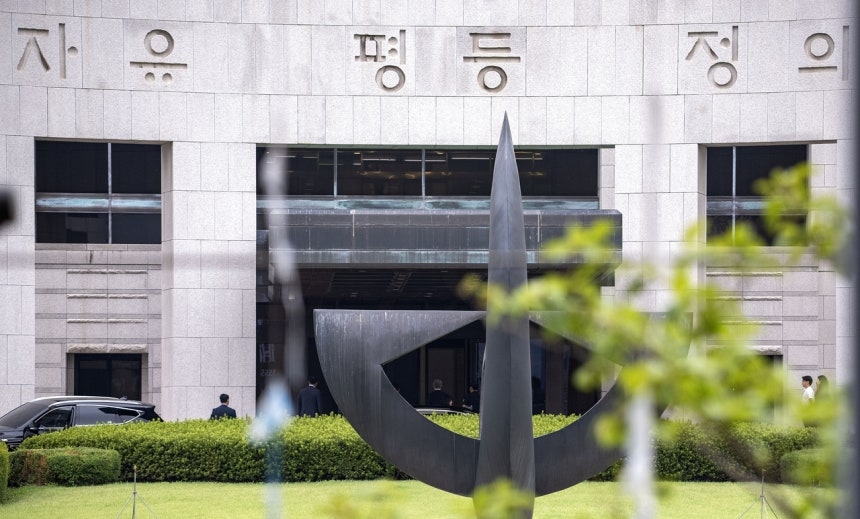
The Supreme Court has finalized acquittals for those charged with raising military service fraud allegations involving Park Joo-shin, the son of the late Seoul Mayor Park Won-soon. An appeals court had overturned their trial court convictions, and the Supreme Court has now upheld that ruling.
The Supreme Court's First Division, presided over by Justice Ma Yong-ju, on Thursday affirmed the appeals court ruling acquitting Yang Seung-o and four others of violating the Public Official Election Act. Only one defendant — charged separately with illegally distributing documents — was found guilty and ordered to pay a fine of 700,000 won ($455). The Supreme Court agreed that the defendants had likely believed the allegations to be true when they made them.
The case traces back to August 2011, when Park Joo-shin enlisted in the Air Force but was sent home after just five days due to thigh pain. A follow-up medical examination diagnosed him with a herniated disc, and he was assigned to public service duty instead of active military service.
Allegations of military service fraud began circulating at that point. The controversy briefly subsided after Park Joo-shin underwent an MRI at Severance Hospital, but ahead of the June 4, 2014, local elections, Yang and others renewed the allegations, claiming the public medical examination at Severance Hospital had been manipulated.
Investigators concluded that Yang and the others had spread false information with the intent of defeating the late mayor, who was running for reelection. In November 2014, they were indicted on charges of publishing false information under the Public Official Election Act.
The lower courts reached opposite conclusions.
In February 2016, the trial court convicted all five defendants, handing down fines ranging from 7 million to 15 million won.
The court found it clear that no substitute had been involved in Park Joo-shin's medical imaging and that he had personally undergone the public verification examination at Severance Hospital. It also rejected the defense's argument that physical characteristics in the imaging materials — including yellow fatty bone marrow, teeth and ear shape — differed from those of Park Joo-shin.
The trial court said the defendants had intended to prevent Mayor Park, who had announced his reelection bid, from winning. It found that they had been at least contingently aware that what they were publishing was false.
The appeals court reversed course. In February, it acquitted all five defendants.
The appeals court noted that a significant portion of the clues the defendants had cited turned out to be factually supported during the prosecution's investigation, and that voices within the prosecution itself had called for further inquiry. It concluded that the defendants had likely believed the allegations to be true when they raised them.
The court added that under the Public Official Election Act, a person cannot be punished for publishing false information if there was substantial reason to believe it was true at the time — even if it is later found to be false.
The court also said the ultimate truth of the allegations only became clear through subsequent prosecution investigations and lengthy court proceedings. At the time, it said, there would have been practical constraints on verifying them further.
The Supreme Court agreed that the appeals court ruling was correct and affirmed it.
The court held that the appeals court had conducted the necessary deliberation, had not violated the rules of logic and experience, had not exceeded the limits of free evaluation of evidence, and had committed no error in its application of the law.
notstrong@heraldcorp.com