Excluded from principal nomination list two years in a row
Vice principal sued, arguing exclusion was unlawful after disciplinary record was expunged
Court upheld the exclusion; ruling finalized
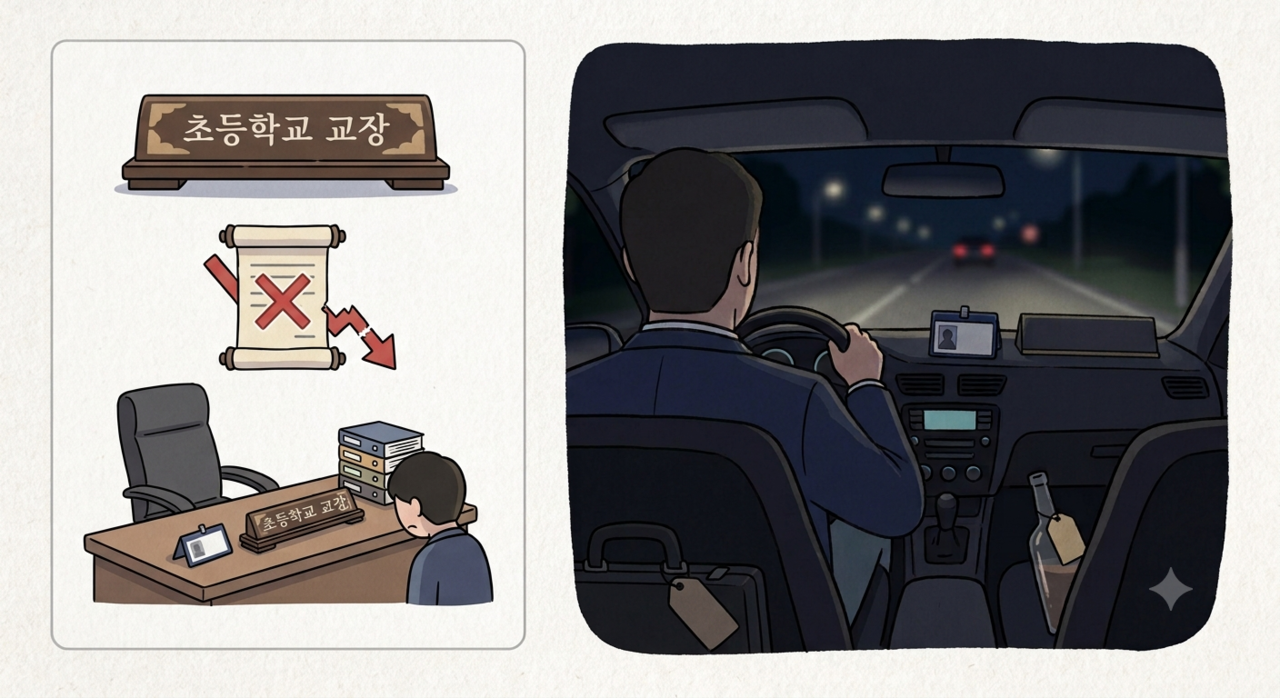
A court has ruled that excluding an elementary school vice principal with a drunk-driving record from consideration for promotion to principal is lawful. The vice principal filed suit contesting the decision, arguing that barring him from the post solely on the basis of a prior conviction — without weighing the severity of the offense, how much time had passed, or evidence of rehabilitation — was unlawful. He lost.
The third administrative division of Daejeon District Court ruled against Vice Principal A on Aug. 26 in a suit he filed against the education minister seeking to overturn the decision to exclude him from the list of candidates recommended for principal appointments. The court also ordered him to bear the litigation costs.
According to the facts established by the court, the Ministry of Education excluded Vice Principal A in January last year from the list of candidates it recommends to the president for principal appointments — for the second consecutive year. The ministry cited two incidents: a 2010 drunk-driving conviction that resulted in a 1 million won ($735) fine and a warning, and a 2016 offense in which he refused to submit to a breathalyzer test, resulting in another fine and a two-month suspension.
Vice Principal A challenged the ministry's decision, filing suit in June last year. During the trial, his side argued that he had no disciplinary record involving the four major teacher misconduct categories — accepting bribes or entertainment, habitual assault, sexual misconduct, and grade manipulation — and that barring him in effect permanently from promotion to principal even after his disciplinary record had been expunged was unlawful.
The court rejected his arguments.
The panel said it was difficult to find that Vice Principal A had been given any legitimate expectation that expungement of his disciplinary record would automatically lead to his appointment as principal.
The court added that standards for evaluating candidates for principal appointments can be raised as times change, and that given the significant public interest in preventing unsuitable candidates from becoming principals, the decision could not be considered unlawful.
The court noted that a principal bears ultimate authority and responsibility for running a school and is therefore required to possess not only professional expertise but also a high level of character and moral integrity befitting a role model for all school members. It pointed out that Vice Principal A had been punished for drunk driving in 2010 and then, six years later, penalized again for refusing a breathalyzer test.
The court went on to say that drunk driving is a crime that can endanger not only the driver but also others on the road, and that its serious social harm makes it an act that calls into question a teacher's basic character and moral fitness.
The panel concluded that even though a considerable amount of time had passed since Vice Principal A committed the drunk-driving and breathalyzer-refusal offenses, those prior acts could not be disregarded given the position and responsibilities of a principal. It said it was difficult to conclude that the public interest served by excluding him from the candidate list was outweighed by the disadvantage he suffered as a result.
The ruling was finalized Sept. 12, after Vice Principal A chose not to appeal.
notstrong@heraldcorp.com