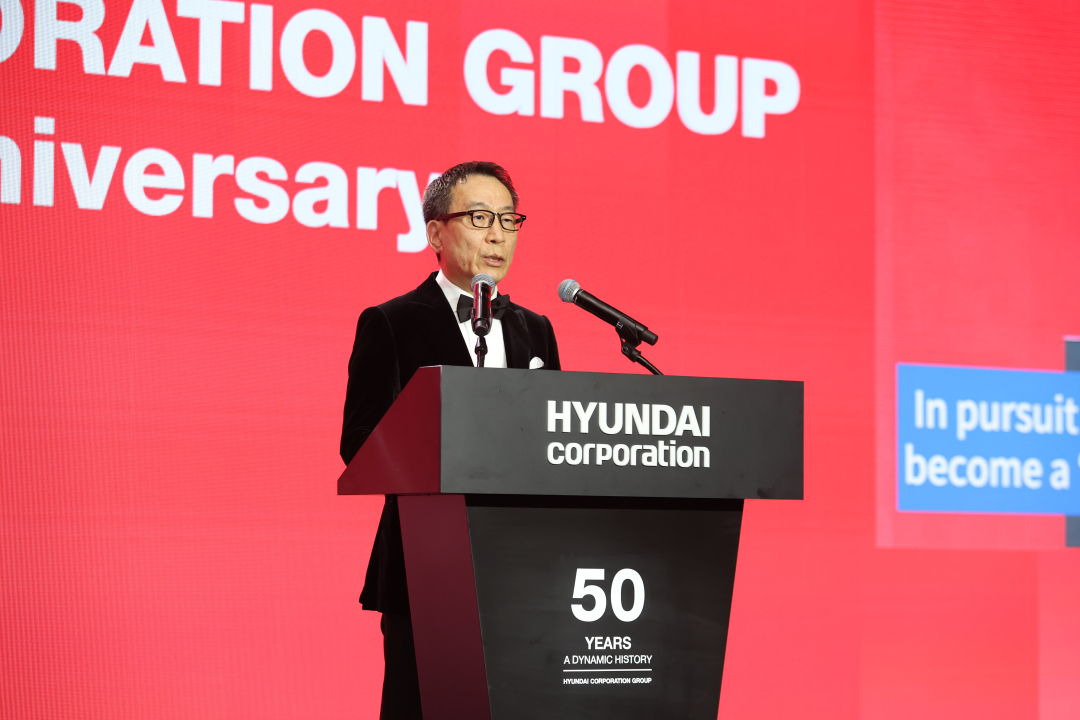
Criminal justice forum hosted by Justice Training Institute and Korean Institute of Criminology and Justice
"The prosecutor general is enshrined in the Constitution — cannot be changed by statute"
"The Public Prosecution Office Act renders the prosecutor general a dead letter — altering its substance is unconstitutional"
By Yang Geun-hyuk, The Herald Business
Legal experts at a forum held on the eve of a sweeping overhaul of the criminal justice system — one that would separate investigation from prosecution — argued Thursday that abolishing the prosecution service is unconstitutional. Repeated warnings were also raised that preparations for the new Serious Crime Investigation Agency and Public Prosecution Office system, set to replace the prosecution service in October, remain woefully inadequate.
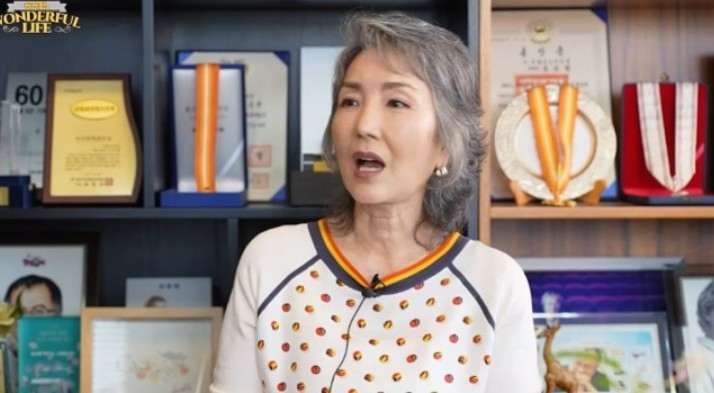
Cha Jin-a, a professor at Korea University School of Law, said at the forum Thursday that "abolishing the prosecutor general — a position established under the Constitution — or abolishing the prosecution service, of which the prosecutor general is the head, through ordinary legislation is unconstitutional, as is retaining the name while altering or hollowing out its substance through statute." The forum was held at the L Tower in Seocho-gu, Seoul, under the theme "Criminal Justice in an Era of Great Change." The Justice Training Institute and the Korean Institute of Criminology and Justice (KICJ) organized the event, which drew prosecutors, lawyers, law professors and other experts. Cha said Article 89, Clause 16 of the Constitution explicitly names the prosecutor general as the head of the prosecution service — a provision that has existed since the founding constitution — and that this makes the prosecutor general a constitutionally mandated institution that cannot be altered by ordinary law.
Cha said the prosecution service and the proposed Public Prosecution Office are fundamentally different in character and authority, since the prosecution service is composed of prosecutors who hold both investigative and indictment powers, while the Public Prosecution Office would not. "It is therefore difficult to regard the two as the same institution," he said. He also pointed to a precedent from the Roh Tae-woo administration in 1989, when an attempt to rename the Joint Chiefs of Staff was abandoned amid constitutional objections — because changing a constitutionally designated name requires a constitutional amendment, not ordinary legislation. "The Public Prosecution Office Act renders the prosecutor general a dead letter, and that is precisely where its unconstitutionality lies," he said.
Cha said reforming the prosecution should mean improving it so it can fulfill its proper functions, not abolishing it. "Abolition — rather than normalization — upends the very foundation of the criminal justice system linking police, prosecutors and courts, and the fallout will inevitably be enormous," he said.
Concerns were also raised about overlapping investigative jurisdiction between the Serious Crime Investigation Agency, which would be established as an investigative body alongside the abolition of the prosecution service, and other existing investigative agencies.
Park Gyeong-gu, head of the criminal law research division at KICJ, who presented the first paper, said the Serious Crime Investigation Agency Act lists offenses under its jurisdiction by name alone, without defining any characteristics or criteria for what constitutes a "serious crime" and without applying threshold standards such as minimum statutory or sentenced penalties. "As a result, the current definition of serious crimes under the act will inevitably produce numerous conflicts and overlaps in investigative jurisdiction with other agencies — the National Investigation Headquarters, the Corruption Investigation Office for High-ranking Officials, and special judicial police," he said.
Yang Hong-seok, an attorney at law firm Igong, said the Serious Crime Investigation Agency may have been conceived as a way to compensate for stripping prosecutors of investigative powers. But the enormous cost of establishing a new investigative body — combined with the existing National Investigation Headquarters, the Corruption Investigation Office for High-ranking Officials, and the frequent special prosecutor investigations expected under the Lee Jae Myung administration — will lead to widespread duplication of investigative jurisdiction, wasting investigative resources. "The bigger problem is the risk of a pervasive culture of passing cases off to other agencies to avoid taking responsibility," he said.
Concerns were also raised about the proposed abolition of prosecutors' supplementary investigative powers, a central issue in the revision of the Code of Criminal Procedure. Cha said the government and ruling party's refusal to grant the Public Prosecution Office supplementary investigative powers "only deepens suspicions that this so-called prosecution reform is not about protecting the public from crime, but about neutering the prosecution." He said that despite abundant evidence and case studies demonstrating police's lack of legal expertise and the resulting need for supplementary investigative powers, "it is difficult to understand why the government and ruling party are deliberately turning a blind eye."
Yang said that while President Lee Jae Myung had acknowledged that supplementary investigative powers may be needed in exceptional cases, he recently indicated he would leave the question of whether to retain them to the National Assembly — while the Democratic Party of Korea leader has taken the position that prosecutors will "absolutely not" be granted such powers under the principle of separating investigation from prosecution. "The public still does not know what the revised Code of Criminal Procedure will actually contain," Yang said. He added that because the Constitution grants warrant application authority exclusively to prosecutors, "the Constitution can be understood as recognizing that prosecutors, as investigative authorities, may exercise investigative powers either directly or through investigative direction."
The forum opened with remarks by Park Jin-seong, acting director of the Justice Training Institute, and a welcoming address by Jeong Ung-seok, director of KICJ. The first session, on the content and future tasks of the Public Prosecution Office and Serious Crime Investigation Agency acts, was moderated by Park Yeong-jin, a research fellow at the Justice Training Institute, with Park Gyeong-gu presenting. Discussants included Cha Jin-a of Korea University, Yang Hong-seok of law firm Igong, Lee Chang-hyeon of Hankuk University of Foreign Studies School of Law, and Han Sang-hun of Yonsei University School of Law.
The second session addressed the roles of criminal justice agencies under the new legislation. Yun Ji-yeong, head of KICJ's judicial reform and AI strategy research division, moderated, and Jang Jun-ho, chief of the Gangneung Branch of the Chuncheon District Prosecutors' Office, presented. Discussants included Cha Ho-dong of law firm Bae, Kim & Lee, Han Sang-hee of Konkuk University School of Law, Lee Chang-on of Ewha Womans University School of Law, and Han Sang-gyu of Ajou University School of Law.
yg@heraldcorp.com