Complaints and accusations to be filed with police for ordinary cases; serious crimes go to new agency; prosecutors lose direct investigative powers
![Employees arrive for work at the newly launched Public Prosecution Service office in Seocho-gu, Seoul, on Friday. [Yonhap]](https://wimg.heraldcorp.com/news/cms/2026/10/02/rcv.YNA.20261002.PYH2026100201000001300_P1.jpg)
South Korea's 78-year-old prosecutors' office system came to an end Friday as a sweeping new criminal justice framework — one that fully separates investigation from prosecution — took effect.
With prosecutors stripped of their direct investigative powers, major investigations will now be divided among the police, the new Serious Crimes Investigation Agency and the Corruption Investigation Office for High-ranking Officials, while indictments and the conduct of public prosecutions will fall to the newly established Public Prosecution Service. The changes affect nearly every stage of the criminal justice process, from where citizens file complaints to how they can challenge investigation outcomes.
The laws establishing the Serious Crimes Investigation Agency and the Public Prosecution Service, along with amendments to the Code of Criminal Procedure, took effect Friday. The Prosecutors' Office, which had operated since 1948, was formally abolished after 78 years. The direct investigative functions previously held by prosecutors will be taken over by the Serious Crimes Investigation Agency, while the Public Prosecution Service will handle indictments and the conduct of trials. Prosecutors' authority to oversee police investigations has been retained in limited form — through the power to demand supplementary or re-investigations.
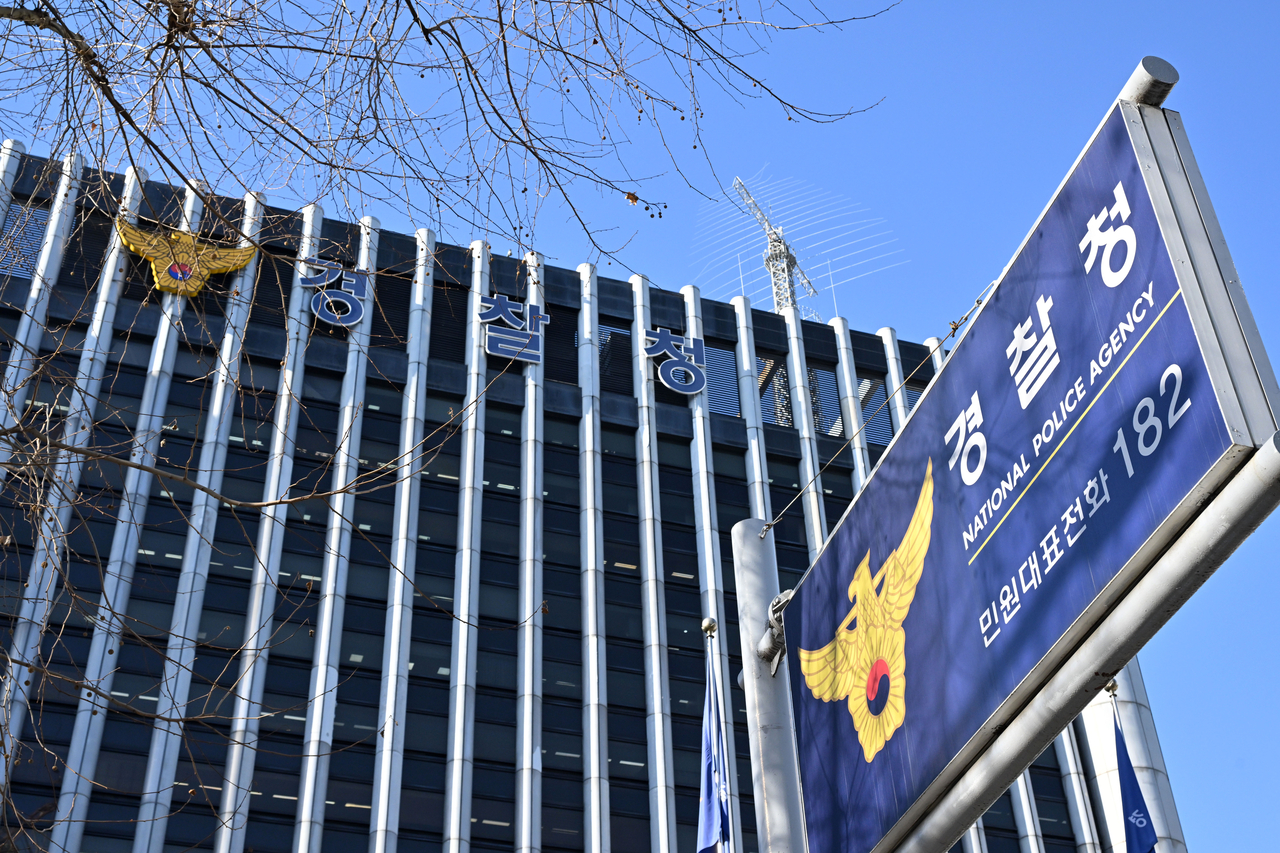
The most significant change concerns who conducts investigations. Police will handle ordinary crimes, while the Serious Crimes Investigation Agency will take charge of serious offenses: corruption and economic crimes, defense procurement crimes, drug offenses, insurrection and foreign relations crimes, cybercrime, and perversion of justice. The Corruption Investigation Office for High-ranking Officials will continue to investigate crimes by senior public officials under its own governing statute.
Where citizens file complaints and accusations will also change. Ordinary cases will in principle be received by police, while serious crimes under the Serious Crimes Investigation Agency's jurisdiction can be reported directly to that agency. For economic crimes such as fraud, embezzlement and breach of fiduciary duty, cases involving damages below 500 million won ($368,000) will be handled by police, while those at or above that threshold will go to the Serious Crimes Investigation Agency. Police authority and responsibility have grown substantially as a result — with prosecutors out of direct investigations, police become the central institution for ordinary criminal cases.
The overhaul also introduces new procedures for challenging prolonged or rights-violating investigations. If a substantive investigation — including the gathering of evidence — has not advanced for six months or more without justification after being opened, complainants and others may file an objection with the head of the relevant investigative agency. The agency head must respond within 14 days, informing the complainant whether the investigating officer will be replaced, the status and plan of the investigation, and what measures will be taken to protect the complainant's rights. If no action is taken, or if the complainant remains dissatisfied, a further review may be requested from a higher agency within 14 days.
Deadlines have also been introduced for challenging a police decision not to refer a case for prosecution. Complainants must file an objection within three months of being notified of such a decision. Where there is legitimate cause, the objection period may be extended by up to six months from the date the case records are transmitted. Accusers who have a direct stake in the case and are treated on a par with crime victims may also file objections for crimes designated by presidential decree. Cases subject to such objections are transferred to the Public Prosecution Service. Prosecutors may demand a re-investigation if they find a police decision not to refer a case to be unlawful or improper.
Even when a Public Prosecution Service prosecutor reviewing a case referred by police or another investigative agency determines that further investigation is needed before deciding whether to indict, the prosecutor cannot conduct that investigation directly. Prosecutors may hear the views of suspects or others involved in the case, or receive relevant materials, through a process called "fact-finding" — but any statements or materials obtained this way cannot be used as evidence at trial. For any additional investigation to proceed, the prosecutor must formally request supplementary investigation from a judicial police officer. In short, prosecutors can neither initiate investigations nor conduct supplementary ones — they can only request them.
![Officials lower the prosecutors' flag at the Supreme Prosecutors' Office in Seocho-gu, Seoul, on Thursday, the day before the Public Prosecution Service officially launched. [Yonhap]](https://wimg.heraldcorp.com/news/cms/2026/10/02/rcv.YNA.20261001.PYH2026100133570001300_P1.jpg)
Prosecutors retain their constitutional authority to request warrants. Because the Constitution vests warrant-request powers in prosecutors, this function carries over into the new system. When investigative agencies such as the police determine that coercive measures — detention of a suspect or search and seizure — are necessary, they apply for a warrant, which a Public Prosecution Service prosecutor reviews before submitting the request to a court. With the human rights protection unit that previously screened police warrant applications abolished along with the Prosecutors' Office, the Public Prosecution Service plans to assign criminal division prosecutors to handle warrant requests on a case-by-case basis.
Cases already being handled under the old system will be redistributed to fit the new framework. Cases that prosecutors were investigating will in principle be processed under the new investigative and prosecution structure. To prevent gaps in case handling during the transition, however, cases in which a prosecutor had received a referral or had independently opened an investigation — and to which transitional provisions apply — may continue under the old rules for up to 90 days. The Public Prosecution Service is expected to transfer most cases that had been referred by police back to investigative agencies, while using the grace period primarily for major cases that prosecutors had initiated on their own.
The handling of large-scale criminal investigations will also change significantly. Joint investigative units operated by prosecutors and police — covering voice phishing, financial and securities crimes, and virtual assets — will be dissolved following the abolition of prosecutors' direct investigative powers. Their functions will transfer to the new investigative framework centered on the Serious Crimes Investigation Agency.
Legal circles have raised concerns that case processing delays could worsen in the early stages of the new system, as cases move back and forth between the Public Prosecution Service and investigative agencies — a phenomenon already being called "case ping-pong." How well the new system takes hold is expected to depend on how effectively the agencies can collaborate to minimize investigative gaps and delays.
yg@heraldcorp.com