Cumulative visitors top 10 million this year as Yesan Market regains its energy
Regional development accounts for just 2% of sales, but data collection is the real goal
Expansion to accelerate nationwide, with Yeoju next after Mungyeong and Gunsan
"It used to be only old people who came here. Now that young people are showing up, I feel younger myself."
At Yesan Market in Yesan-gun, South Chungcheong Province, on Friday afternoon, Kim Ji-jun, 75, flipped a piece of golden-brown dried filefish with tongs as he spoke. He has run Daeheung Sanghoe at the heart of the market for 52 years. The shop, which once sold dried seafood and cooking ingredients, began grilling its products on the spot in 2023 after receiving consulting from The Born Korea — and has since become one of the market's signature attractions.
The transformation of Yesan Market traces back to a regional revitalization project that The Born Korea and Yesan-gun have pursued together since 2018. By developing food offerings using local specialties and supporting youth entrepreneurship, the once-stagnant market has found new energy.
A former convenience store called Gwangam Super has reinvented itself as Gwangsi Castella, selling castella cakes made with Yesan's signature apples. Owner Nam Seung-woo, 45, said his in-laws had been trying to close the shop after running it for 15 years, but a consulting session with The Born Korea chief Baek Jong-won gave them the idea to sell apple castella instead. "I had never baked bread before, so I had no idea where to start," Nam said. "But now it's turned into a store that draws a lot of tourists."
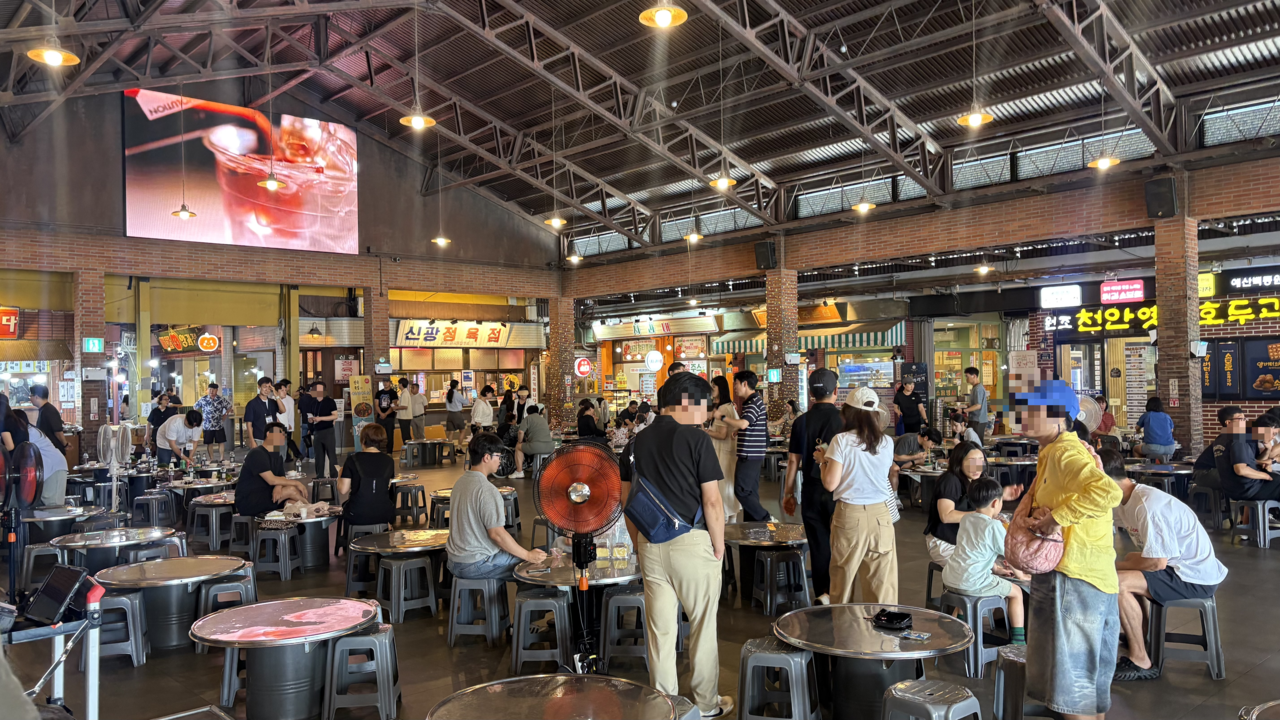
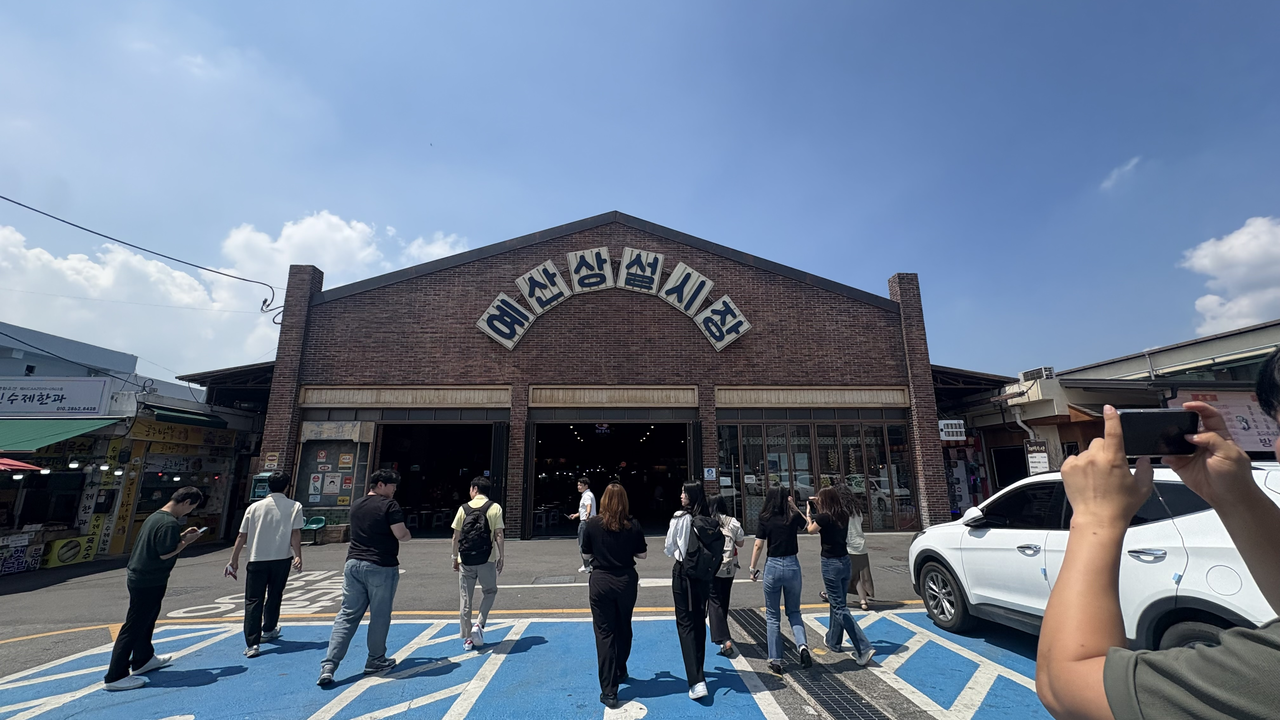
In fact, Yesan Market looked quite different from a typical traditional market. The walkways were tidy, and a wide variety of food was on offer — from full meals such as tteokbokki, noodles and bulgogi to desserts like castella and apple pie. At Jangteo Plaza, a shared dining area, tourists gathered in small groups to eat and chat.
A 23-year-old tourist from China who gave her name as Fei Fei said she had come to Yesan because it is the hometown of Shin Yu of the K-pop group TWS. "The market was so clean and well-organized," she said. "I was also impressed that you can try so many different foods all in one place." Kim Tae-woo, 8, who had come from Seosan in South Chungcheong Province on a field trip to mark the Dano holiday, flashed a bright smile and said he was having a great time exploring the market.
Visitor numbers, which had dipped last year amid controversy surrounding Baek, have been climbing steadily. Buoyed by the reopening of Jangteo Plaza and other improvements, about 1.41 million people visited in the first five months of this year alone. Cumulative visitors since the project launched in 2023 have now surpassed 10 million.
Young entrepreneurs from outside the region have also been a steady presence. Park Yu-deok, 37, who relocated from Daejeon to Yesan, opened a shop called Baek Sul Sanghoe through a pilot program. He sells makgeolli brewed from Yesan apples alongside other local traditional liquors and specialty products. "When I first came in 2020, most of the shutters were down and the place felt like a ruin," Park said. "As the project moved forward, it has come back to life — there are almost no empty units now."
The visit offered a glimpse into the direction of The Born Korea's regional development ESG initiative. The core idea is to combine food, local specialties and commercial districts with tourism to encourage visitors to stay longer and spend more — creating a virtuous cycle for the broader local economy.
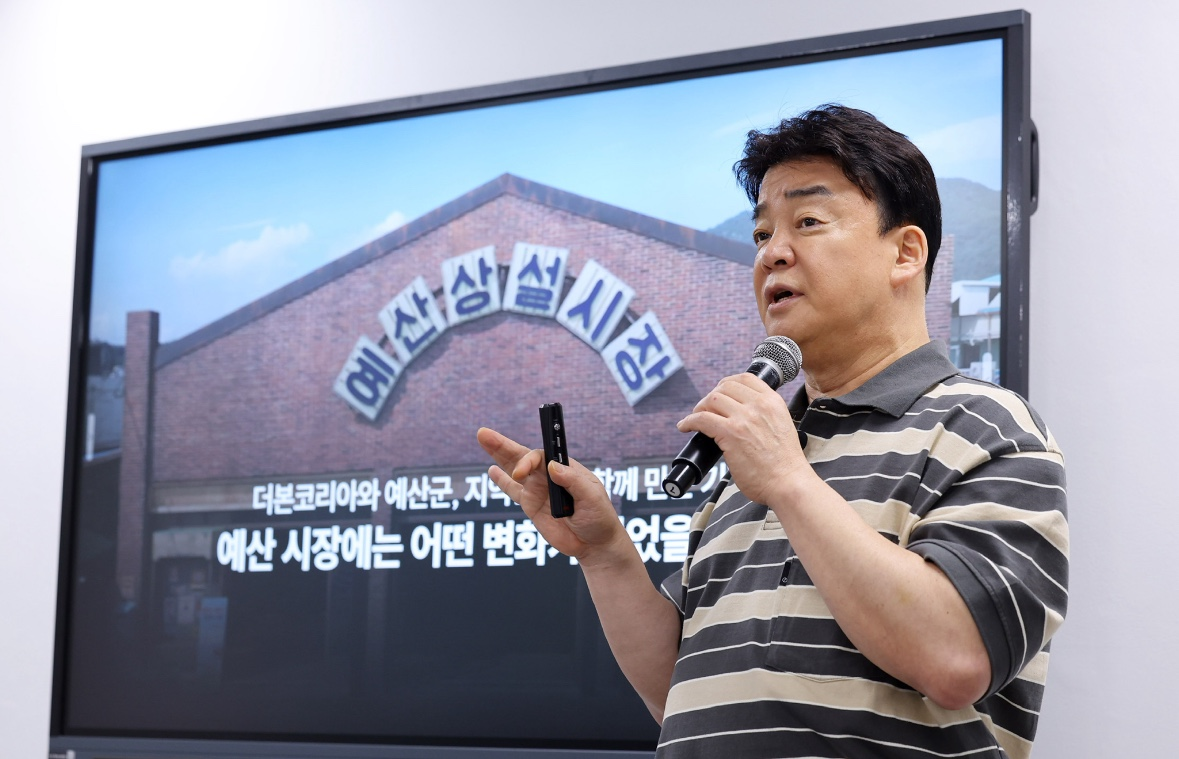
At a media briefing, Baek described the effort as "a structural approach to solving the problem of regional depopulation, not just a simple business venture," adding that "when local specialties are paired with food, a natural motivation to visit is created." He said the regional development project "is not about making money."
The Born Korea's audit report bears that out: last year, revenue from its regional development operations came to 8.1 billion won ($5.24 million), just 2.2 percent of the company's total sales of 361.2 billion won. Even so, The Born Korea continues to pursue regional development for the data — the company aims to turn consumer responses gathered on the ground, commercial district structures, and menu development know-how into usable data for future use.
That function is taking shape through the Born Korea Food Industry Development Institute. The institute designs unique regional concepts based on each area's culture, landscape and food heritage, then uses those concepts as the basis for commercial district analysis and project feasibility reviews. Following Yesan, the institute opened centers in Mungyeong in April 2024 and Gunsan in July 2025 — its second and third locations.
"The larger a company grows, the more ESG work becomes a necessity, not a choice," Baek said. "Yesan Market required heavy investment as the starting point, but we intend to establish this as a new business model — one where local communities and the company grow together — that goes beyond a corporate ESG activity."
The Born Korea plans to build on the experience accumulated at Yesan Market and expand its regional development model to suit the conditions and characteristics of each area. Current projects include converting idle space at Chungnam Bangjik into a mixed-use content complex, developing a tripe-specialty street at Sapgyo Market, and building a traditional liquor experience complex — all linking industrial, commercial and tourism assets.
siuu@heraldcorp.com