Gyeonggi's Dongtan, Giheung and Guri hit with triple regulations Tuesday
Brokers say buyers had already moved ahead of the announcement
Analysts warn late-arriving rules only hurt end-users as prices soar
I expected Dongtan to be placed under regulation right around the end of June and early July. Buyers who were waiting had all put down preliminary deposits by last week, and the moment the additional designation was announced on Wednesday, they signed their contracts. Eight out of 10 buyers in this "shuttle zone" — the area served by shuttle buses to the semiconductor industrial complex — are high-income end-users born between 1990 and 1995. They will buy regardless of any regulation.
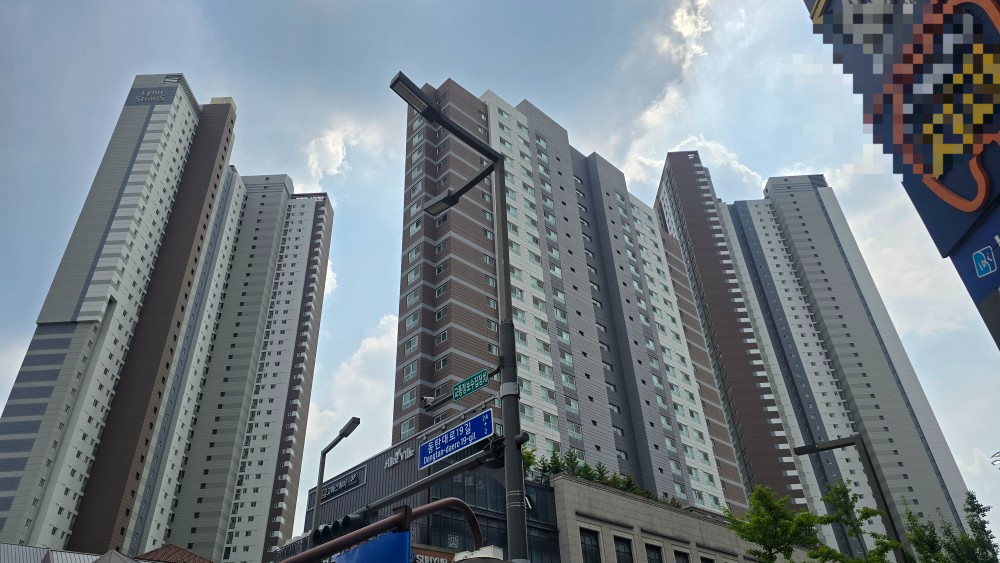
The government on Tuesday announced a surprise "triple regulation" designating Dongtan district in Hwaseong, Giheung district in Yongin and Guri — all in Gyeonggi Province — as adjustment target areas, speculative overheating districts and land transaction permit zones simultaneously. Real estate agents in Dongtan said in unison that they had seen it coming. The market had already moved preemptively, anticipating that Dongtan would be added to the list of regulated areas before the end of the first half of this year.
The mood was particularly calm in Mokdong, a "shuttle zone" popular with newlywed couples working at Samsung Electronics and SK hynix, where 84-square-meter apartments — the so-called national standard size — were still priced around 1 billion won ($646,000). A broker at a nearby agency said he had told a buyer over the weekend to prepare a 10 percent deposit in advance because the area could become regulated the following week. That buyer completed the purchase through an electronic contract the moment the announcement came out on Wednesday, the broker added.
Prices already sky-high, end-users bear the brunt — brokers doubt land permit rules will help
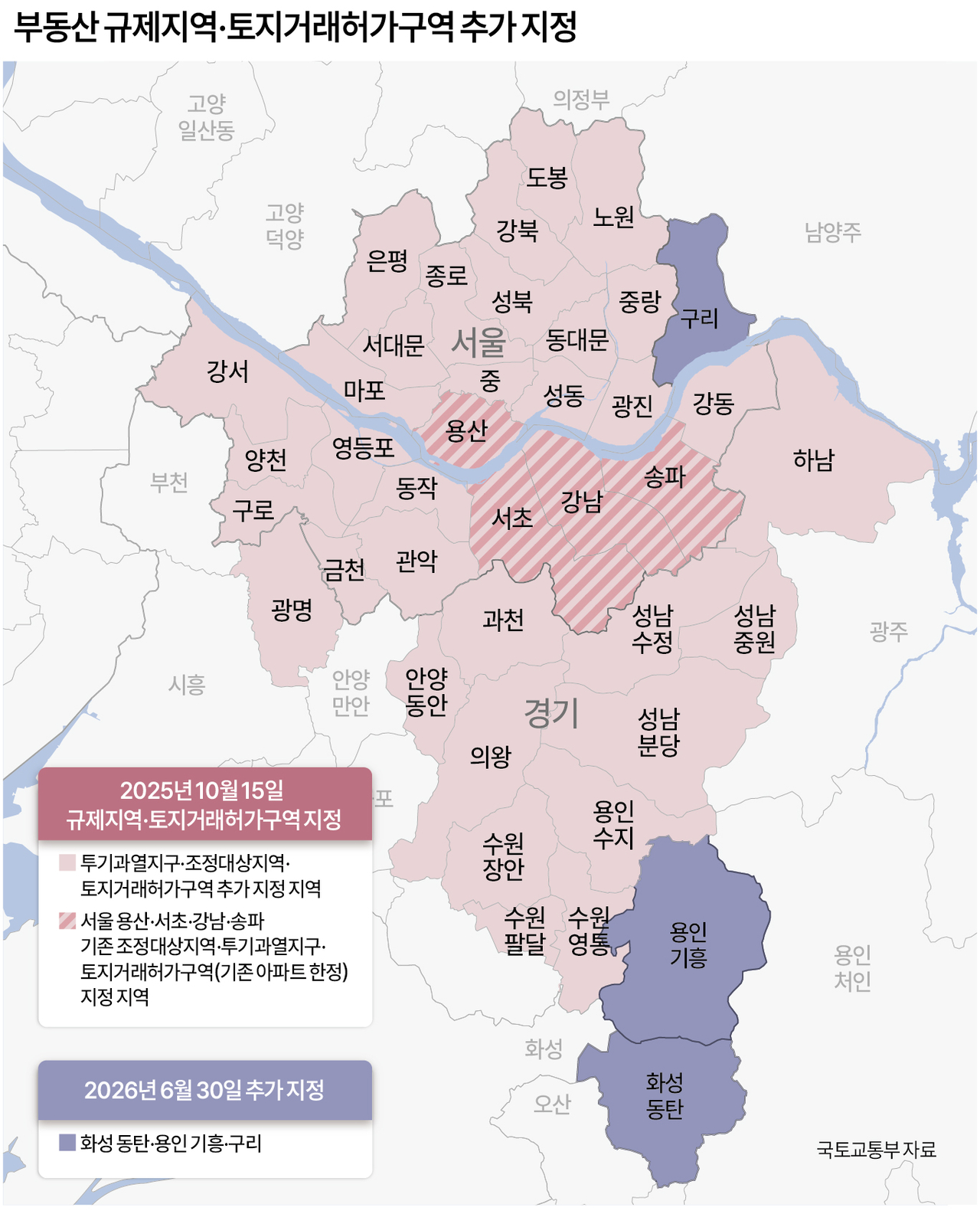
Dongtan district in Hwaseong, Giheung district in Yongin and Guri officially became regulated zones — designated as both speculative overheating districts and adjustment target areas — effective Wednesday. Starting Sunday, they will also be designated as land transaction permit zones, imposing an owner-occupancy requirement on buyers.
The three areas had been left out of the Oct. 15 measures last year, when the government designated all of Seoul and 12 locations in Gyeonggi Province as regulated and land transaction permit zones, and home prices climbed as a result. Dongtan in particular, situated near the semiconductor industrial complex, saw prices shoot up sharply as the outlook brightened for Samsung Electronics and SK hynix amid expectations of a semiconductor industry boom.
An 84-square-meter unit at Hillstate Dongtan held steady in the 700 million to 800 million won range from last October through early this year, then climbed into the 900 million won range in May as end-users commuting to Samsung's nearby Hwaseong campus kept buying. Last month, a unit on the 16th floor traded at a record 1.06 billion won.
The Yeoul-dong and Cheongye-dong neighborhoods near Dongtan Station — regarded as the most premium addresses in Dongtan — have seen an even steeper climb. The flagship complex in Cheongye-dong, Dongtan Station Sibeom Unam First Ville, had actual transaction prices for its 84-square-meter units in the 1.1 billion won range before the Oct. 15 measures were announced last year. Transactions surged immediately after that announcement, pushing prices to between 1.2 billion and 1.3 billion won. Then, as performance bonuses and in-house loans from Samsung Electronics and SK hynix materialized early this year, a 16th-floor unit set a new record at 1.86 billion won. Asking prices now stand at 2 billion won.
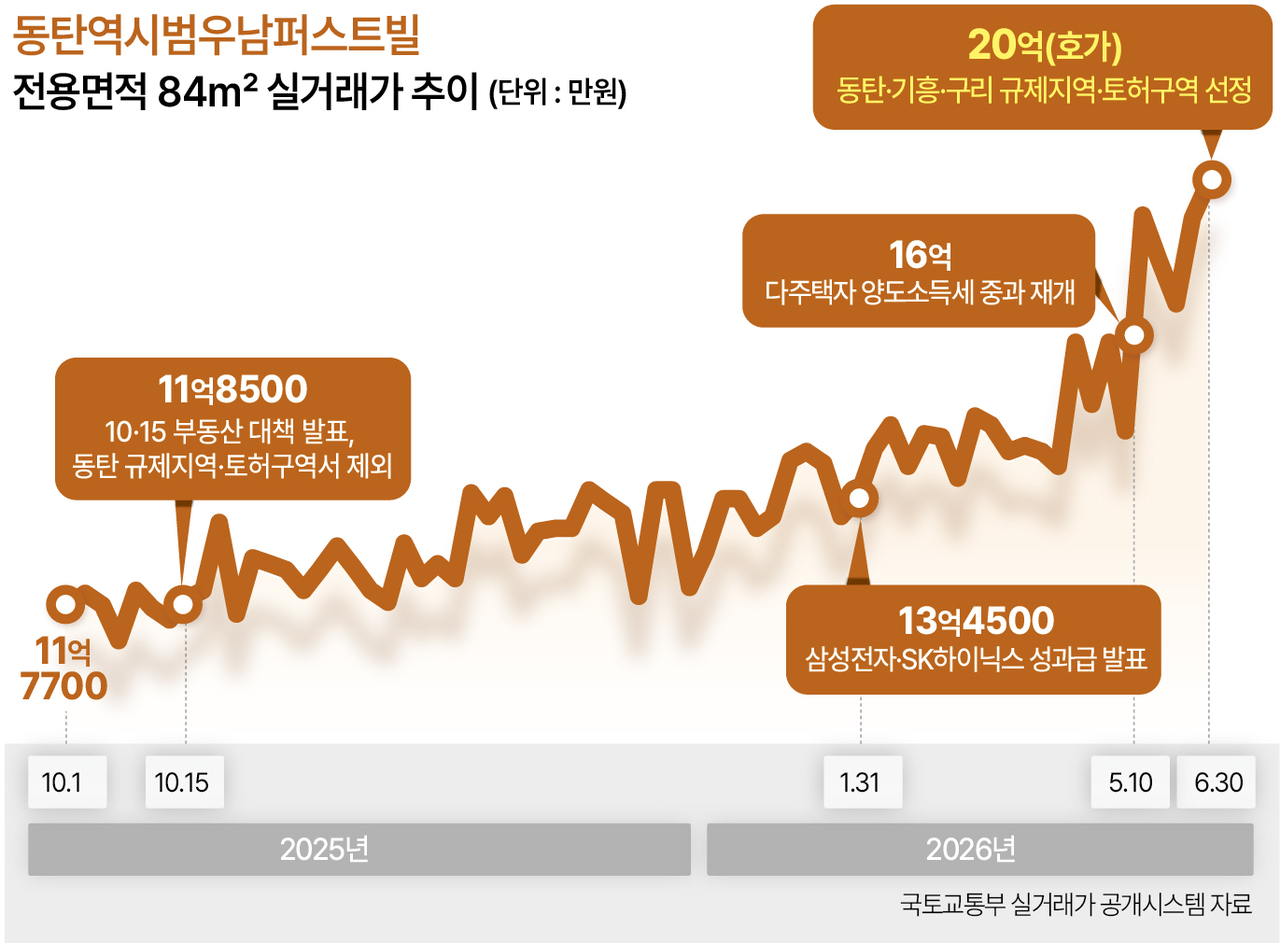
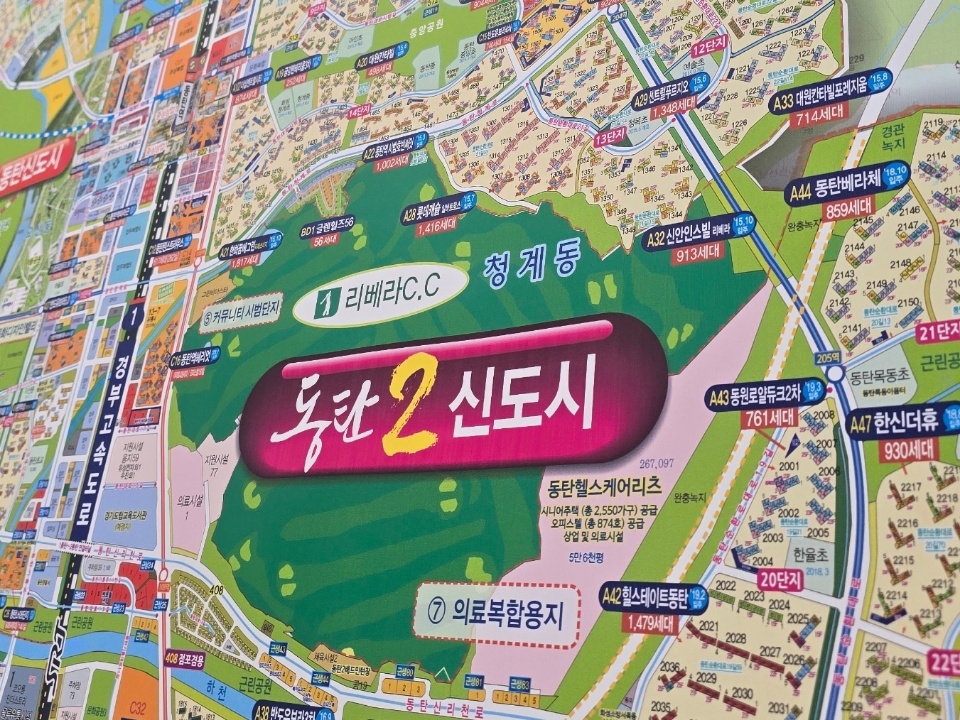
Frustration also surfaced in the market, with many arguing that the belated designations had only fueled the price surge. The head of a real estate agency near Dongtan Station said apartments in Yeoul-dong and Cheongye-dong had already moved into a higher price bracket, with buyers chasing elevated asking prices that already factored in the prospect of regulation. "Sale prices have risen so far above jeonse prices that I question whether designating this as a land transaction permit zone will have any effect at all," the broker said.
'Dongtan demand may shift to Osan, Guri demand to Namyangju'
The central question is whether the regulations will work. When housing market controls repeatedly chase prices higher rather than getting ahead of them, end-users who have been priced out may resort to panic buying the moment an opportunity appears. Demand could also spill over into nearby unregulated areas, repeating the balloon effect seen before.
Kwon Dae-jung, a distinguished professor of real estate studies at Hansung University, said the late timing was partly unavoidable. Dongtan had previously been folded into citywide statistics for Hwaseong as a whole, making it harder to meet the quantitative thresholds required for a regulated-zone designation, he noted. Even so, he warned that simply expanding the regulated zone could push demand from Dongtan and Giheung toward Osan, and from Guri toward Namyangju, driving up prices in nearby unregulated areas that share the same daily living zone.
Meanwhile, the Ministry of Land, Infrastructure and Transport signaled at a background briefing after Tuesday's announcement that it is also considering tightening lending restrictions. A loan-to-value ratio cap of 40 percent will apply in Dongtan and the other newly designated areas once the regulations take effect. A ministry official said the government is weighing whether even a loan-to-value ratio of 30 to 40 percent of the home price is excessive — a remark widely interpreted as leaving the door open to a stricter cap.
Park Won-gap, chief real estate specialist at KB Kookmin Bank, said additional lending restrictions could feel unreasonable from an individual buyer's perspective. "For those who do not receive large performance bonuses like workers in the semiconductor industry, their cash flow stays the same while home prices keep rising and their borrowing limit shrinks further," Park said.
hss@heraldcorp.com
quq@heraldcorp.com