Top-selling brand in Vietnam last year, just nine years after founding
Haiphong plant targets 400,000 vehicles this year
Parts shipped to India, Indonesia; automation still at early stage
'No plans for Korea market — but working with Korean firms on batteries, parts'
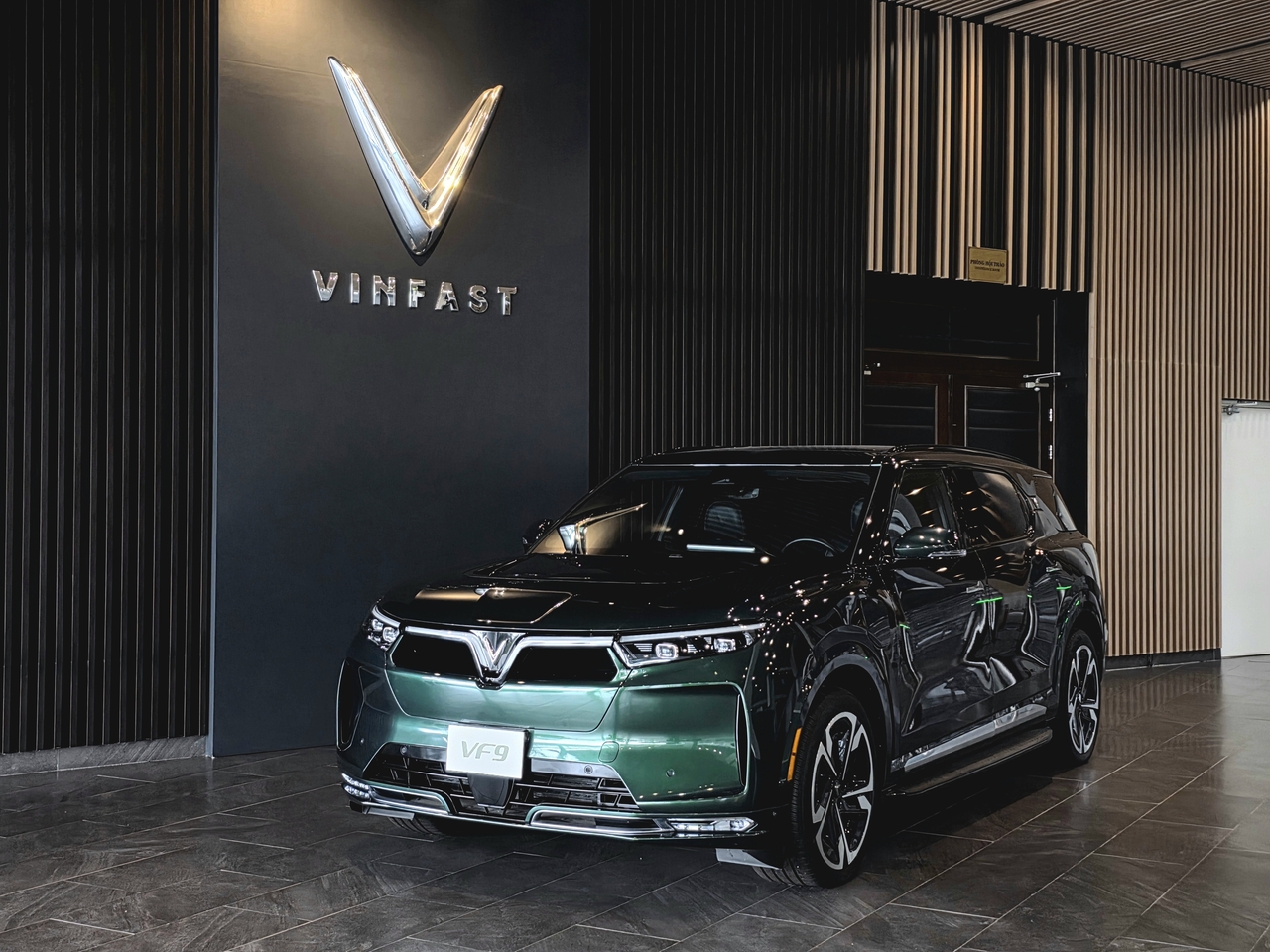
On the roads of Hanoi, among the familiar logos of global automakers, cars bearing a bold "V" emblem weave through traffic. They belong to VinFast, Vietnam's homegrown electric vehicle brand.
VinFast may be little known in South Korea, but it has firmly established itself as a household name at home, topping Vietnam's sales charts last year with 175,099 vehicles sold. Founded in 2017 by Vingroup, Vietnam's largest conglomerate, the automaker halted production of internal combustion engine vehicles in 2022 and has been at the forefront of electrification ever since. In 2023, it listed on the Nasdaq, signaling its ambitions as a global player.
VinFast operates electric vehicle production bases in the northern port city of Haiphong and in the central province of Ha Tinh. The Haiphong plant converted its lines from combustion engines to electric vehicles, produced 200,000 vehicles last year and is targeting output of 400,000 this year.
On Thursday (local time), this reporter toured the EV production floor at VinFast's Haiphong factory, about two hours from Hanoi. While South Korean automakers have aggressively automated their plants with robotic arms and driverless forklifts, VinFast's automation remains at an early stage. Large-scale equipment was visible in the press and welding processes, but the assembly and inspection stages relied heavily on human workers.
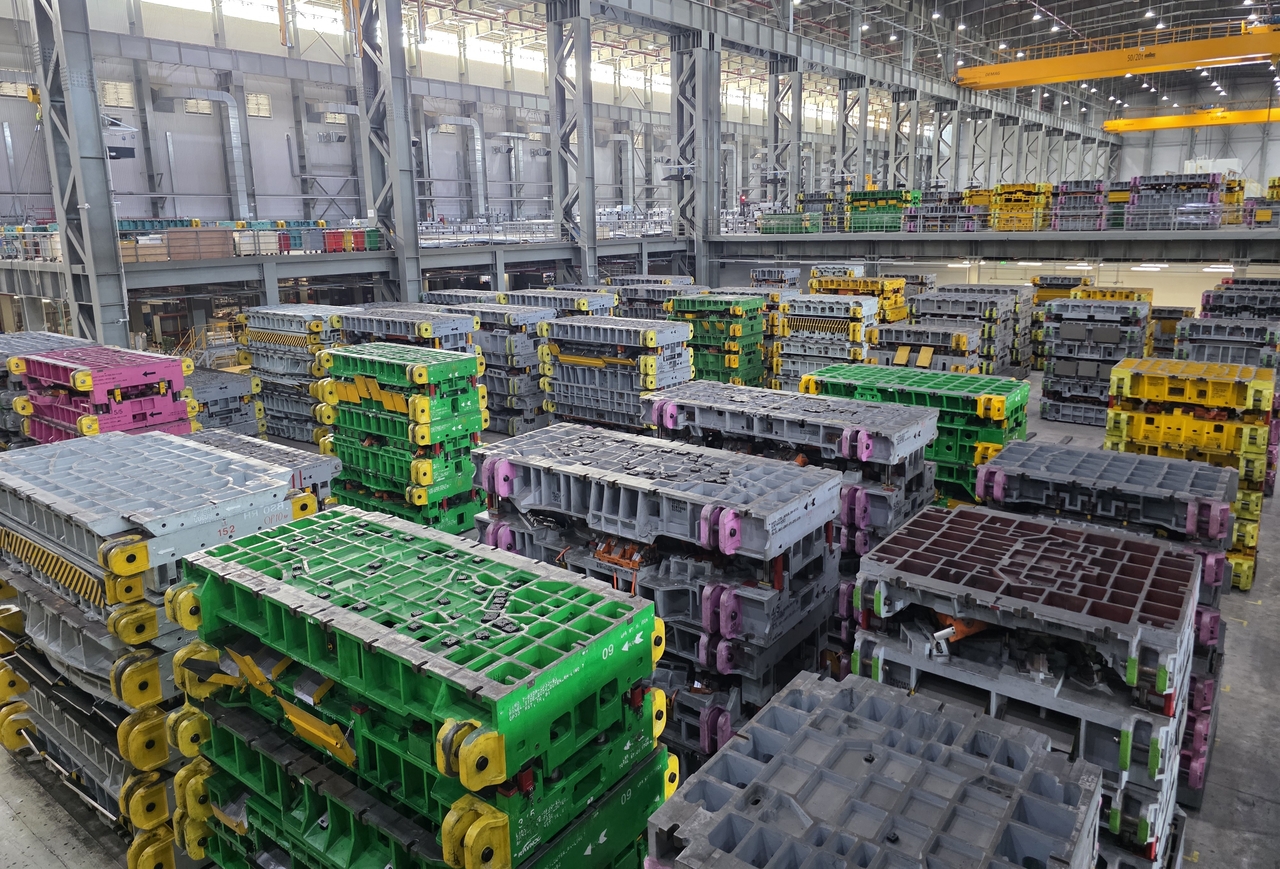
The Haiphong plant currently runs two press lines producing exterior body parts for nine SUV and MPV models. "We can produce four to 15 parts per minute, depending on the size of the part," the production line supervisor said.
In the materials storage area, press molds in various colors and steel coil rolls were stacked in rows. The molds are color-coded by vehicle model, allowing workers to distinguish between models even when multiple types are produced on the same line.
Steel coils moved through a blanking process — where large sheets are cut to size — and laser welding before reaching the press line, where pressure was applied to the sheets to produce doors and frames in rapid succession. Workers in pairs manually loaded the finished parts onto racks, while others walked the line with inspection equipment, checking quality piece by piece.
"We are building new EV production equipment inside the factory and plan to begin production within six months," the press plant manager said. "Parts produced here are also supplied to our production bases in India and Indonesia."
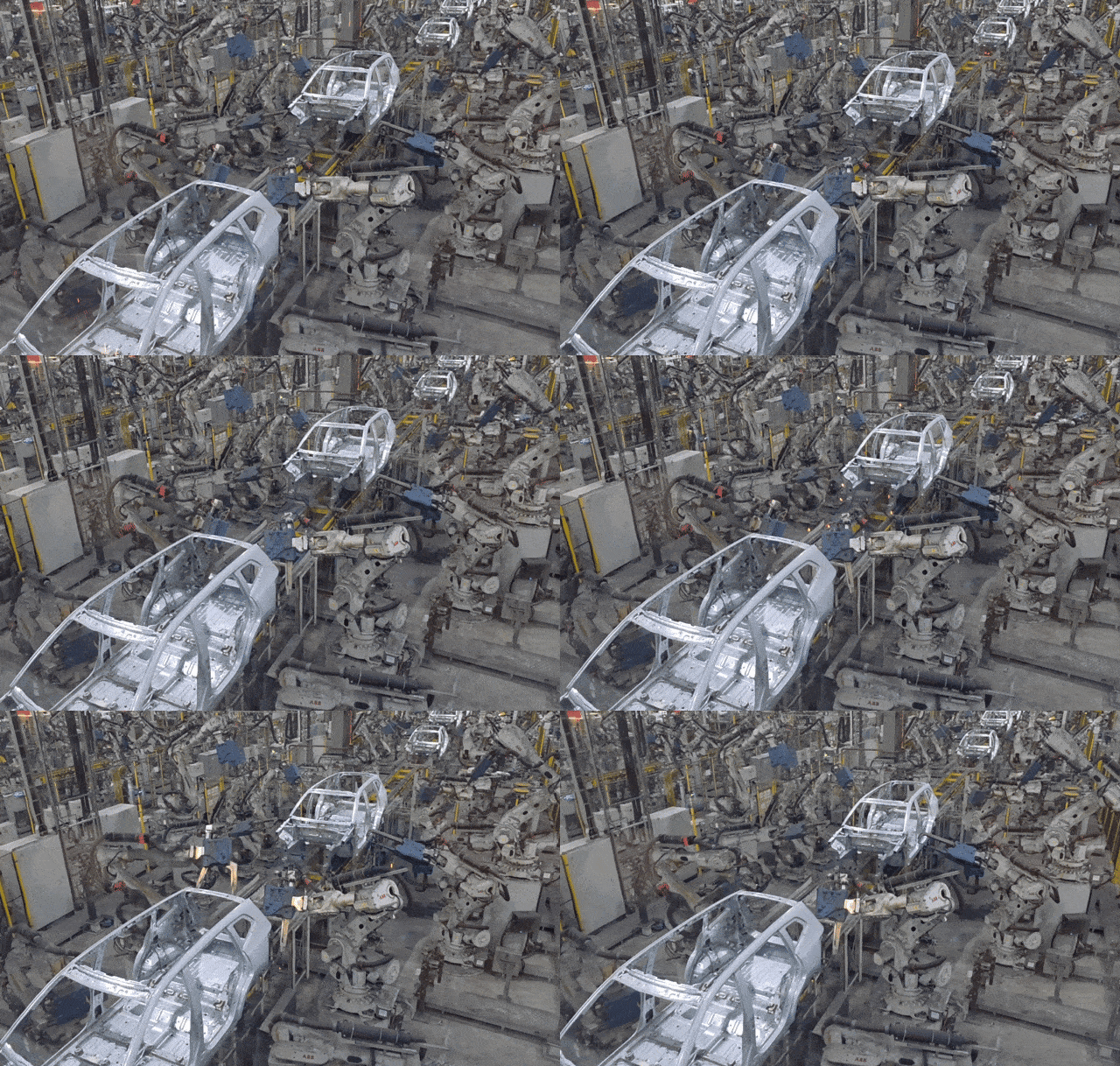
Inside the assembly plant, robotic arms moved briskly, welding vehicle bodies. Because welding produces dangerous sparks, the robotic work areas were separated from workers' walkways by iron cages — though sparks occasionally flew into the pedestrian zones, creating a hazard.
After welding, four workers per vehicle inspected weld quality before each car moved on to the painting process, where it received its color coat.
Final assembly required even more hands. As vehicles were suspended from overhead conveyors and moved along the line, teams of six workers installed bumpers, dashboards and other components. After passing through multiple stages and a final quality check, each completed vehicle was ready to ship as a VinFast product.
"The Haiphong factory employs 6,000 workers and produces more than 1,000 vehicles a day," the assembly plant manager said. "Finished vehicles are verified against 10 quality criteria on a test track, then undergo a final inspection before moving to the dispatch area."

Even as automation remains at an early stage, VinFast is pressing ahead with global expansion. Trinh Van Ngan, vice president of VinFast Haiphong, said the company sees strong potential in India and Indonesia and has established production bases in both markets. "We are also building a factory in North Carolina in the United States," he added.
He said VinFast has no current plans to sell vehicles in South Korea, but acknowledged the country's importance. "Korea is a very advanced automotive nation and an important market," he said. "We continue to work with Korean companies across various areas, including batteries and electric vehicle parts."
eyre@heraldcorp.com