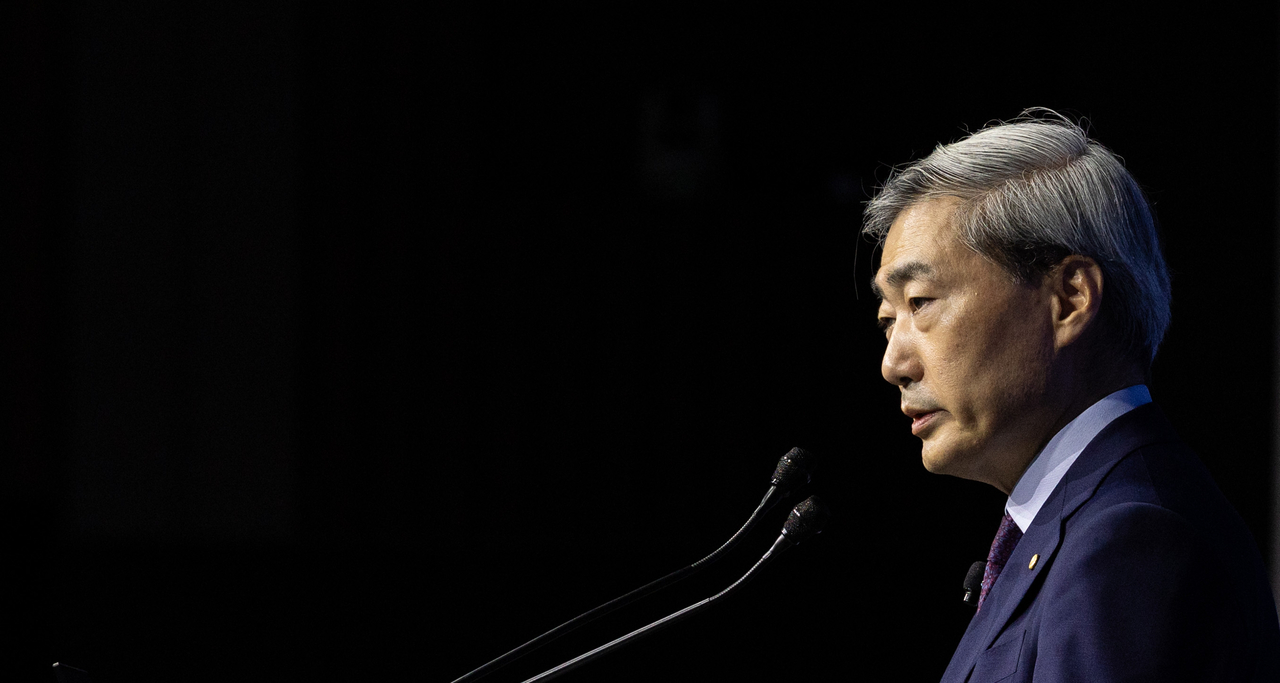
Bank of Korea Governor Shin Hyun-song will deliver his first National Assembly briefing on Thursday, with attention focused on what message he will send about the won-dollar exchange rate, which has been hovering above 1,500 won.
According to financial and political circles Monday, the National Assembly's Committee on Finance and Economic Planning will hold a plenary session Thursday morning and receive briefings from the Bank of Korea, the Ministry of Planning and Budget, and the Korea Minting and Security Printing Corp., among others. Shin is expected to attend and present an overview of the central bank's operations.
The persistently elevated exchange rate is expected to dominate the session. The average won-dollar rate in the first half of this year — based on weekly closing prices — came to 1,484.6 won, the highest first-half average since the 1,493.1 won recorded during the 1998 financial crisis. It is also 133.5 won above the level seen during the global financial crisis.
The rate closed above 1,500 won for 34 consecutive trading days through Friday, the second-longest such streak on record after the 49 consecutive trading days logged in late 1997 and early 1998 during the financial crisis.
Some in the financial sector have raised the possibility that the high exchange rate environment could persist. In a recent report, Park Hae-sik, a senior research fellow at the Korea Institute of Finance, said the won-dollar rate has shifted upward to the 1,400-won range since 2024 and that the elevated rate trend is likely to continue through next February.
Shin has consistently dismissed the risk of the high exchange rate tipping into a financial crisis, but has taken a hard line on what he describes as structural herding in the currency market. At his confirmation hearing in April, he said the exchange rate had "remained at a considerably high level over the past several months" and noted heavy off-balance-sheet derivatives trading as a source of a "tail wagging the dog" dynamic. At his first Monetary Policy Board press conference in May, he said he would respond "very decisively" to exchange rate herding and vowed not to tolerate it.
He is expected to strike a similar tone at Thursday's briefing. With the foreign exchange market having moved to 24-hour operations Monday, Shin may also outline a medium- to long-term vision for reducing exchange rate volatility through won internationalization.
Monetary authorities launched round-the-clock won-dollar trading through brokerage firms Monday, expanding operating hours from the previous window of 9 a.m. to 2 a.m. the following day to a continuous session running from 6 a.m. Monday through 6 a.m. Saturday. The expansion is partly aimed at curbing exchange rate herding by drawing speculative offshore trades — which had previously taken place after the market closed — into the onshore market.
An offshore won settlement system is also set to be established next January. The system would allow foreign financial institutions to open won-denominated accounts in South Korea and directly hold, raise and settle funds in won. A new settlement network operating around the clock would enable won-based transactions even during overnight hours.
Shin has repeatedly emphasized won internationalization since taking office. In his inaugural address, he said the central bank would pursue 24-hour foreign exchange market operations and the construction of an offshore won settlement system to bring the accessibility and stability of foreign exchange transactions up to international standards, adding that the moves would promote won-based capital and real-economy transactions and contribute to the stable development of the foreign exchange market. At the European Central Bank Forum on June 1 (local time), he said the bank was also exploring ways to link Project Agora with a digital currency system to process foreign exchange and securities settlements in a single transaction, lowering costs and broadening the international use of the won.
kimstar@heraldcorp.com