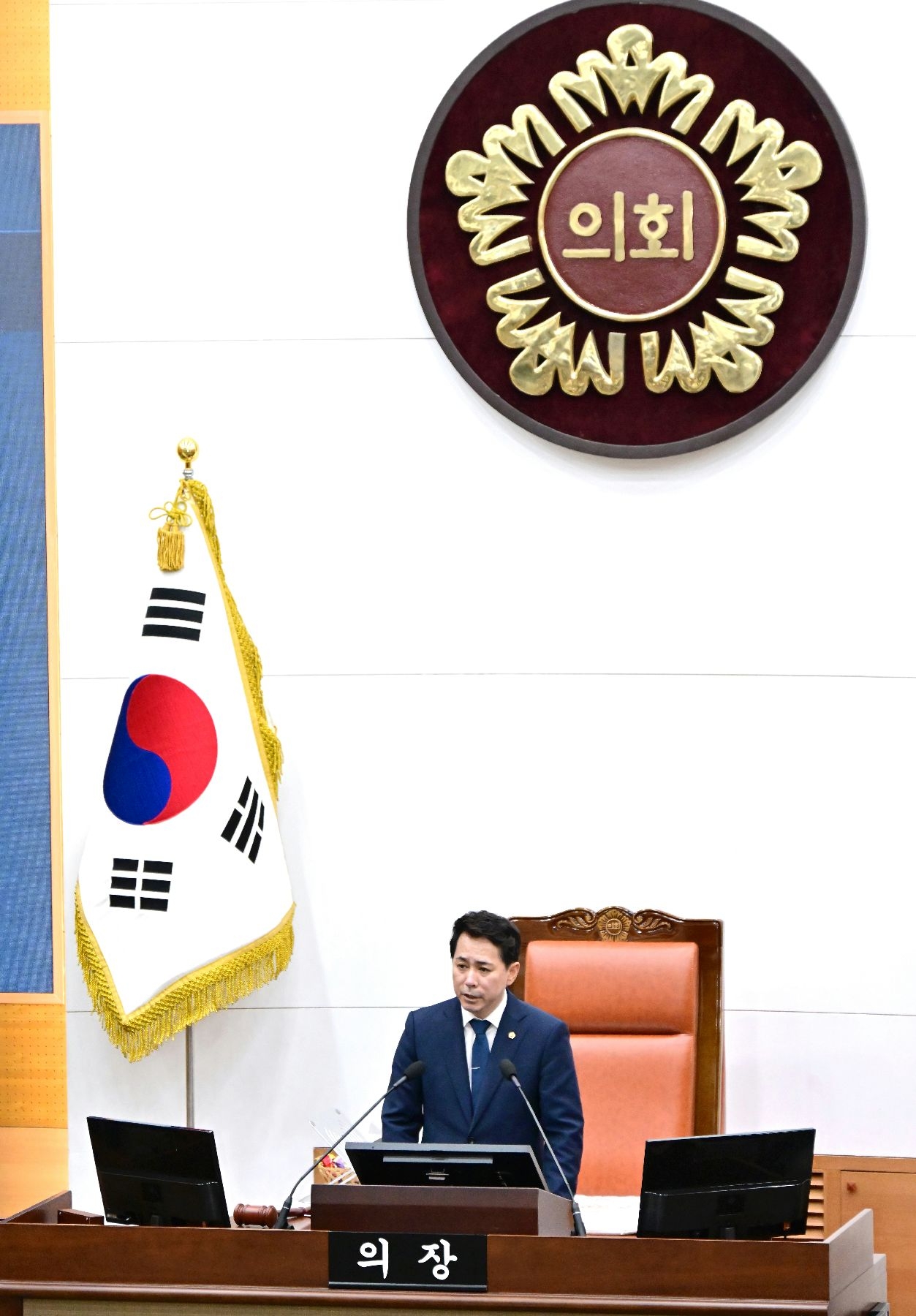
Seoul has its youngest-ever city council speaker. Im Man-gyun, a three-term lawmaker aged 48, was elected to lead the Seoul Metropolitan Council, which represents the capital's 10 million residents, taking on one of the weightiest roles in local government.
The Seoul Metropolitan Council reviews and approves the city's annual budget — which exceeds 50 trillion won ($32.8 billion) — and serves as a check on the city administration. The speaker is responsible not only for running the assembly but also for managing cooperation with the Seoul Metropolitan Government and mediating between the ruling and opposition parties, making the post anything but light.
The election process itself drew considerable attention. Six of the Democratic Party of Korea's 80 council members entered the primary for the first-half speaker's seat, with heavyweights including five-term lawmaker Kim Ki-deok and four-term lawmaker Kim In-je among the competitors. Im's victory as a three-term member defied expectations and generated hopes for a new style of leadership.
Im previously served as chair of the Environment and Water Resources Committee during the second half of the 11th Seoul Metropolitan Council, building up his legislative experience.
Immediately after his election, he said he felt "a heavy sense of responsibility rather than joy." He added that he would "uphold principles and work through mutual communication to find common ground, especially when interests diverge."
He said the public's intent behind creating a council where the opposition holds a majority was a call to "restore what a council should truly be." He pledged to build "a strong and capable assembly that decides when to stop and when to move forward based solely on the interests of citizens — not unconditional opposition, unconditional cooperation, unconditional checks, or unconditional silence." He also promised to "focus on choices that revive people's livelihoods, decisions that protect safety, and investment that opens the future."
Yet Im faces a difficult challenge almost immediately.
The first issue to test him is whether to advance an ordinance providing a legal basis for budget support to TBS, the city-funded broadcaster. The Democratic Party plans to push the measure through, while the Seoul Metropolitan Government has maintained a cautious stance on fiscal support.
On Tuesday, coinciding with the council's opening ceremony, the TBS labor union held a rally outside the assembly building urging passage of the ordinance. With 80 seats, the Democratic Party holds more than the two-thirds of all members required for a re-vote override. In theory, even if Mayor Oh Se-hoon exercises his veto, the council could override it.
In practice, however, the situation is more complicated. The authority to allocate and disburse funding contributions rests with the Seoul Metropolitan Government, meaning passage of the ordinance alone would not resolve the issue. Without a realistic agreement reached through cooperation between the city and the council, the conflict could drag on indefinitely.
How Im navigates the Democratic Party's demands against the city government's position is expected to be his first true leadership test. Finding a solution that citizens can accept through negotiations and mediation — rather than a hard-line approach — may well be the measure by which his political skill as speaker is judged.
On the other side stands Mayor Oh Se-hoon, who carries his own symbolic weight as the first five-term Seoul mayor and is frequently mentioned as a potential presidential contender. The structure of the situation makes it difficult for either side to simply steamroll the other.
Ultimately, whether the city and the council choose cooperation over conflict — and whether Im can demonstrate a new model of assembly leadership in the process — will be a significant variable in how Seoul is governed going forward.
Political circles are also watching Im's next moves. There is speculation that he could run for Gwanak-gu district chief, succeeding Park Jun-hee, who is barred from seeking another term due to a three-consecutive-term limit ahead of the next local elections. His performance as Seoul Metropolitan Council speaker could serve as an important milestone for his political future.
As the youngest speaker in the history of the Seoul Metropolitan Council, Im now carries on his shoulders challenges that go well beyond managing the assembly's day-to-day operations — among them, forging genuine cooperation with the city government, rebuilding public trust, and elevating the standing of local government councils.
seouldream01@heraldcorp.com