
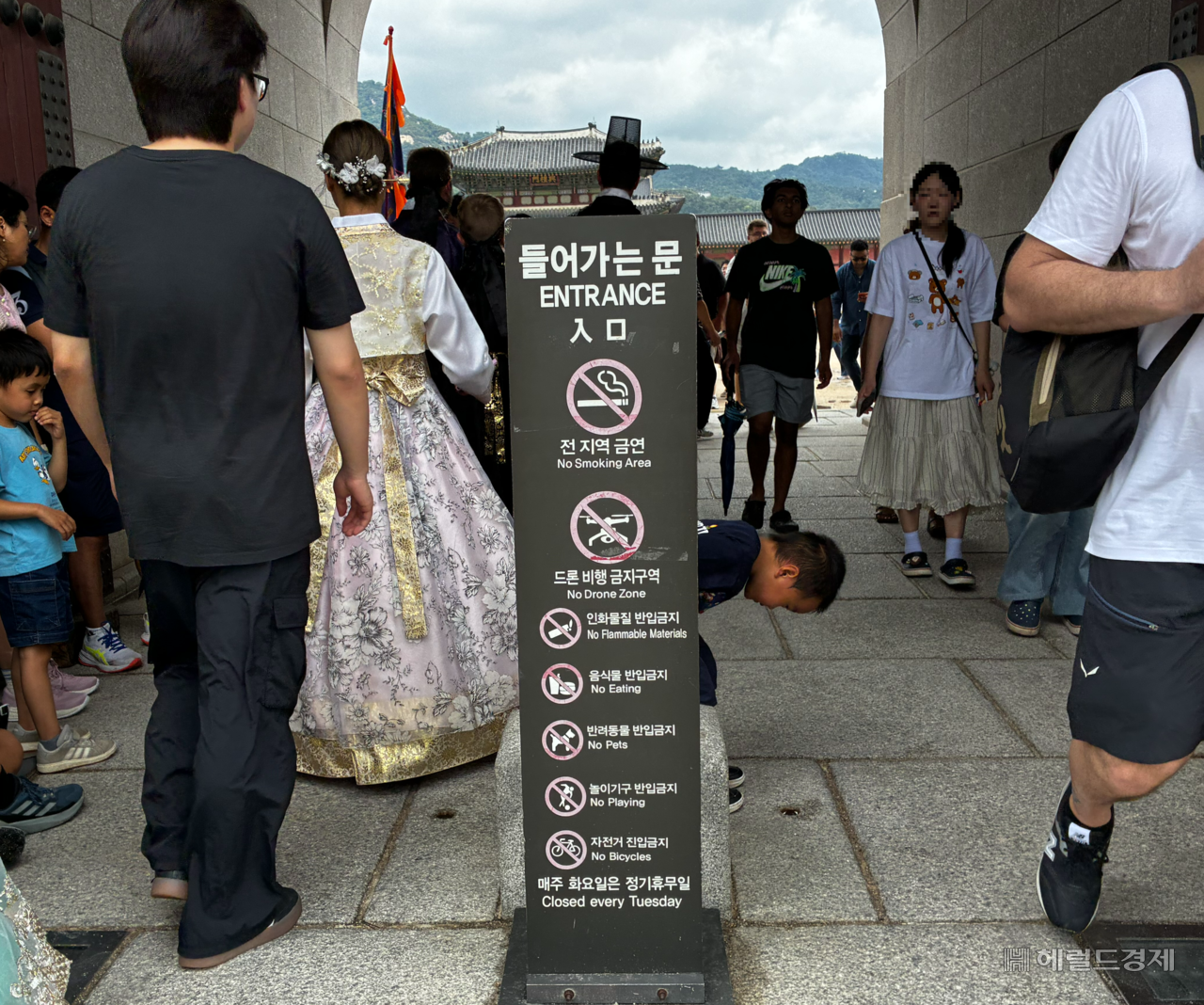
Illegal drone flights by foreign tourists near Cheong Wa Dae in Jongno-gu, Seoul, show no sign of letting up. Police have produced English-language pamphlets and banners to prevent violations, but complaints of "I didn't know" keep coming — fueling calls for a fundamental overhaul of how the rules are communicated. This year, reports filed in just the first half already rival the full-year total, adding to the enforcement burden.
A roughly 6.5-kilometer radius centered on Cheong Wa Dae in Jongno-gu is designated a no-fly zone (P-73). No drone, regardless of type or weight, may be flown there without prior approval. Yet because the area concentrates cultural heritage sites — Gyeongbokgung Palace, Bukchon and Cheong Wa Dae itself — foreign tourists are repeatedly caught flying drones there.
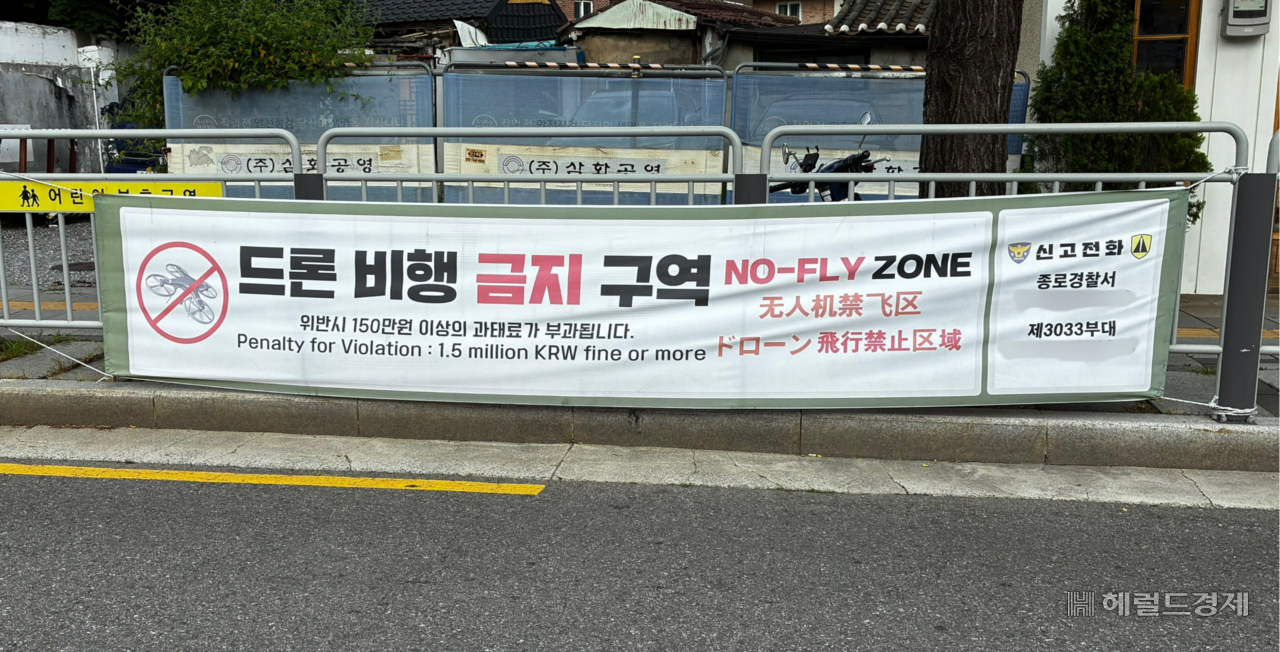
The Jongno Police Station recently produced its own English-language pamphlets and distributed them to precinct stations under its jurisdiction. Working with the military, it also installed banners prohibiting drone flights at key points near Cheong Wa Dae. Even so, reports continue to come in from the field.
According to the Jongno Police Station, a total of 96 drone-related emergency calls were logged through the end of June this year — 14 in January, 7 in February, 29 in March, 19 in April, 11 in May and 16 in June. A Jongno station official said the annual average used to be around 100 cases, but reports have been on a steady upward trend recently, driven in part by growing tourist numbers.
One drone, five precincts scrambled
For police stations and precinct offices near Cheong Wa Dae, reports of illegal drone flights by foreigners have become routine. An officer at one precinct in Jongno-gu said foreign visitors are drawn to Gyeongbokgung Palace and the hanok village and photograph them extensively. "The drones are small, so they're not easy to spot," the officer said, adding that the Capital Defense Command or Cheong Wa Dae often identifies them first and contacts police through the emergency line.
An official at a nearby district police unit said residents also file reports, but Cheong Wa Dae sometimes confirms a sighting and requests a response. "Because the drones are so small and keep moving, a single report can send four or five precinct stations out searching at the same time," the official said, adding that the station has been putting more effort into producing flyers and banners over the past two to three months.
When police receive a report of a drone in flight, they locate the operator and pass the person's details to the Seoul Regional Aviation Administration, which then issues a fine.
An officer at a precinct near Gyeongbokgung Palace said foreign visitors are frequently fined for flying drones, which is why the station produced English-language materials.
However, police said no espionage cases have been confirmed among the illegal drone flights detected so far. A Jongno station official said every case identified to date involved a drone flown for tourism purposes. "The problem is that tourists don't know the rules, so the same situation keeps repeating — fines are issued and both police and the military have to respond," the official said.
The official added that a significant number of foreign tourists leave the country shortly before or after a fine is issued, making it difficult to confirm in practice whether the penalty was ever paid.
Tourists say 'didn't know' even after no-fly zone warnings
American tourist Jacob Miller, 26, said he had watched drone footage of Gyeongbokgung Palace multiple times on YouTube and never thought it was illegal. "I didn't realize," he said, adding that he assumed YouTubers would have no trouble bringing a drone.
Taiwanese tourist Lin Zhiqing, 21, said she had watched many drone videos while planning her trip and had no idea it was illegal. "I didn't know," she said, adding that she had never seen any banners or pamphlets about it.
Laurent Moreau, 38, visiting from France, said he assumed strict rules would be in place given that it is where the president resides. "A quick search is all it takes to find out it's a restricted zone," he said.
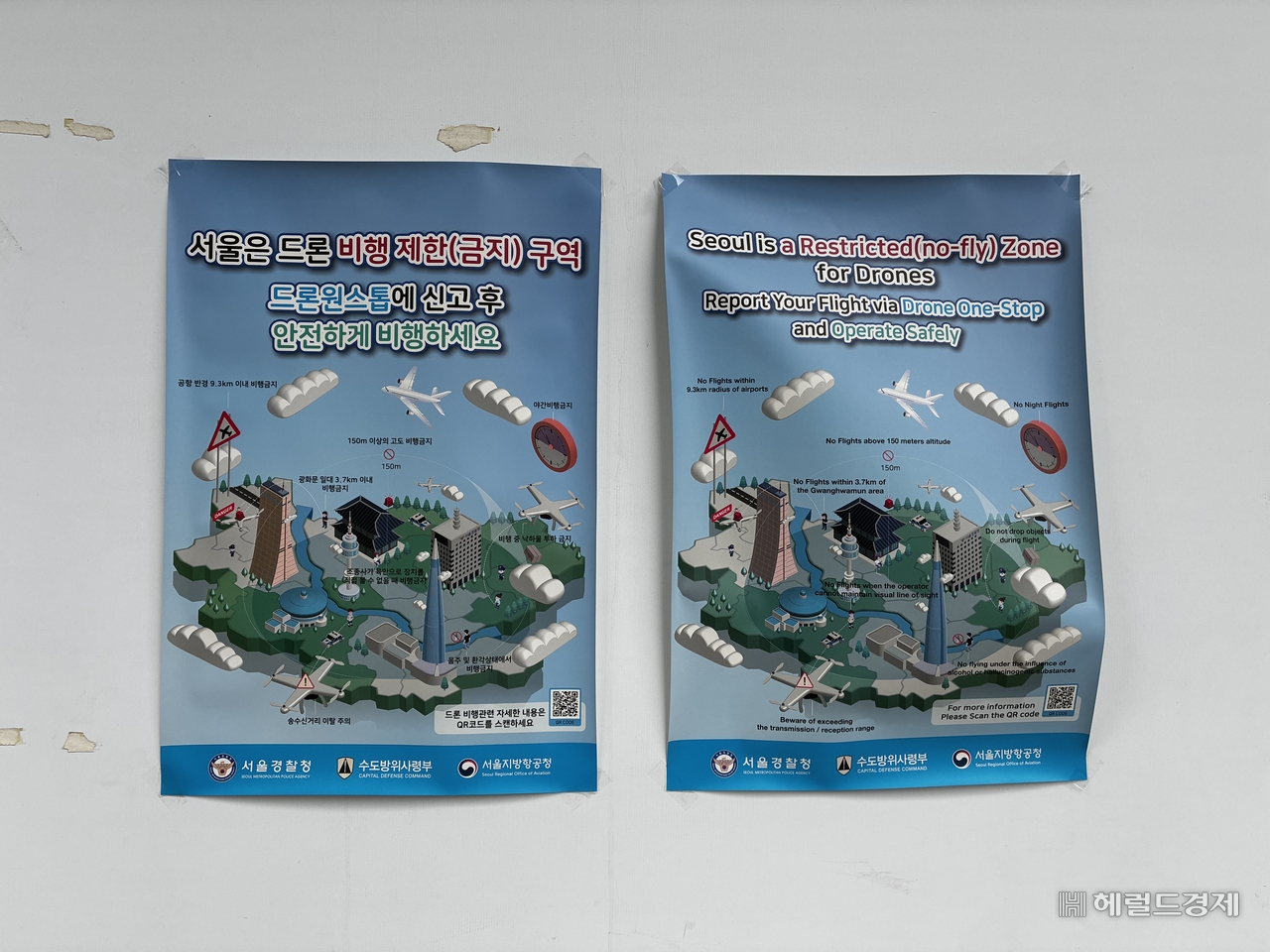
Sarah Bennett, 45, a British tourist, said she had received no information about drones at the airport or her hotel. "If this is really happening a lot, more proactive guidance is needed," she said. Nur Aisha, 32, from Malaysia, said she wished there were more prominent signs in areas with heavy tourist foot traffic.
In practice, the no-drone notice at the Gyeongbokgung Palace entrance was printed in small text and easy to miss, and no separate signage could be found along the main routes leading through the palace grounds or toward Cheong Wa Dae. Banners were only spotted near Cheongun Police Substation in Jongno-gu.
A Jongno station official said that for now, installing more banners and producing more materials is the best available option, but added that the most effective approach would be to inform visitors about drone no-fly zones at the airport upon arrival.
Lee Jun-gon, an emeritus professor in the defense acquisition program at Konkuk University, said the anti-drone response system needs to be strengthened to account for the possibility of malicious drones disguised as tourist equipment. Briefing visitors on the relevant rules at the point of entry would also be effective, he said, but discussions about which agency should be responsible must happen alongside that.
jookapooka@heraldcorp.com
snsd@heraldcorp.com





