A homebuyer identified only as A signed a contract to purchase an apartment in the Greater Seoul area for around 1.4 billion won ($957,000), with the final payment due at the end of October. Since Wednesday evening, he has barely slept. He had planned to finance more than 550 million won of the purchase through a mortgage, but KB Kookmin Bank abruptly announced it would cap loans at 300 million won. "I've already paid more than 100 million won in earnest money," he said. "I can't afford to lose that deposit, so I'm now looking into third-tier lenders — loan sharks — whose interest rates are three to four times higher."
As commercial banks are expected to tighten mortgage limits, homebuyers who stretched their finances to the limit are growing increasingly anxious. KB Kookmin Bank on Friday cut the maximum mortgage loan limit for home purchases in the Greater Seoul area and regulated zones from 600 million won to 300 million won. The bank imposed stricter lending standards on its own, going beyond the maximum limits set by financial regulators.
Industry insiders say buyers and prospective buyers in Seoul's outer districts — where properties priced at 1.5 billion won or less are concentrated — will bear the brunt of the tightening if banks continue to reduce mortgage limits. Since the government's Oct. 15 measures, home prices in Seoul have continued to rise, particularly in outlying areas. A sharp drop in jeonse supply across Seoul, driven by tighter owner-occupancy requirements, pushed more renters toward buying — and those outer-district properties had been eligible for loans of up to 600 million won.
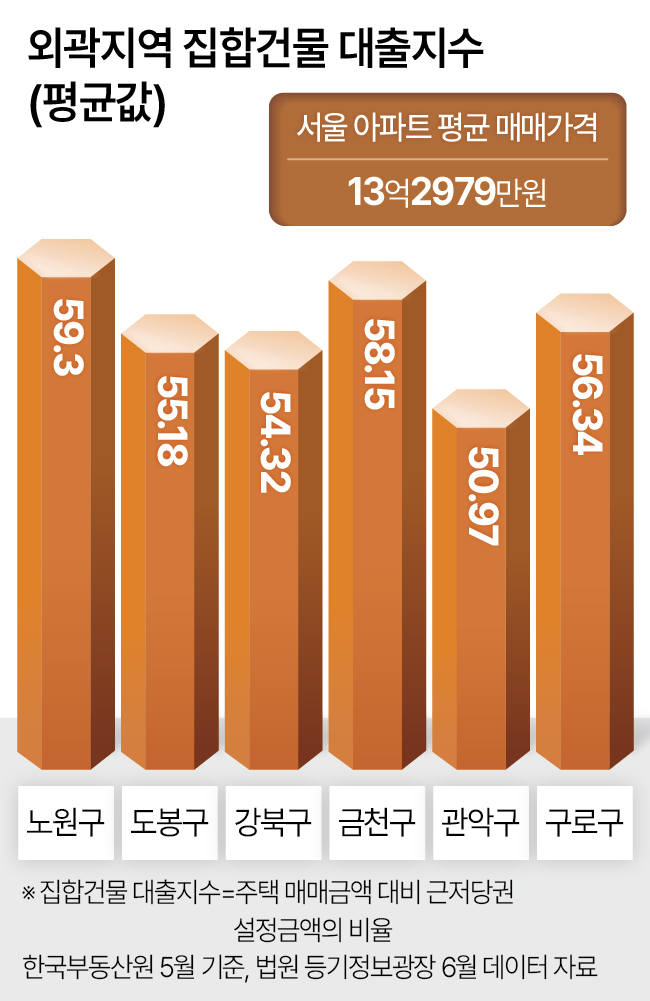
According to the Court Registry Information Plaza, the collective building loan index (average value) for Seoul's Nowon, Dobong and Gangbuk districts — known as "Nodo-gang" — and the Geumcheon, Gwanak and Guro districts — known as "Geumgwan-gu" — areas where mid-to-low-priced apartments under 1.5 billion won are concentrated, stood at an average of 55.71 as of June. That means buyers in those areas rely on loans for nearly half the purchase price.
People who had structured their financing around the previous 600 million won cap now find themselves scrambling overnight to secure hundreds of millions of won from other sources. In outer districts, where prices have been rising quickly, cases are already multiplying in which the effective loan limit has fallen from 600 million won to 400 million won. Demand has flooded into apartments priced at or below 1.5 billion won — the threshold under KB's market price standard — pushing those properties' prices up and eroding loan-to-value headroom.
According to the Korea Real Estate Board, the average sale price of a Seoul apartment as of May stood at 1.33 billion won, up 152.61 million won from a year earlier. As the equity required to buy a home grows while loan limits shrink, buyers are expected to be forced either to scramble for funds at unfavorable terms or to settle for lower-quality housing.
Buyer B, who has a final payment due at the end of November on a Seoul apartment, said he had signed the contract expecting a 500 million won mortgage. "I'm in talks with the seller about whether we can move the closing date up," he said. "I had planned to apply for the loan at the earliest in late August, and now I've been hit out of nowhere."
Some buyers are already trying to reschedule their closing dates over loan concerns. Buyer C said her final payment is due at the end of September and her loan consultant advised her to change the date. "The seller says only a delay is possible, so I'm confused about what to do," she said.
Sellers, too, now face a worst-case scenario they must account for: a buyer whose financing falls through and who cannot make the final payment.
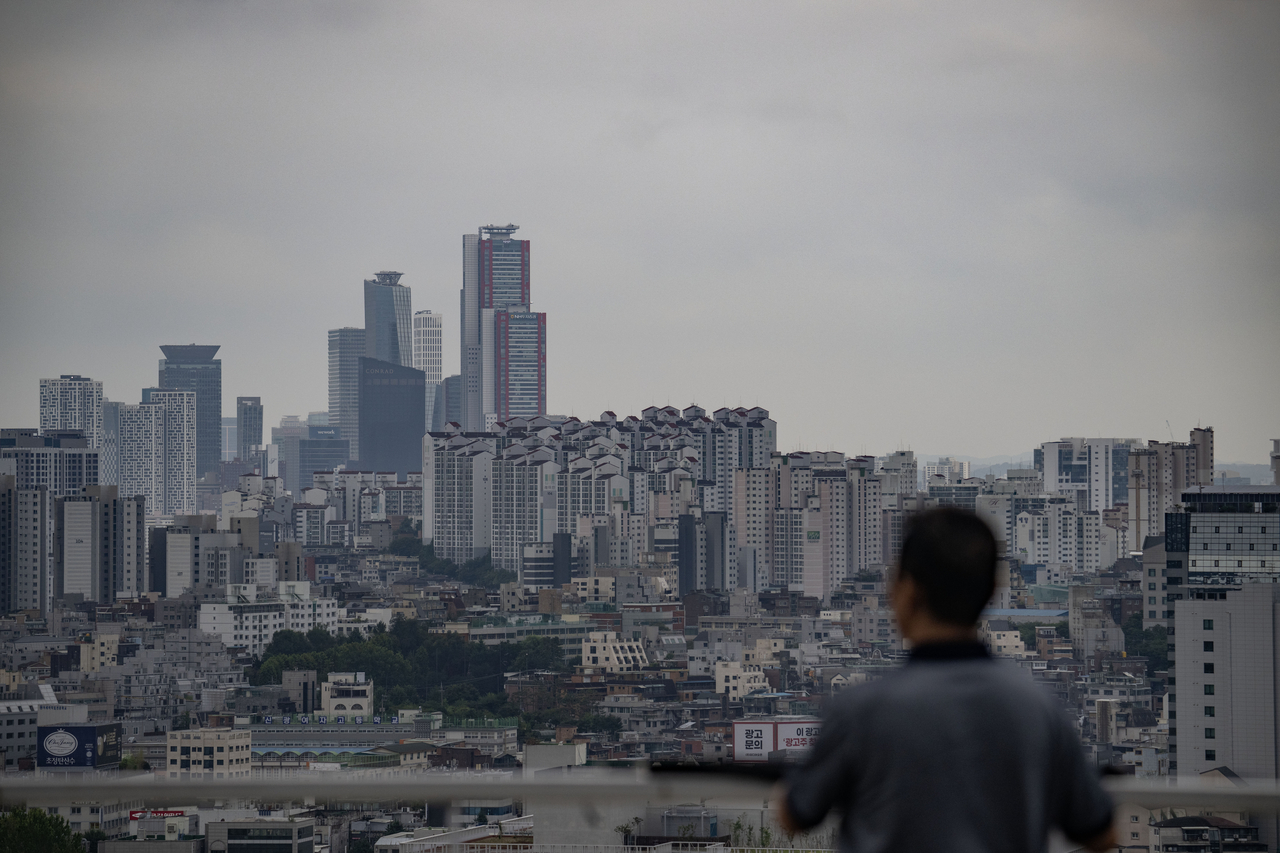
![A view of Seoul's residential neighborhoods as seen from N Seoul Tower on Namsan [Herald DB]](https://wimg.heraldcorp.com/news/cms/2026/07/10/news-p.v1.20260630.39fdba18aa634b1a83feb42bb465e103_P1.jpg)
Industry insiders say the mortgage cutbacks will affect not only buyers but also sellers who had been considering upgrading to a new home, potentially reducing the supply of available listings further.
Yoon Ji-hae, head of the research lab at Real Estate 114, said prospective buyers who find themselves short on funds will have little choice but to consider switching to non-apartment housing types or adjusting their target size or location. "For single-homeowners who need to sell before they can move to their next home, a freeze on transactions means fewer listings on the market and could spread anxiety across the housing market as a whole," she said.
Some analysts, however, say the loan cap reduction will not immediately translate into falling home prices. Ham Young-jin, head of the real estate research lab at Woori Bank, said transaction volumes could decline in areas that had seen particularly strong price gains — such as Gwangmyeong and Guri in Gyeonggi Province and Yongin's Suji district. He added that areas and unit sizes where buyers can tap alternative financing such as corporate in-house loans or the Bogeumjari loan program are likely to sustain demand and keep prices relatively firm.
hope@heraldcorp.com