
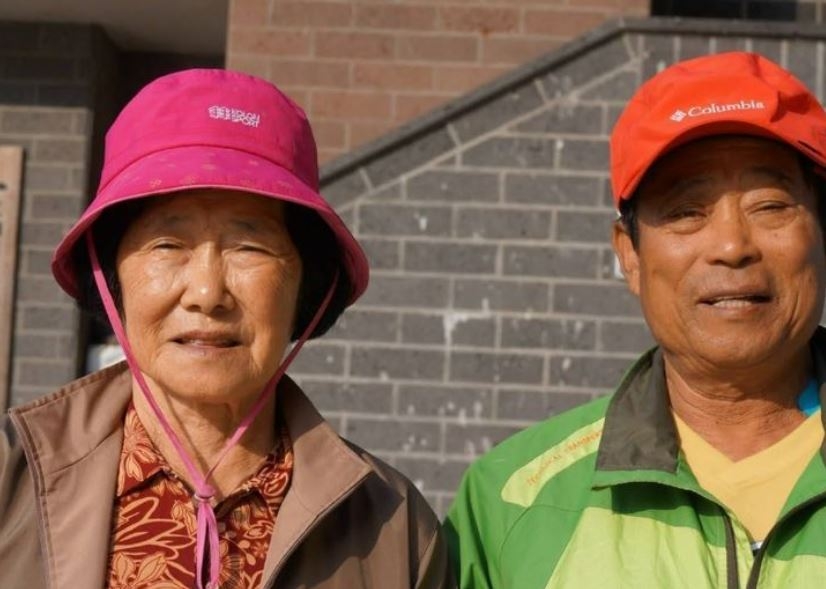
A dispute has erupted between the family of the late Kim Sin-yeol — Dokdo's last registered civilian resident — and local administrative authorities over the residential quarters she occupied on the islets. The family says the deceased was shown no basic courtesy after a lifetime of guarding Dokdo, while authorities maintain they followed standard legal procedures for managing state-owned property. With neither side backing down, both the restoration of the quarters and the process of selecting a new resident have come to a standstill.
The Dokdo Management Office under Ulleung-gun sent the family a formal notice in April requesting that personal belongings left in the residential quarters be removed by May 30, according to Newsis. The office said the permit to use the quarters had expired upon Kim's death and that restoration procedures were required under law.
The family, however, takes issue not with the procedure itself but with how it was handled. Kim's daughter posted the notice on her Facebook page, criticizing authorities for sending "a cold, impersonal form letter without a word of condolence or respect" to the family of someone who had spent her life guarding Dokdo. "I will no longer stay silent as the life and sacrifice of the person who guarded Dokdo for a lifetime are forgotten and the dignity of her family is stripped away," she wrote.
The Dokdo Management Office said it had consulted with the family multiple times before sending the notice.
"When the family applied to visit Dokdo for the 49th-day memorial rite, we called them directly and asked about their plans for clearing out the belongings, but they said they had no intention of doing so," an office official said. "We then sent the formal notice and also conveyed that we would provide as much administrative support as possible during the removal process."
According to the office, the residential quarters are administrative property owned by the Ministry of Oceans and Fisheries. With the permit having lapsed upon Kim's death, the office said it is proceeding with restoration under laws governing state-owned assets. It added that it had given advance notice and an opportunity to submit written opinions, but the family did not submit any.
Authorities are now pursuing administrative enforcement, having issued a restoration order and a warning notice. They said, however, that the belongings would not be disposed of arbitrarily.
"If administrative enforcement proceeds, the items will be packed in boxes, stored, and then handed over to the family," the official said. "The process will be one of returning the belongings, not discarding them."
The dispute has grown beyond a question of clearing out a residence into a broader debate over how far Dokdo's symbolic significance, state recognition, and administrative procedure can be reconciled. Competing voices call for strict adherence to legal process on one side, and for symbolic consideration toward the last person to have guarded the islets on the other.
As the standoff continues, follow-up steps have effectively stalled. The office says it cannot review whether to select a new resident until the quarters are restored and the facility is refurbished. If the conflict drags on, Dokdo could remain without a registered civilian resident for the foreseeable future.
Kim Sin-yeol, Dokdo's last civilian resident, died in March at the age of 88. Together with her late husband Kim Seong-do, she had lived on the islets from the late 1960s, fishing and running a small lodging business. After gaining official resident registration in 1991, she became known as Dokdo's most prominent permanent civilian inhabitant, casting her ballot from the islets in various elections.
Kim Seong-do died in 2018, and with Kim Sin-yeol's passing, Dokdo now has no registered civilian residents — a situation not seen since 1981, roughly 40 years ago.
Twenty-four people currently live on Dokdo in an official capacity — members of the Dokdo Guard unit, lighthouse keepers, and Dokdo Management Office staff — but none holds civilian resident registration.
Given Dokdo's deep symbolic importance as South Korean territory, many argue that the handling of the quarters and the selection of a future resident must go beyond routine administration and account for the islets' historical and symbolic weight. How to balance the legal legitimacy of administrative procedure with appropriate social recognition for the last person to have called Dokdo home remains the central question at the heart of this dispute.
rainbow@heraldcorp.com





