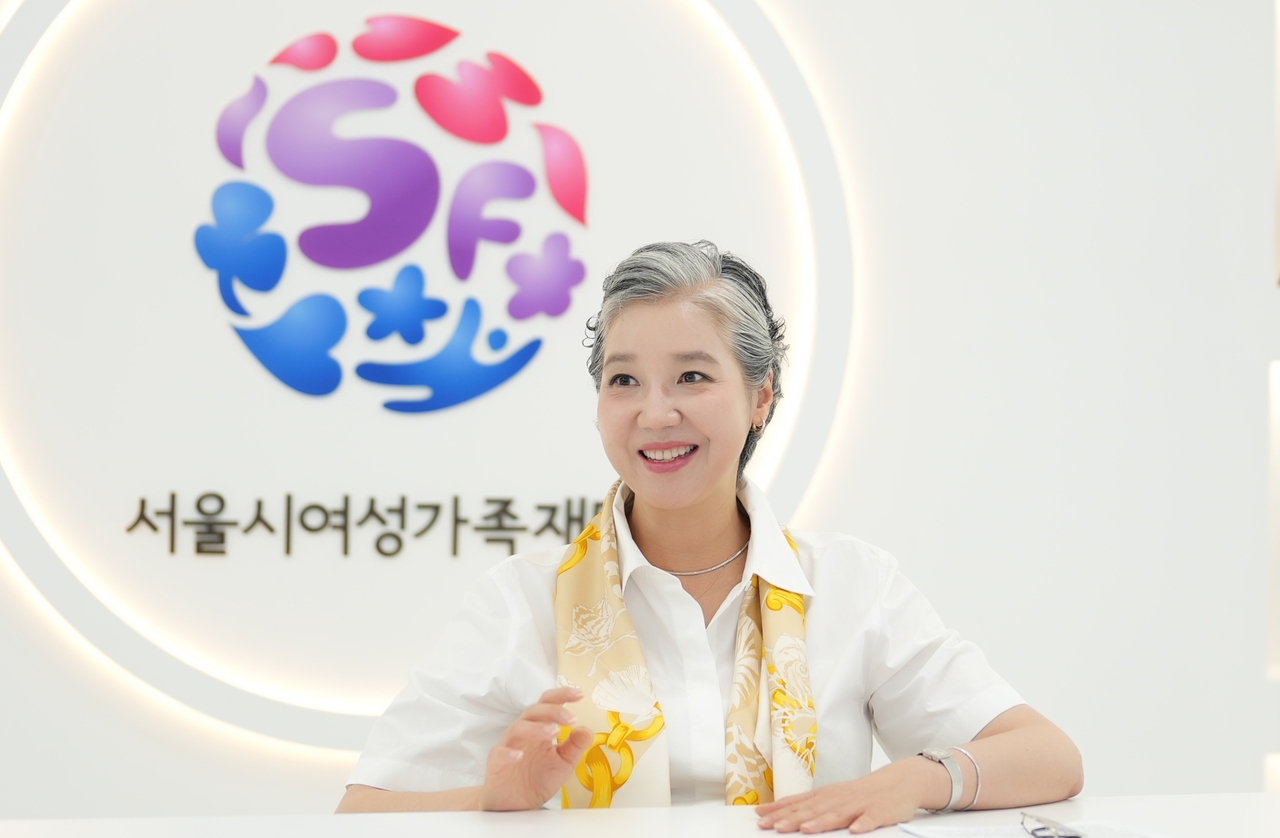
The Seoul Foundation for Women and Family has made responding to the low birth rate, expanding women's economic participation, strengthening care systems and building a civic safety net its core priorities, working to sharpen the policy impact of each. The foundation plans to reinforce its role as a platform connecting research, field programs and policy, approaching the wide range of challenges facing women and families from an integrated perspective rather than through isolated policies.
Halfway through her term, CEO Park Jeong-suk described the foundation's core value in an interview Friday as "creating real change close to citizens' lives." She said policy only becomes meaningful when it moves beyond institutions and plans to something citizens can feel in their everyday lives.
Under that vision, the foundation is focused on building an urban environment where women and families can work and provide care with stability, and live safely. Park said she pays particular attention to the close connections among women's economic activity, care, safety and gender-equality culture — noting that a supportive work environment is a prerequisite for sustainable caregiving, and that only when society shares the burden of care does having and raising children become a genuine choice.
Smart Women Project draws praise as a landmark policy
The foundation is currently advancing its major programs under the Smart Women Project. Its flagship initiatives include Smart Job, which supports women's career transitions and work-life balance; Smart Care, which goes beyond childcare to support children's overall development; Smart Safety, which underpins the safe daily lives of women and families; and Smart Governance, which strengthens inter-agency cooperation and resource linkages.
Park said the policy environment for women and families is changing rapidly. She said the low birth rate is a structural challenge that cannot be solved by birth-incentive policies alone, and that progress on jobs, housing, care, work-life balance and shifts in social and cultural attitudes must all happen together. She added that family structures are also diversifying, and that new risk factors — including deepfake content, digital sex crimes and stalking — are on the rise.
Amid these changes, the foundation serves as a specialist institution linking research, implementation and evaluation to broader dissemination. It is concentrating its efforts on building a virtuous cycle in which citizens' needs identified in the field are developed into policy research, translated into programs and then fed back into policy improvements.
Through an organizational restructuring, the foundation has more clearly defined two pillars: responding to the low birth rate and spreading the value of gender equality. On the low birth rate side, it is strengthening a comprehensive response system that connects childbirth and child-rearing, women's economic activity, work-care balance and childcare. On the gender equality side, it is linking policy development, violence prevention, victim support and civic participation programs so that gender-equality values can take natural root in everyday life.
Programs addressing the low birth rate are also expanding. The foundation is advancing initiatives that citizens can feel directly, including a work-life balance points program for small and medium-sized enterprises in Seoul, housing cost support for households without homes that have had children, egg-freezing procedure subsidies, and childbirth and care support for small business owners.
The foundation is also actively supporting women's career retention and re-employment through the Seoul WomanUp Project, women's economic activity support programs and the WomanAI education platform. Viewing career breaks caused by childbirth and child-rearing as closely linked to the low birth rate problem, it is working to create an environment where women can balance their careers and family lives.
In the care sector, the foundation is working to build a high-quality care environment through a range of infrastructure, including Seoul city nurseries, Woori Dongne Kium Centers, Seoul-style kids cafes and child care services. It is also actively developing content that goes beyond basic care to support the growth and development of the next generation.
Supporting women's economic activity is another key priority. Through the Seoul WomanUp Project and the Seoul CareerUp Project, the foundation supports women with career experience in re-entering the labor market, and this year expanded eligibility to include women in their 50s.
The foundation also operates the WomanAI education platform to help women build the skills needed in an era of AI transformation, investing in digital capacity building. As AI adoption spreads across industries, it is strengthening its support system so women can adapt to the changing labor market and secure new opportunities.
Park said expanding women's economic participation requires viewing career breaks not as an individual problem but as a structural one. Women find it difficult to sustain their careers when the burdens of childbirth, child-rearing and family care fall on specific individuals, she said, so re-employment support must be accompanied by improvements in corporate culture and the creation of a work-life balance environment.
Through the work-life balance points program for small and medium-sized enterprises and a program to foster child-friendly corporate cultures, the foundation is also working with businesses to spread a culture of work-care balance.
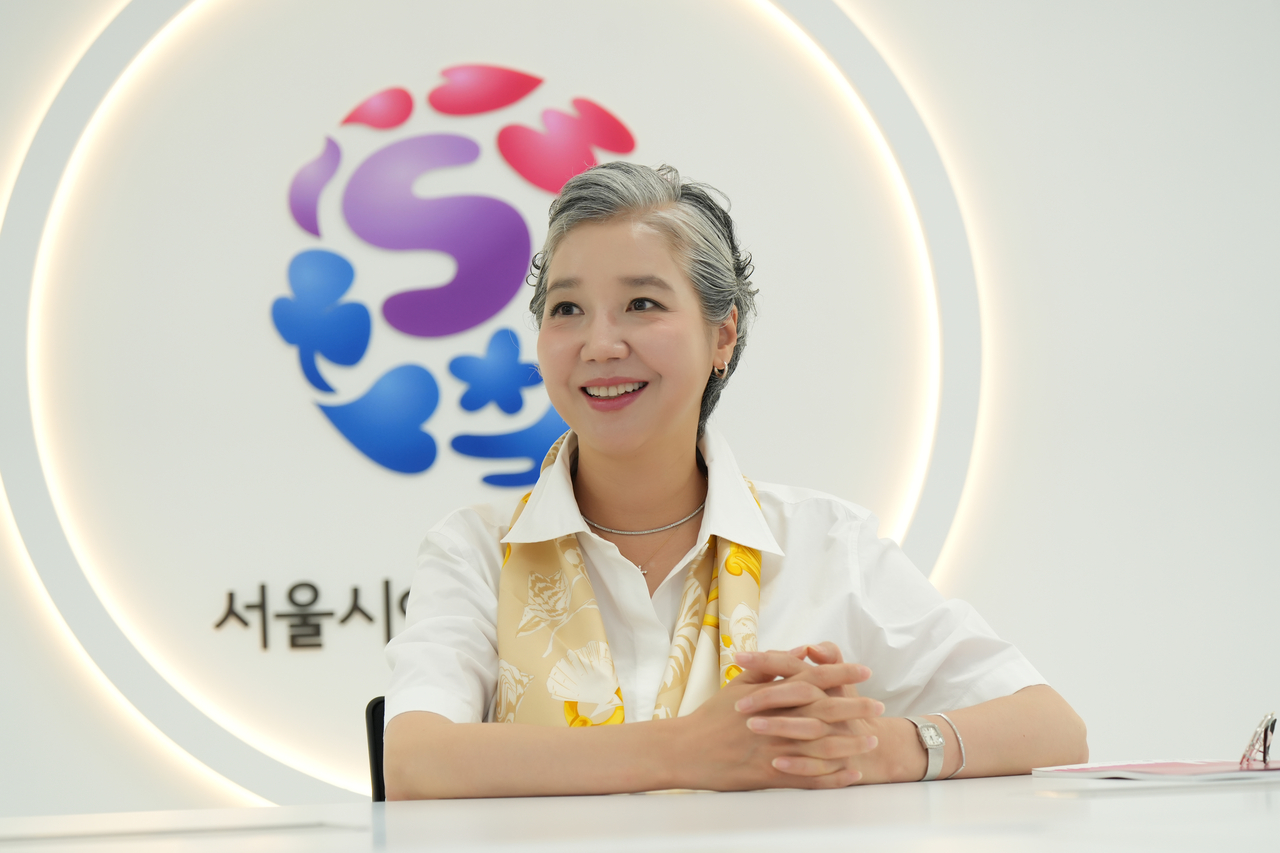
Building a social safety net, including support for digital sex crime victims
In the area of safety, strengthening the capacity to respond to complex forms of harm — including stalking, intimate partner violence and digital sex crimes — has emerged as a key challenge.
Park said the types of crimes that have recently gained social attention are often interconnected, amplifying the harm they cause. As new forms of crime continue to emerge with advances in digital technology, she said, existing laws and systems must be applied flexibly to ensure no gaps arise in victim support.
The foundation currently runs programs supporting victims of digital sex crimes, violence prevention education and recovery assistance. It plans to continue strengthening its capacity for proactive responses to new types of crime and to further develop a victim-centered support system.
The foundation's medium- to long-term goal is to establish itself as a "work, care and safety support platform" for women and families. Rather than addressing the challenges women and families face in isolation, it aims to build an integrated policy model that views jobs, care, safety, housing and community as one interconnected ecosystem.
To that end, the foundation plans to expand policy outcomes across the four areas of the Smart Women Project and further strengthen inter-agency cooperation. It also intends to develop Seoul Women's Plaza and Seoul Family Plaza into spaces where citizens can directly experience policy and culture, making them hubs for policy delivery.
Building a structure in which research, programs and policy are organically connected — so that field needs translate into policy and policy outcomes are reflected back in citizens' lives — is also a key goal.
Park said the foundation must establish itself as an institution that creates real change close to citizens' lives. The plan, she said, is to view the difficulties faced by women and families not as isolated problems but as challenges spanning all aspects of life, and to create change that citizens can feel by organically connecting research, policy and field programs.
Park said the foundation will grow into a Seoul-style integrated platform encompassing work, care and safety for women and families. She added that the foundation's role is to create an environment where any citizen can get help when needed, try again and enjoy a safe daily life.
"The value of policy ultimately depends on how much it improves citizens' daily lives," Park said. "The Seoul Foundation for Women and Family will listen more closely to citizens' voices, grounded in the values of work, care, safety and equality, and do its utmost to build a Seoul where women and families are respected."
7toy7@heraldcorp.com