'Politics must ultimately be proven' — Kim focuses on improving Seongdong-gu's education environment
21.9 billion won secured for school upgrades; Muhak Girls' High School to go coeducational
New middle school planned for Wangsimni New Town; goal is a city residents never have to leave for education
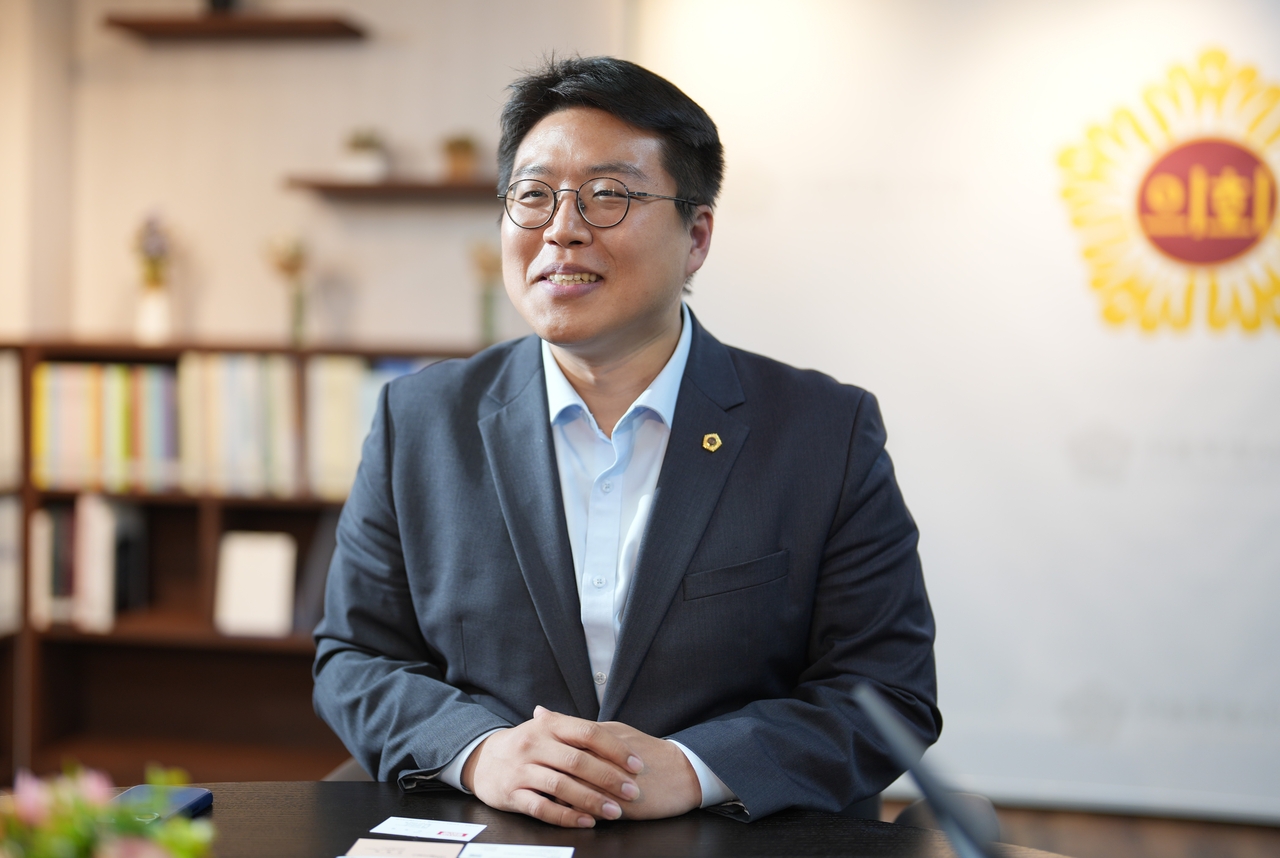
The results of politics must be proven in the daily lives of citizens. Campaign pledges become meaningful only when they are translated into concrete policies and systems — and when those changes reach the people they were meant to serve.
That philosophy sits at the heart of how Seoul Metropolitan Council member Kim Hyun-woo approaches his work. Connecting the mandate granted by voters to the fulfillment of promises and tangible outcomes is, in his view, the most important duty in politics.
Kim, a member of the council's education committee representing Seongdong 2 for the Democratic Party of Korea, has made improving the district's education environment his central legislative priority. His reasoning: a neighborhood with excellent transport links and housing cannot claim lasting competitiveness if families still feel compelled to move elsewhere for their children's schooling.
In an interview Thursday, Kim outlined his plans for the district's major education challenges — converting Muhak Girls' High School to a coeducational institution, establishing a new middle school in Wangsimni New Town, and tackling school violence prevention, commute safety and the narrowing of educational gaps.
"Politics must ultimately be proven," Kim said, describing the faithful delivery of promises made to citizens as the most important principle guiding his work on the council.
Education shapes where people put down roots — securing Seongdong's future
The structural improvement of Seongdong-gu's education environment is the issue Kim has identified as the district's most pressing challenge.
Seongdong-gu offers strong transport access and good housing conditions, but a shortage of adequately sized high schools within the district and the absence of a middle school in Wangsimni New Town have long remained unresolved problems.
Kim has paid particular attention to the fact that some parents begin considering a move to another neighborhood as early as when their children finish elementary school, weighing options for middle and high school. The quality of local schooling, he argues, is a decisive factor in whether residents choose to stay long-term.
Kim frames the problem not simply as a lack of school facilities but as a challenge tied to the district's demographic structure, residential stability and the city's long-term viability. Only when residents have access to quality education within the district, he believes, can they settle with confidence — and can the city sustain its competitiveness over time.
The most prominent example of his push for better education conditions is the conversion of Muhak Girls' High School to a coeducational school.
The Seoul Metropolitan Office of Education finalized the plan in July, confirming that Muhak Girls' High School will go coeducational from the 2027 school year. The move is intended to address the declining school-age population and expand students' freedom to choose their school.
Kim said Muhak Girls' High School should develop into a competitive institution that honors its long history and tradition while responding to the district's evolving education needs.
However, some alumni and school community members have raised objections to the transition. Kim acknowledged that gathering a full range of voices and ensuring the policy goal of improved education conditions translates into real outcomes remains a task ahead.
Funding to improve physical conditions at schools in the district has also been secured.
The Seoul Metropolitan Office of Education's second supplementary budget for 2026 includes 56 projects totaling 21.93 billion won ($16.4 million) for school environment improvements across Seongdong-gu.
Key projects cover upgrades to aging restrooms, reinforcement of school safety facilities, and repairs to cafeteria and electrical systems. The package also includes 280 million won for facility improvements at Muhak Girls' High School — including specialized classrooms and restrooms — in preparation for the coeducational transition.
Through his work on the education committee, Kim has pushed to include projects benefiting local schools: facility upgrades at Muhak Girls' High School and Haengdang Middle School, CCTV installation at Muhak Middle School, and fire safety improvements at Muhak Elementary School. With the relevant budgets now secured, he said he will continue to monitor progress to ensure the changes are felt on the ground.
The other central challenge is establishing a new middle school in Wangsimni New Town.
Despite being a large residential development, Wangsimni New Town has no middle school within its boundaries, leaving students and parents to deal with long commutes and limited school options. Local politicians have repeatedly called for a school to be built there, but no concrete progress has been made.
Kim made the new middle school a campaign pledge and said he is working with education authorities to find a path to making it happen. He acknowledged that significant hurdles remain — including student placement and site conditions — but said he cannot ignore a demand residents have raised for years.
That local issue was also part of why he sought a seat on the Seoul Metropolitan Council's education committee. Having promised residents better education conditions, he said he wanted to oversee the relevant policies directly and pursue them with accountability.
The stable implementation of the high school credit system and closing the education gap between schools are also priorities for Kim. He believes effective measures — such as nurturing schools of appropriate size and running shared curriculum programs — are needed to ensure that students' course choices and learning opportunities do not vary based on the size of their school or where they live.
For Kim, improving the education environment is not simply about building new schools or expanding facilities. The ultimate goal, he said, is to create conditions in which students can realize their potential within the district and parents no longer feel they must move to give their children a good education.
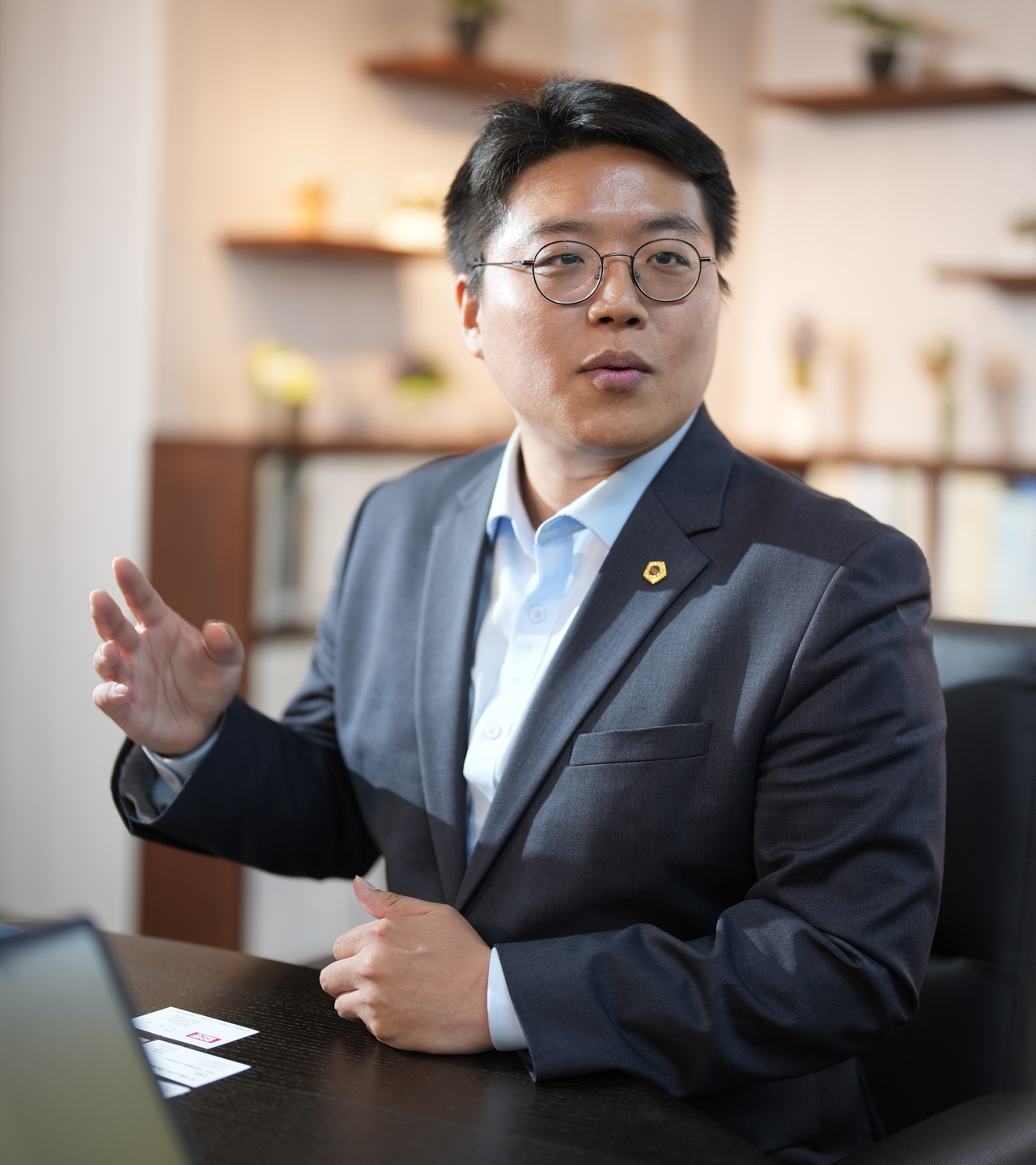
From school violence to commute safety — Kim puts students at the center
Student safety and the right to learn are the values Kim places above all else in education policy.
Schools should be places where students can learn without fear, teachers are guaranteed the right to carry out their professional duties, and parents can trust the institution, he said.
On school violence in particular, Kim said the response system must go beyond after-the-fact punishment to center on protecting and supporting victims. He noted that while related policies have been continuously refined, blind spots may still exist where the system fails to capture the full range of violent behavior occurring in schools today.
Kim also expressed concern about violent behavior patterns emerging among teenagers — including a trend known as "yacha" — warning that formal agreements can be used to obscure accountability for violence, or that power imbalances between students can be exploited to pressure victims.
With violent incidents increasingly filmed and spread online, he said schools and education authorities must respond more proactively to new forms of violence. Above all, he said, strengthening protection and recovery support is critical to ensuring that victims are not the ones who end up leaving school or dropping out.
Kim also argued that commute safety policy needs to move beyond its current approach.
Safety measures have long focused on school zones around elementary schools, but he said they must be extended to middle and high school students as well, with a system that manages the full range of routes students actually use to get to school.
Hazards along school commute routes — including side streets, intersections and public transit segments — should be addressed proactively, he said, and a management framework in which education offices and local governments share responsibility needs to be established.
Kim also stressed that the voices of students, parents and teachers must all be reflected in a balanced way when education policies are developed.
"If only one side's perspective is reflected too heavily, the result will ultimately be distorted," Kim said, warning that policies skewed toward any single group can produce unintended consequences in practice.
Students are the direct stakeholders of education policy, parents are partners who share responsibility for their children's growth and learning, and teachers are the key actors who put policy into practice at the school level, he said.
Because each group faces different realities and challenges, rational alternatives must be developed through sufficient dialogue and deliberation, he said. Moving beyond token consultation — explaining how input was actually incorporated into policy decisions and continuing to monitor outcomes after implementation — is essential, he added.
Kim said the true measure of whether an education policy succeeds is not the introduction of a new system itself, but how much tangible change students, teachers and parents actually experience in their schools.
From youth policy work to the council chamber — proving politics through ability
Kim's path into politics began with community involvement — serving on youth policy committees and participating in participatory budgeting processes.
Taking part in efforts to bring young people's voices into policy, he came to see firsthand that citizens' opinions can shift the direction of public administration, and that the content of a policy can change the lives of residents.
But he also encountered the limits of participation alone. Even the best policy proposals, he found, go nowhere without the will to accept and act on them.
That experience led him to move beyond proposing policies to choosing a path in politics where he could take direct responsibility for decisions and their implementation.
Since joining the Seoul Metropolitan Council, Kim has continued to emphasize the role of local government in connecting citizens' voices to actual systems and policies.
If national politics sets the broad direction for running the country, local politics must focus on solving the specific, everyday problems residents face, he said. Enacting ordinances, reviewing budgets and conducting administrative audits to identify gaps in public services and propose solutions the community needs — that, he said, is the essential duty of a local council.
Kim also shared his thinking on what it means to be a young politician.
The change and innovation people expect from younger politicians cannot be delivered through enthusiasm or fresh perspectives alone, he said. What is needed, he argued, is the ability to absorb the experience and wisdom of different generations and translate that into policy results.
"I think I need to show that youth is a possibility, and then prove it through ability," Kim said, expressing his determination to answer the expectations placed on young politicians with concrete results.
Kim acknowledged there is still much to learn as a first-term lawmaker. He said he is deepening his expertise by listening to the advice of more experienced council members and sharing policy ideas with colleagues.
His interest in education policy is also shaped by changes in his personal life.
Since becoming a father, he said, his perspective on education and safety has become more concrete and urgent. Raising a child has made him newly aware of everyday hazards he once overlooked, and he said he has come to understand how important it is to build a community where parents can raise their children with peace of mind.
That experience has translated into a sense of responsibility across education policy — from preventing school violence and creating safe commute environments to expanding childcare infrastructure.
Expanding community childcare resources — including publicly run kids' cafes and neighborhood childcare centers — is also something Kim identified as necessary to ease the burden on families raising children and to build a sustainable community.
The politics Kim pursues is everyday politics that protects the ordinary lives of citizens. His vision for Seongdong-gu's future is a district where families no longer have to uproot themselves for the sake of education, children can grow up safely, young people find new opportunities, and older residents are treated with respect and care.
To that end, he said he will continue his legislative work — listening more to residents and connecting the problems raised on the ground to policy and budget decisions.
The promise to transform Seongdong-gu's education environment is now in the hands-on stage of delivery. Whether Kim's vision of "politics that proves itself" succeeds will depend on the changes residents come to feel in their daily lives.
7toy7@heraldcorp.com