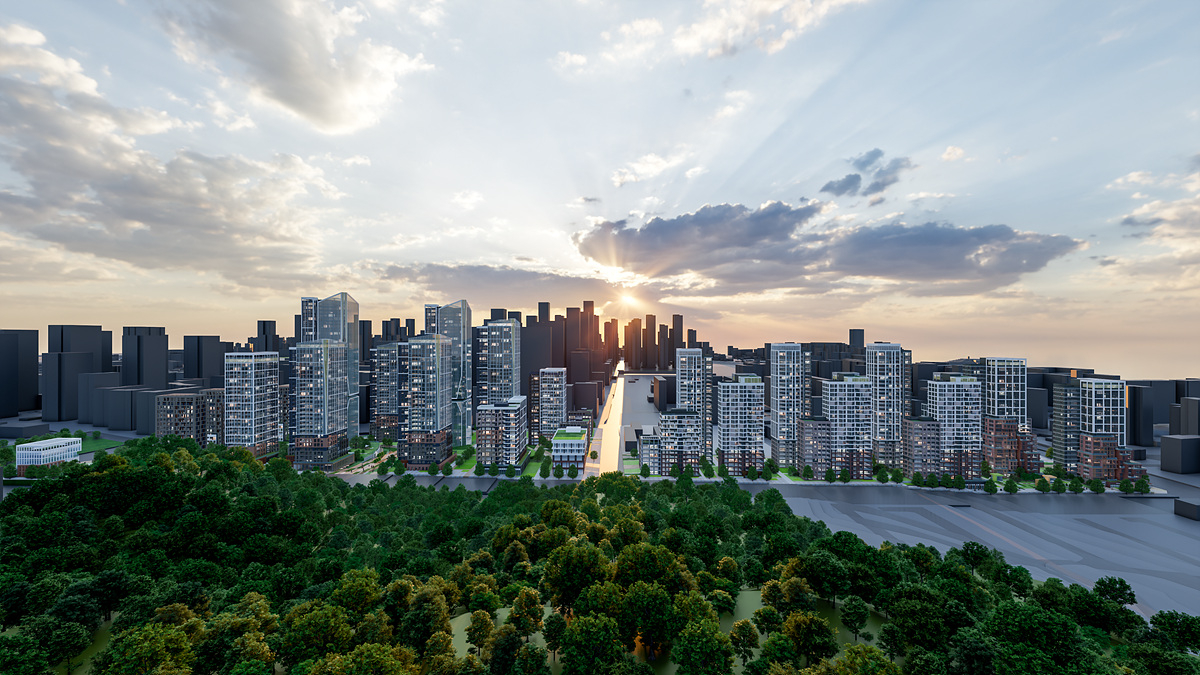
By Park Jong-il, The Herald Business Yangcheon-gu has launched a combined basic and detailed design project for sewer improvements around the Mok-dong apartment complex, as the area's large-scale reconstruction moves into full execution and the district prepares to meet sharply higher future demand for wastewater infrastructure.
The Mok-dong apartment complex, spread across roughly 2.28 square kilometers in the Mok-dong and Sinjeong-dong area, currently comprises 14 complexes and 26,629 households. Once reconstruction is complete, the development is expected to grow to approximately 47,438 households — about 1.8 times the current number — transforming the area into a mini new town. The net increase of more than 20,800 units is expected to drive a significant rise in sewage treatment demand, making preemptive infrastructure upgrades essential.
To prepare for the surge in wastewater generation from the large-scale redevelopment and for extreme rainfall driven by climate change, the district is conducting a full review of appropriate sewer capacity and drawing up a phased improvement plan.
From April 2024 through the end of last year, the district carried out a basic sewer improvement plan for the Mok-dong area. The study covered surveys and analysis of existing sewer pipes and stormwater pump stations, a review of past flooding incidents, projections of population growth and stormwater and sewage volumes after reconstruction, a reassessment of drainage and treatment zones, an analysis of current pipe conditions and problems, and the formulation of a pipe upgrade plan.
Building on that master plan, the district will invest a total of 3.2 billion won ($2.13 million) to carry out the combined basic and detailed design work from May this year through November 2027.
For stormwater pipes, the project will recalculate facility capacity to reflect the Ministry of Environment and Seoul Metropolitan Government's tightened disaster-prevention performance standards, minimizing flood damage even during heavy downpours. For sewage pipes, the district will reassess appropriate capacity in light of the increased number of households after reconstruction and revised sewer design standards.
Alongside this, engineers from five design disciplines — water and sewage, civil structures, geotechnical and geological engineering, mechanical, and electrical — will participate in the project, conducting a comprehensive review of structural safety, constructability, and maintenance efficiency.
Through this detailed design work, the district aims to finalize the direction of sewer improvements in tandem with the Mok-dong reconstruction and carry out phased construction to build a high-quality sewer system capable of stable operation for more than 100 years.
The Mok-dong reconstruction project is advancing rapidly. All 14 complexes completed their designation as improvement zones in December last year. Eight complexes pursuing a trust-based approach — complexes 1, 2, 5, 9, 10, 11, 13 and 14 — have had their project operators designated. Of the six complexes proceeding through a residents' association model — complexes 3, 4, 6, 7, 8 and 12 — five have completed association formation, and Complex 6 selected a contractor last month, marking its entry into full execution.
"The Mok-dong apartment reconstruction is a project that will determine the future of Yangcheon-gu, so even invisible infrastructure like sewers must be planned carefully to fully reflect future demand," district mayor Lee Gi-jae said. "Through this project, we will build a sewer system designed to last 100 years and create an urban environment where residents can live more safely and comfortably."
seouldream01@heraldcorp.com