
"Gangnam, full speed ahead! Residents, let's thrive! The great transformation of Gangnam!!"
That is the signature slogan Kim Hyun-gi has raised as Gangnam-gu district mayor since launching the ninth elected term.
Kim spent 20 years as a National Assembly aide and served four terms — 16 years in total — as a Seoul Metropolitan Council member, giving him broad experience in both national politics and local administration. He is widely regarded as someone who understands better than most what residents want from their local government.
Of all his priorities, reconstruction is by far where Kim is pushing hardest.
On his first day in office, he signed the "Gangnam Reconstruction Rapid Harmony (Sinhwa) Project" as his first official act, and has since taken personal charge as head of the task force, visiting sites to accelerate progress.
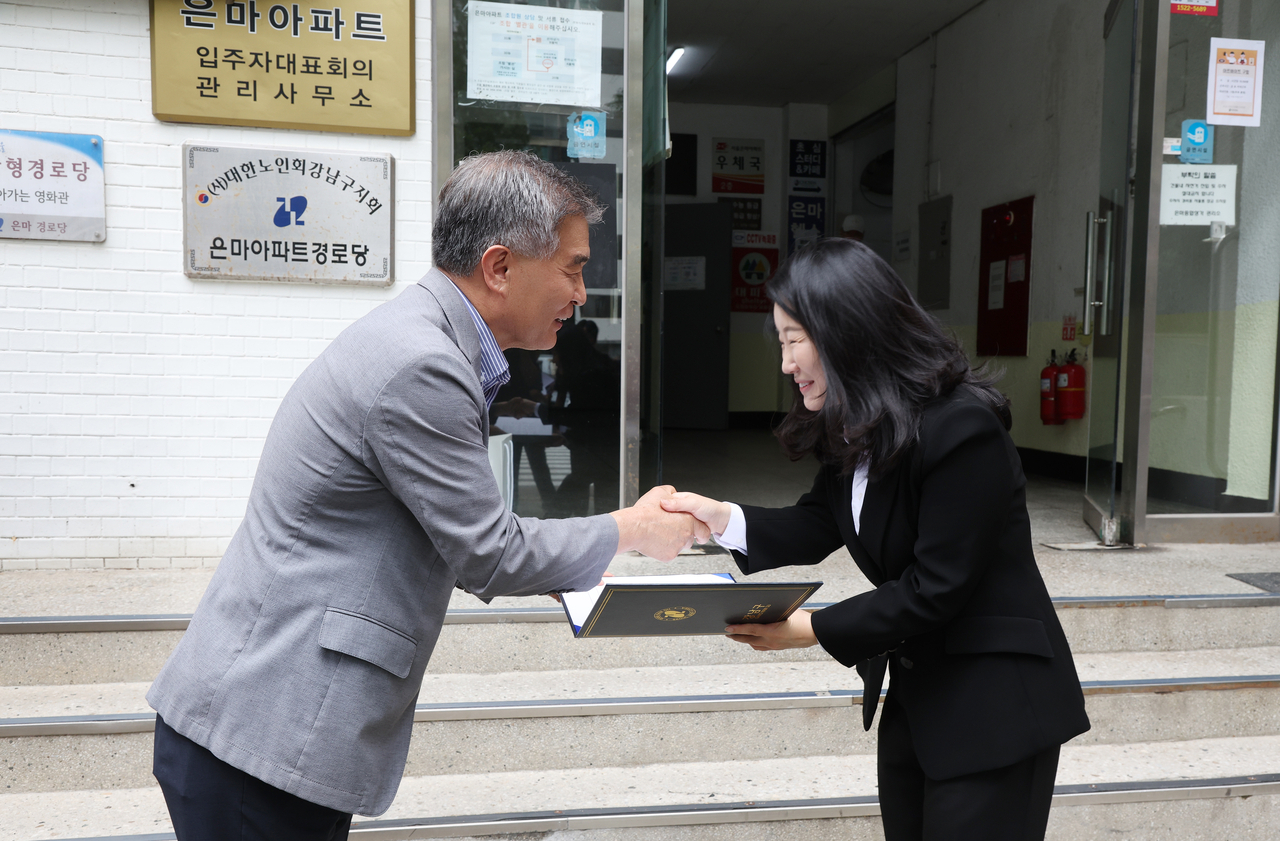
On July 2, he visited Eunma Apartment — one of the district's most prominent reconstruction sites — to personally hand residents the approved implementation plan for the project and held an on-site meeting with association officials.
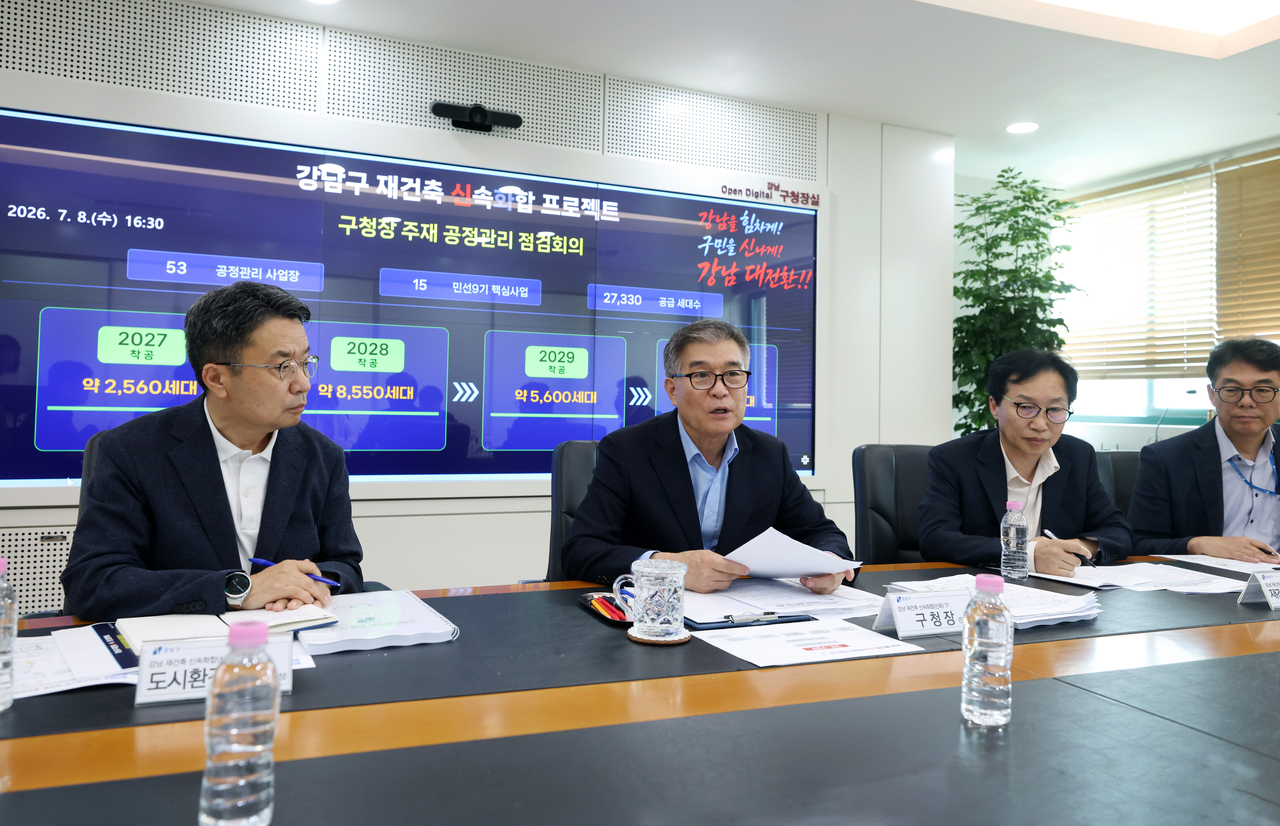
Then on July 8, he chaired the district's first reconstruction progress review meeting, formally launching a system under which he directly oversees projects scheduled to break ground during the ninth elected term.
The meeting brought together the head of the urban environment bureau along with department chiefs responsible for infrastructure — including reconstruction projects, roads, flood control, parks and green spaces, traffic, environment and architecture — to review the progress of individual projects, identify causes of delay and discuss ways to collaborate.
The meeting was significant not merely as a routine briefing but as the formal establishment of a system in which the district mayor personally manages the reconstruction timeline.
Gangnam-gu currently has 103 urban renewal projects under way, including 53 reconstruction projects as well as redevelopment and remodeling initiatives.
The district is targeting a total supply of 27,330 housing units by 2030. Annual ground-breaking targets are 2,560 units in 2027, 8,550 in 2028, 5,600 in 2029 and 10,620 in 2030.
Kim particularly held up the Eunma Apartment approval as a model case.
The project required coordination with roughly 80 related departments and agencies, as well as public review and other complex procedures, yet approval was completed 33 days ahead of the 60-day statutory deadline.
The district plans to apply the same approach to other major reconstruction projects to significantly shorten the permitting period.
"Every morning when I come in, the first thing I do is receive a briefing from the reconstruction task force," Kim said. "I will establish a progress management system in which I personally review the schedule for each project and resolve any causes of delay immediately."
He added that he would "make sure to show that reconstruction can move at a different pace when the district mayor is directly involved."
His July 2 visit to Eunma Apartment was an extension of that hands-on approach to local governance.
The visit was the first official field outing for the "Gangnam Reconstruction Rapid Harmony (Sinhwa) Task Force," launched to advance the fast-tracked reconstruction that is a core campaign pledge of the ninth elected term.
Kim met directly with residents to congratulate them on the approval and pledged active support to ensure that subsequent steps — including drawing up a management and disposal plan and arranging relocations — proceed without a hitch.
The meeting also provided an open forum for residents and association officials to share the administrative support they need and raise concerns about the project.
Residents and association officials expressed strong satisfaction that the district mayor had come in person to deliver the approval and hear their views, and asked for continued administrative support.
Going forward, Gangnam-gu plans to use the Sinhwa Task Force as its hub for regularly monitoring the progress of major reconstruction sites, with the district mayor personally handling matters that require coordination with the Seoul Metropolitan Government and other relevant agencies.
Through this approach, the district aims to cut the permitting period by more than 30 percent and accelerate delayed projects by up to two years or more.
"Reconstruction is a field problem that cannot be solved by desk reports alone," Kim said. "Since I am personally leading the task force, I will visit the sites, listen to residents and see things through to the end."
He added that "Gangnam's reconstruction must move forward with both speed and unity," and pledged to "deliver results that residents can feel through the Reconstruction Sinhwa Task Force."
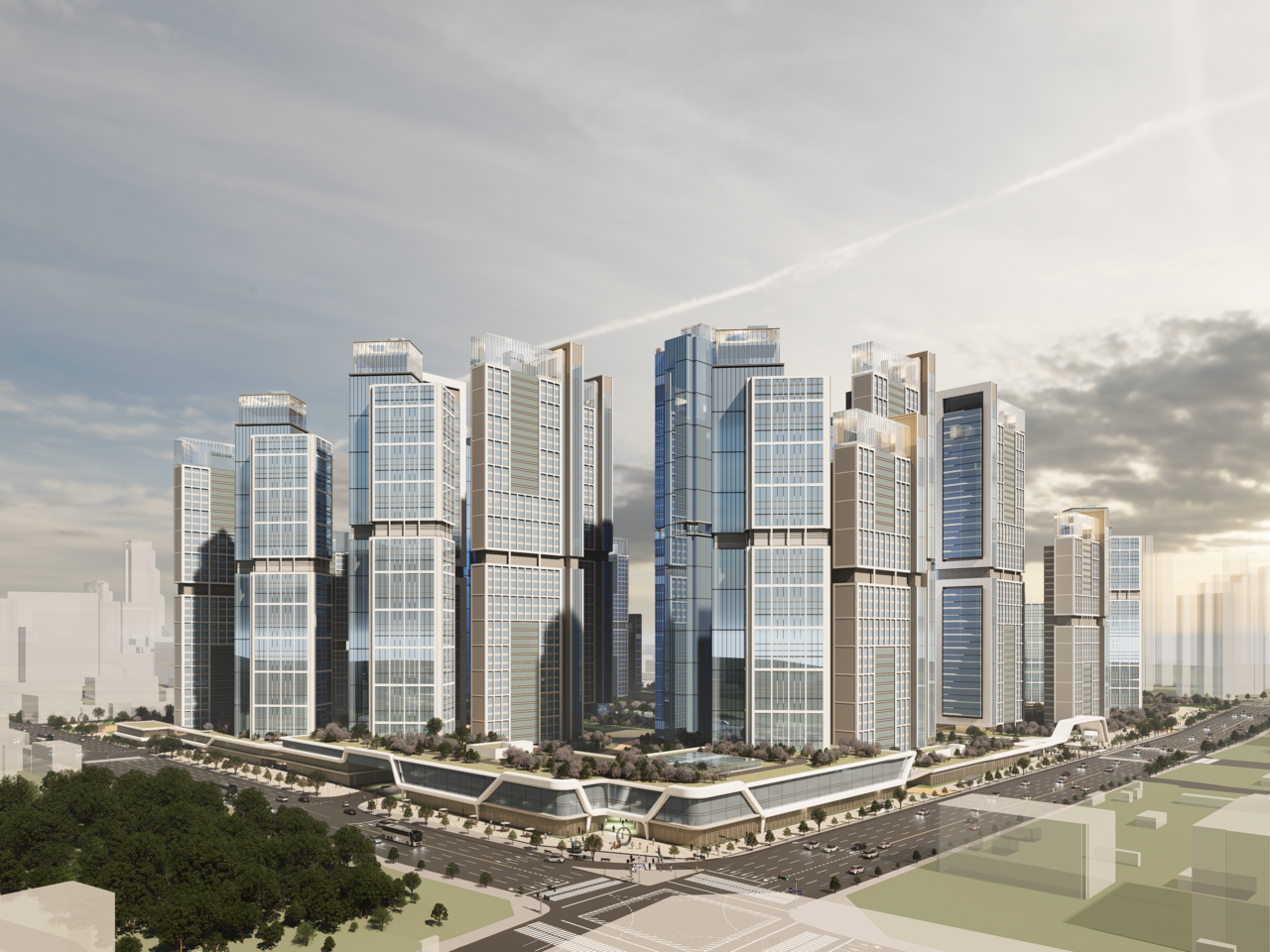
Attention is now focused on how much Kim's hands-on approach — hitting the ground running since the start of the ninth elected term to personally oversee reconstruction projects — can accelerate the pace of redevelopment across Gangnam.
seouldream01@heraldcorp.com





