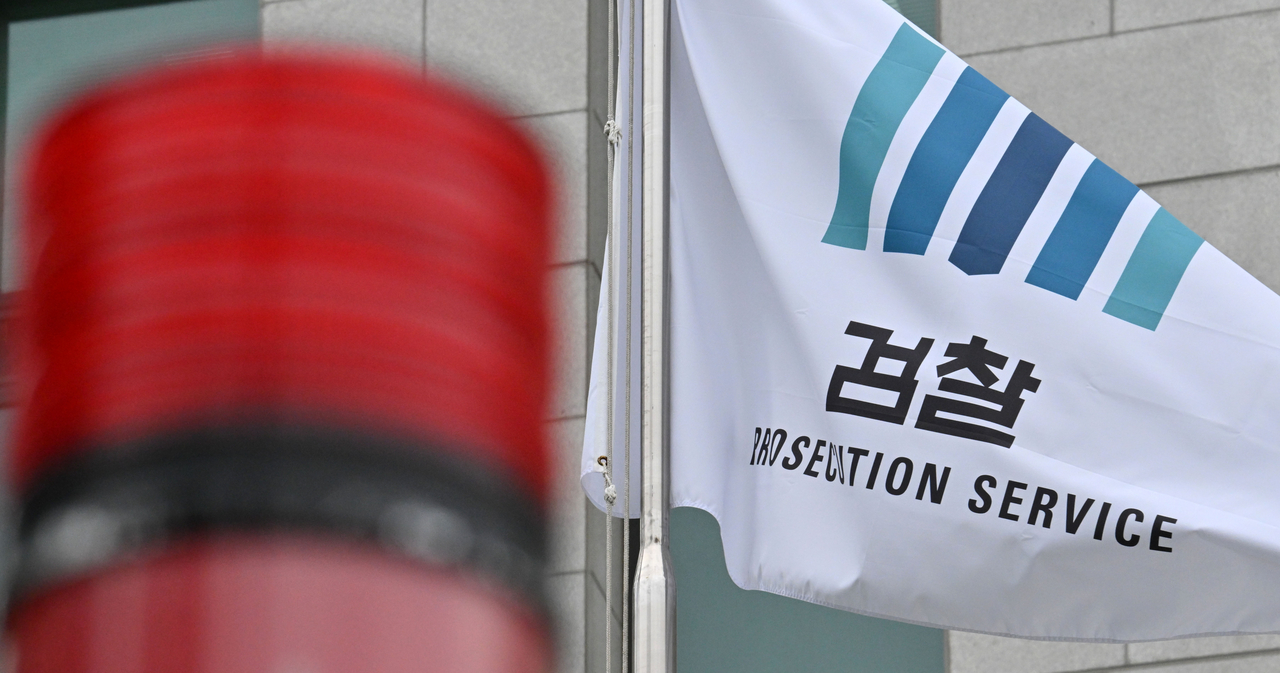
With the Prosecution Service set to be dissolved in October and replaced by a new Public Prosecution Service and a Serious Crimes Investigation Agency, concerns are mounting over proposed amendments to the Code of Criminal Procedure that would abolish prosecutors' supplementary investigation powers. Those concerns now come not only from prosecutors but also from the judiciary and bar associations, all of which have raised alarms about potential side effects and called for safeguards. Whether the pushback will influence deliberations within the ruling party, which is driving the criminal procedure reform effort, remains to be seen.
According to legal circles Monday, the judiciary has also weighed in ahead of the October transition, flagging potential side effects from abolishing prosecutors' supplementary investigation powers and calling for remedial measures.
In a review opinion submitted to the National Assembly on bills sponsored by Democratic Party of Korea lawmaker Kim Yong-min and Rebuilding Korea Party lawmaker Park Eun-jeong, the Supreme Court said the abolition of supplementary investigation powers was "a matter to be decided as a legislative policy question after sufficient deliberation and review by the National Assembly," but added that "sufficient safeguards to prevent side effects that may arise from the institutional change must also be put in place."
Earlier, the government announced through a briefing by then-Prime Minister Kim Min-seok that abolishing prosecutors' supplementary investigation powers was a core principle of prosecution reform, and that it would leave the matter to the National Assembly rather than submit its own criminal procedure bill. Following that, a series of bills were introduced in the Assembly — beginning with those by Kim Yong-min and Park Eun-jeong — that would eliminate prosecutors' supplementary investigation powers while retaining only the right to request supplementary investigations.
Since then, prosecutors — who hold the supplementary investigation powers in question — and the Ministry of Justice, which oversees them, had each already expressed concern and called for safeguards. Now the judiciary has joined bar associations in raising the same call.

Bar associations have also been issuing statements in quick succession since the "Jang Yun-gi case" — in which police are suspected of omitting and concealing evidence — underscoring the need to preserve supplementary investigation powers.
The Korean Bar Association, the statutory representative body for lawyers, issued a statement Friday saying the Jang Yun-gi murder case, in which evidence destruction would have gone undetected without prosecutors' supplementary investigation, was "a clear example of why supplementary investigation powers are needed as a check mechanism." The association added that "full-case transfer" — requiring police to send all investigated cases to prosecutors — "should also be given positive consideration to enable double-checking and prevent cases from being buried due to shoddy investigations."
Minbyun — Lawyers for a Democratic Society, a progressive bar group — also recently released the results of a member survey affirming the need to retain supplementary investigation powers. Minbyun published the findings July 7, drawn from a poll of 403 members conducted from June 30 to July 3 on proposed amendments to the Code of Criminal Procedure. The results showed that 45.9 percent of respondents favored partial retention of the powers and 21.1 percent favored full retention.
Lee Seok-yeon, chair of the Presidential Commission on National Unity — who served as minister of the Ministry of Government Legislation under the Lee Myung-bak administration and as co-chair of President Lee Jae Myung's election campaign — said Sunday on his personal social media account that abolishing supplementary investigation powers would be unconstitutional, citing the Constitution's designation of the warrant application right as the exclusive authority of prosecutors. In the post, Lee said, "I believe prosecutors' supplementary investigation powers must be recognized in some form — not only to protect victims, uncover the truth, and deliver swift justice in criminal proceedings, but also to uphold the spirit of the Constitution."
bell@heraldcorp.com