The Ministry of Land, Infrastructure and Transport is hosting a public forum Tuesday to gather opinions on real estate policy — the first time the current administration, which has championed a "build first, ask questions later" approach to housing supply, has openly solicited public input. Surging jeonse and monthly rent prices and calls to ease financial regulations on reconstruction and redevelopment projects are expected to dominate the discussion.
About 60 people are set to attend, including Land Minister Kim Yun-deok, First Vice Minister Kim I-tak, ministry officials overseeing housing policy, and a mix of academics, journalists, housing and finance industry representatives, real estate experts and ordinary citizens, according to related ministries.
As the ministry with primary responsibility for housing policy, the Land Ministry is expected to keep the expansion of housing supply at the center of the agenda. Progress and outstanding challenges related to the Sept. 7 measures announced last year — under which the government set a target of breaking ground on 1.35 million units in the Greater Seoul area by 2030 — as well as the Jan. 29 plan unveiled this year to supply 60,000 units on prime sites in the metropolitan area are expected to come up for discussion.
Kim Yong-beom, chief of the Cheong Wa Dae policy office, had earlier signaled the administration's stance on housing supply, saying the situation calls for building "as fast as possible, no excuses," and pledging to pursue extraordinary measures.
More specific topics likely to be aired include ways to boost the supply of non-apartment housing such as urban-type residential units and officetels, the need to expand supply through private redevelopment projects, and how to accelerate implementation of the Jan. 29 plan.
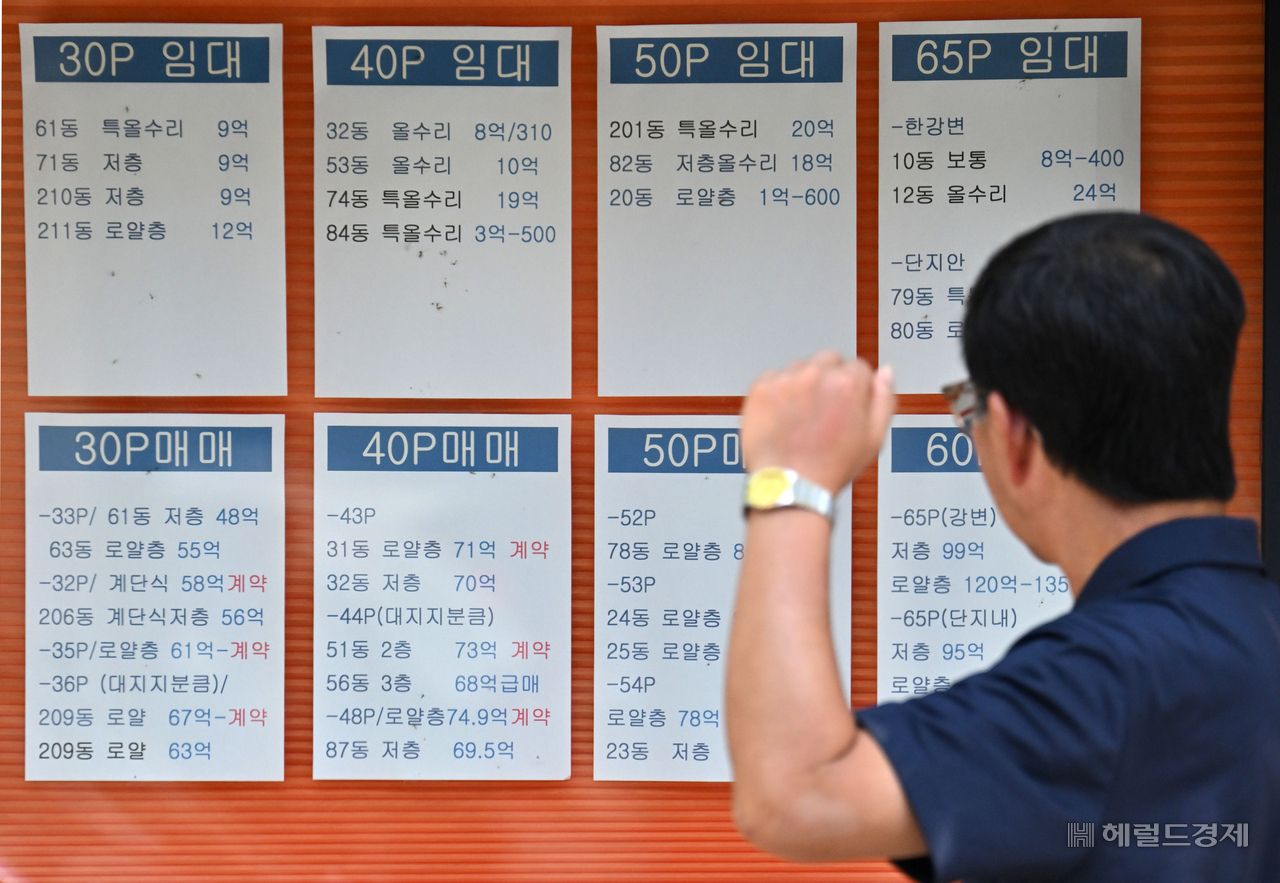
Rapidly rising jeonse and monthly rent prices are also expected to feature prominently. According to the Korea Real Estate Board, Seoul apartment jeonse prices rose 0.31 percent in the first week of July (as of July 6), outpacing the 0.30 percent gain in sale prices. The cumulative increase for the year now stands at 5.42 percent — identical to the year-to-date rise in sale prices — as a shortage of available listings has allowed jeonse prices to close in on purchase prices.
The accelerating shift from jeonse to monthly rent arrangements has also given rise to a "high-end monthly rent" phenomenon. In one example, an 84-square-meter unit at SK Bukhansan City in Mia-dong, Gangbuk-gu is currently listed at a monthly rent of 2 million won ($1,330), reflecting a broader trend of rising high-priced rentals even in traditionally more affordable areas north of the Han River.
With the designation of land transaction permit zones across all of Seoul reducing the supply of jeonse listings, and the expiration of the capital gains tax surcharge exemption for multi-home owners adding further pressure, ways to expand the supply of quality rental housing are expected to be put on the table. Diversifying rental housing supply to meet the needs of different tenant groups is also expected to come up as a discussion topic.
Opinions on the designation of regulated zones and land transaction permit zones — also under the Land Ministry's purview — may also be raised. Through the Oct. 15 measures last year, the government placed all of Seoul and 12 areas in Gyeonggi Province under regulated zone status (as adjustment target areas and speculative overheating districts) and land transaction permit zone restrictions. This year, it added Dongtan-gu in Hwaseong, Giheung-gu in Yongin and Guri — areas that had seen particularly sharp price increases — to both designations.
The forum is also expected to gather views on a range of other housing policy issues, including revitalizing redevelopment and reconstruction projects, abolishing the reconstruction excess profit recapture regime, the calculation of publicly assessed property values used as the basis for holding taxes, easing the housing cost burden on ordinary citizens and young people, and relaxing building regulations.
"The broad outline of the tax and financial policy measures set for announcement at the end of July has already taken shape, but this forum was organized with the intention of genuinely listening to public opinion first," a government official said. "There is still ample room for the measures to be refined before they are announced."
Following Tuesday's forum, the Financial Services Commission will hold a separate public discussion on housing finance on Wednesday, and the Ministry of Economy and Finance will host one focused on taxation on Thursday. On July 23, President Lee Jae Myung will preside over a comprehensive debate on real estate policy as a whole.
hss@heraldcorp.com