Kia seeks strike mandate after talks break down
Hyundai Motor enters third day of partial walkout as parts suppliers join in
Production losses spread to Kia's Hwaseong plant
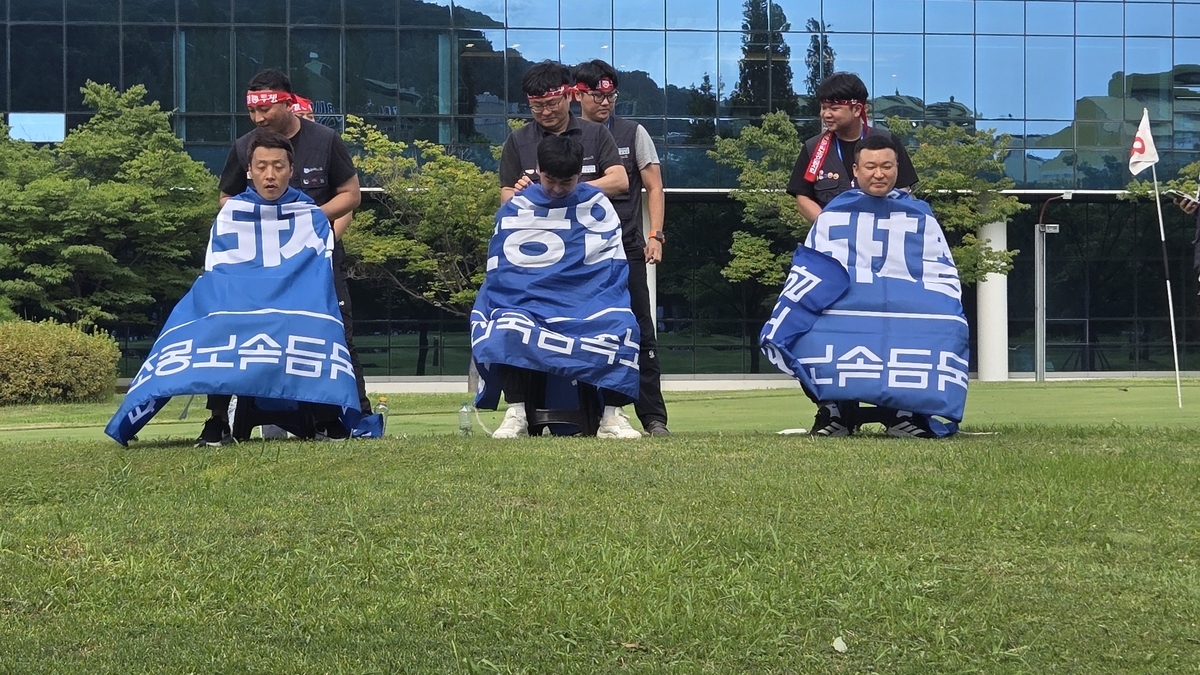
The Korean Metal Workers' Union's Kia chapter has declared its wage talks with management deadlocked and is moving to secure the legal right to strike, deepening concerns about production disruptions across Hyundai Motor Group as the Hyundai Motor union enters its third consecutive day of partial walkouts.
The Kia union declared negotiations broken down at the 15th round of talks held Wednesday at Kia AutoLand in Gwangmyeong, Gyeonggi Province, and said it would file for mediation with the National Labor Relations Commission the same day. If the commission fails to broker an agreement and issues a ruling to suspend mediation, the union can proceed to a general strike following a membership vote.
The union plans to pass a formal dispute resolution at a special delegates' assembly on Monday and form a strike action committee. A membership vote on strike action is scheduled for July 23.
"Management has not put forward any proposal — not even on wages," the union said. "We have concluded that further negotiations are pointless and are declaring a breakdown."
The union is demanding a flat monthly base-pay increase of 149,600 won ($100), a performance bonus equal to 30 percent of the previous year's operating profit, and an extension of the retirement age to 65. It is also calling for new vehicle models and successor lines to be assigned to domestic factories first in response to management's plans to introduce AI and robots, along with job-security measures.
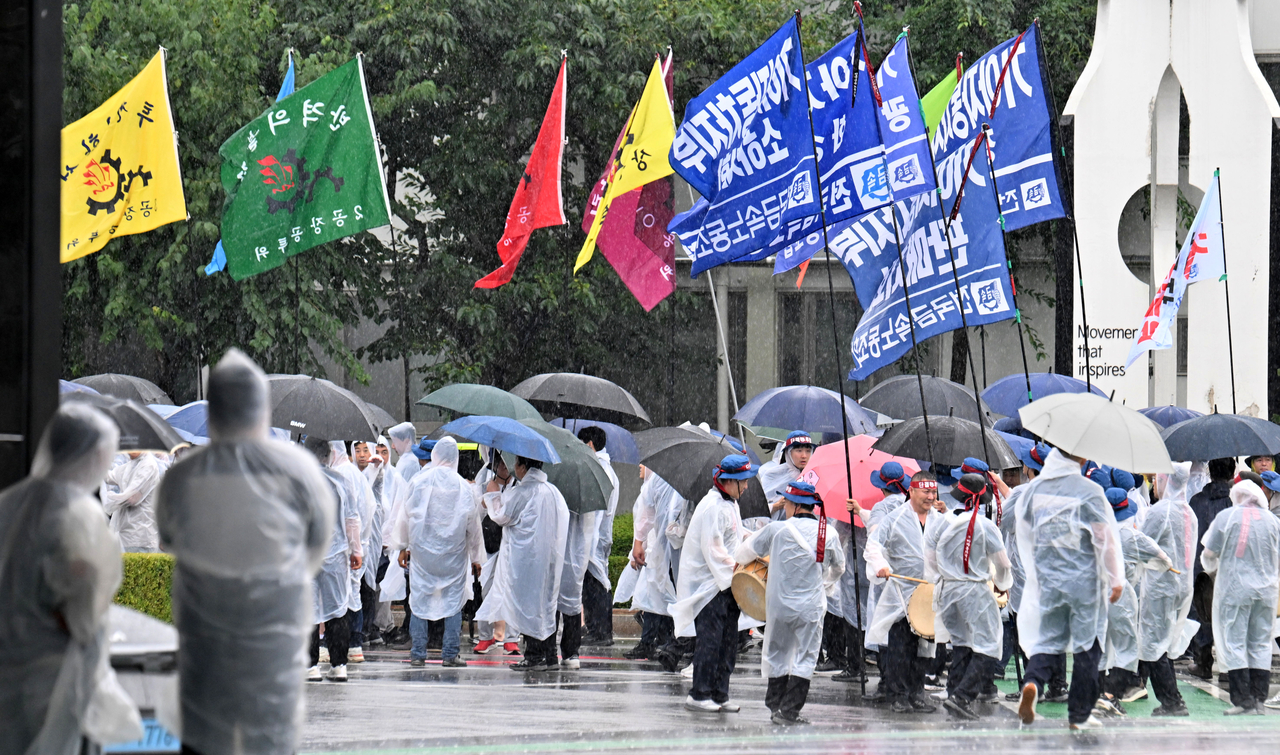
Hyundai Motor's union, which declared its own talks deadlocked before Kia, continued partial strike action for a third day Wednesday. Morning-shift production workers walked off the job at 1:30 p.m. in line with a two-hour strike directive, and some joined the Korean Metal Workers' Union's Ulsan chapter general strike rally in front of Ulsan City Hall.
Strikes by parts-supplier unions are compounding disruptions at both Hyundai Motor and Kia. Motras, which supplies modules including electronic components, also joined the Korean Metal Workers' Union's general strike Wednesday. Afternoon-shift workers at Hyundai Motor and Motras are set to strike for two hours and four hours, respectively, on the same day.
Some production lines at Hyundai Motor's Ulsan plant are expected to lose up to about eight hours of operation Wednesday, with actual disruptions beginning around 11:30 a.m.
Kia is also suffering production losses due to the parts-supplier strike. Kia's Hwaseong Plant 1 decided to halt operations for three hours each for the first and second shifts Wednesday.
Hyundai Motor's union is set to decide Thursday whether to extend strike action. While the two sides have continued back-channel talks, little progress has been made since management tabled its third proposal on July 8.
The union has warned it will escalate strike action if management does not put forward additional proposals. "The 2-2-2 partial strike is a guideline set with a long-term view," the union said. "We will raise the level of strike action at the next strike action committee meeting."
The "2-2-2 partial strike" refers to a three-day partial walkout running Monday through Wednesday, with each shift stopping work for two hours. With both the day and night shifts each halting for two hours, the arrangement can result in a total of four hours of lost production per day.
Within and around the union, there is talk that the strike level could escalate to four or six hours per shift. If four-hour per-shift strikes materialize, total daily production losses could reach eight hours; six-hour per-shift strikes would mean 12 hours of lost output per day. Refusal to work weekend overtime could widen the disruption further.
The union also spelled out the conditions for resuming talks, demanding fair performance bonuses, a 50 percent increase in bonuses, substantive proposals on retirement-age extension, reinstatement of dismissed workers, and withdrawal of damage claims and asset freezes. "Don't even dream of resuming negotiations unless you come with a forward-looking offer," the union warned.
eyre@heraldcorp.com