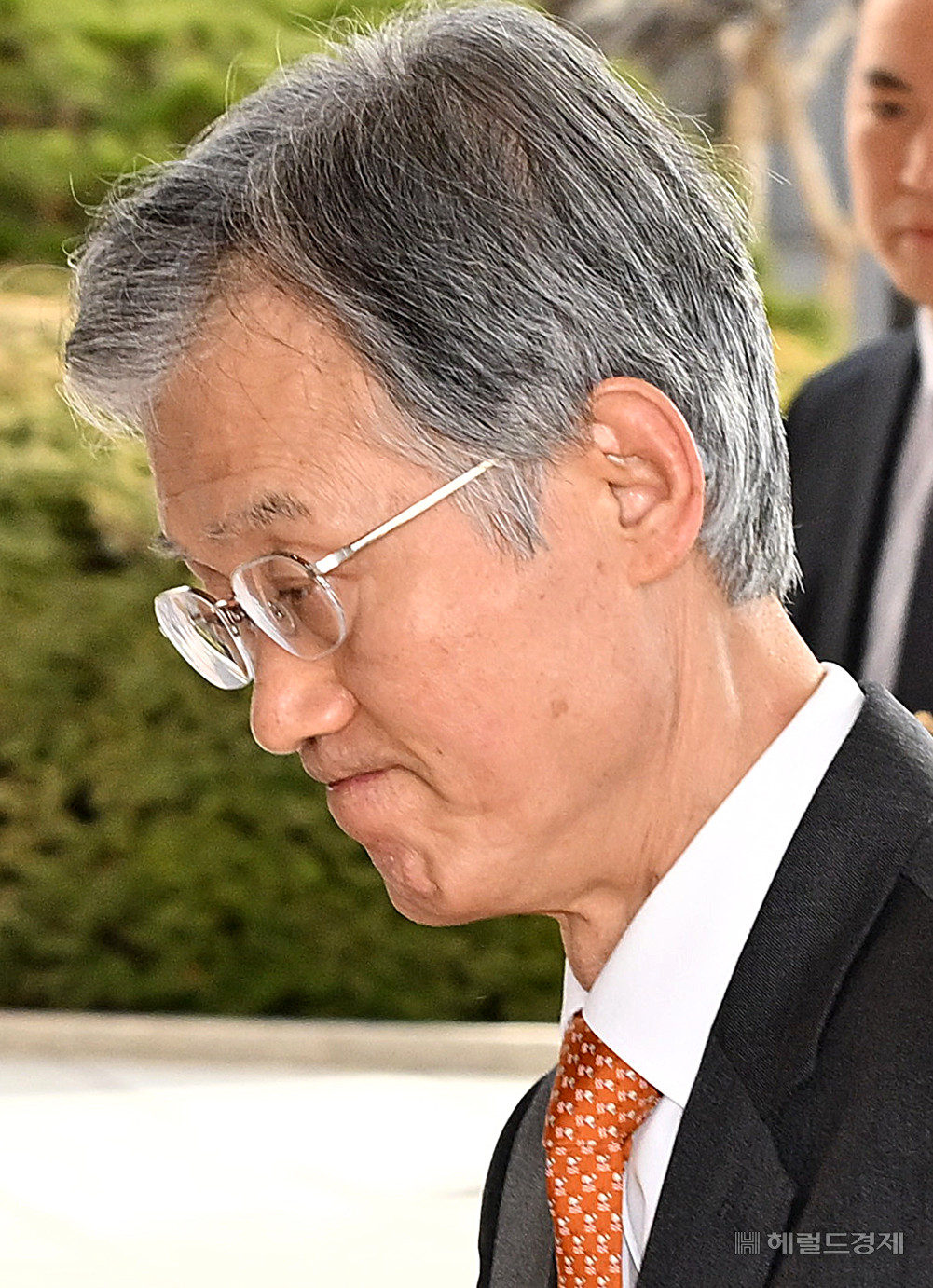
Police have decided not to refer Chief Justice Jo Hee-dae to prosecutors on charges of judicial distortion, stemming from a complaint filed after the Supreme Court overturned and remanded President Lee Jae Myung's Public Official Election Act conviction.
According to police Wednesday, the Seoul Metropolitan Police Agency's anti-corruption investigation unit on July 2 closed the case against Chief Justice Jo and Supreme Court Justice Park Young-jae, dismissing the judicial-distortion allegations without referral.
Attorney Lee Byeong-cheol had filed the complaint, alleging that Chief Justice Jo and other justices deliberately violated the written-proceedings principle under the Code of Criminal Procedure while hearing Lee Jae Myung's election law case in the run-up to last year's presidential election.
Lee argued at the time that it was physically impossible for the justices to review the roughly 70,000 pages of case records in writing within nine days. He said referring the case to the full bench on the very day it was assigned — April 22 last year — and concluding deliberations in just two days before handing down a ruling to overturn and remand for a guilty verdict amounted to deliberate judicial distortion.
Police, however, determined that the judicial-distortion statute, which took effect March 12, could not be applied to the remand ruling issued May 1 last year — before the law came into force.
In explaining the decision not to refer the case, police said the justices' ruling "was definitively expressed externally at the time of sentencing last May, constituting a completed act," and that "there is no procedural right or obligation for a judge to conduct additional review of the case record after sentencing, making it difficult to regard the situation as a continuing omission."
Police also rejected the dereliction-of-duty charge that Lee had raised as an alternative count, ruling that "the case proceeded through assignment to a presiding justice, referral to the full bench, and deliberation sessions before the verdict was rendered," and that "the mere fact that the substance of the judicial act may be deemed unlawful is not sufficient to establish dereliction of duty."
Lee said he would supplement the complaint with new evidence and file an additional complaint with the Corruption Investigation Office for High-ranking Officials.
He said that under Supreme Court precedent, a ruling that violates the written-proceedings principle is void or nonexistent, and called the police decision "one that deliberately ignores the fact that the Supreme Court — to which the defendants belong — is still conducting proceedings in the case."
kido@heraldcorp.com