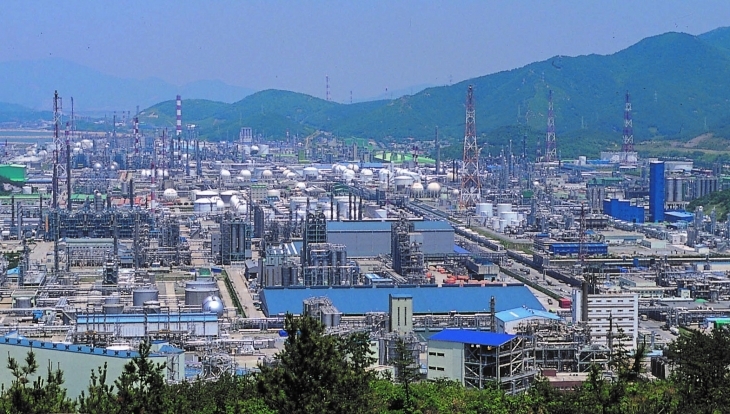
South Korea's petrochemical industry restructuring, delayed by Middle East tensions and the threat of Strait of Hormuz closure, is expected to regain momentum in the second half of the year. The first restructuring project in Yeosu — home to the country's largest petrochemical complex — is anticipated to receive government approval this month, drawing attention to the scale of the support package that will follow the Daesan No. 1 project.
According to industry sources, the Yeosu No. 1 project — a plan to consolidate facilities between Lotte Chemical and Yeocheon NCC — is likely to clear the government approval process this month. Earlier this year, the government approved the Daesan No. 1 project, which merges HD Hyundai Chemical's and Lotte Chemical's Daesan factories, and announced a support package worth 2 trillion won ($1.34 billion) covering financing, tax incentives and regulatory approvals. "The broad outline of whether the Yeosu No. 1 restructuring plan will be approved should become clear this month," one industry official said.
Yeocheon NCC, jointly operated by Hanwha Solutions and DL Chemical, already halted operations at its No. 3 plant — with an annual capacity of 470,000 tons — last year. The current restructuring plan calls for shutting down the No. 2 plant as well, which has a capacity of 915,000 tons, and merging it with Lotte Chemical's Yeosu plant from the No. 1 facility to form a newly integrated company. Lotte Chemical, Hanwha Solutions and DL Chemical would each hold a 33.3 percent stake in the new entity.
If the plan proceeds as outlined, annual ethylene production capacity would be reduced by approximately 1.4 million tons. Under the Daesan No. 1 project, HD Hyundai Chemical is set to absorb Lotte Daesan Petrochemical through a merger effective Sept. 1, halting operation of a naphtha cracking center with an annual capacity of roughly 1.1 million tons. Combined, the two projects would bring total capacity cuts close to the minimum target of 2.7 million to 3.7 million tons per year that the government and naphtha cracker operators set when they signed a voluntary restructuring agreement last year. South Korea's domestic ethylene production capacity stood at approximately 13 million tons last year, with domestic consumption at about 8.23 million tons and exports at about 2.05 million tons. Hitting the reduction target would ease the supply overhang.
The scale of the government's financial support for the Yeosu No. 1 project is also drawing attention. Under the Daesan No. 1 project, HD Hyundai Chemical and Lotte Chemical are set to receive more than 2 trillion won in financial support — up to 1 trillion won in new funding and another 1 trillion won to convert existing debt into perpetual bonds. Repayment of agreed-upon debt will be deferred for three years after the merger, and existing financing terms will be maintained.
Some in the industry expect the support package for the Yeosu project to fall short of the Daesan No. 1 level. Because Hanwha Solutions, DL Chemical and Lotte Chemical plan to lower the new entity's debt ratio through in-kind contributions of equipment and other assets, analysts expect new financing from lenders to be set below 2 trillion won.
While the Daesan and Yeosu complexes have each either secured government approval for their No. 1 projects or finalized restructuring plans, the Ulsan industrial complex presents a more complicated picture. The share of aging naphtha cracking facilities there is relatively low, and disagreements among companies have made capacity adjustments difficult. SK Geocentric and Korea Petro Chemical IND argue that S-Oil, which is bringing new production facilities online, should be the one to cut capacity, while S-Oil maintains that its new Shaheen Project facilities — more efficient than older naphtha crackers — should not be subject to reduction. As a result, the Ulsan complex has yet to finalize and submit its restructuring plan.

keg@heraldcorp.com