![A comparison of the Arctic route and the conventional shipping route [Ministry of Oceans and Fisheries]](https://wimg.heraldcorp.com/news/cms/2026/07/16/news-p.v1.20260522.1f702d875ceb4f27bf18b1301ba701c9_P1.jpg)
South Korea will conduct its first Arctic shipping route trial voyage in August and September. Expanding mackerel supply and accelerating an AI-driven transformation of the maritime and fisheries sector are also among the key priorities for the second half of the year.
Minister of Oceans and Fisheries Hwang Jong-woo announced the ministry's second-half priorities Thursday at a departmental briefing held at Cheong Wa Dae's state guesthouse and presided over by President Lee Jae Myung.
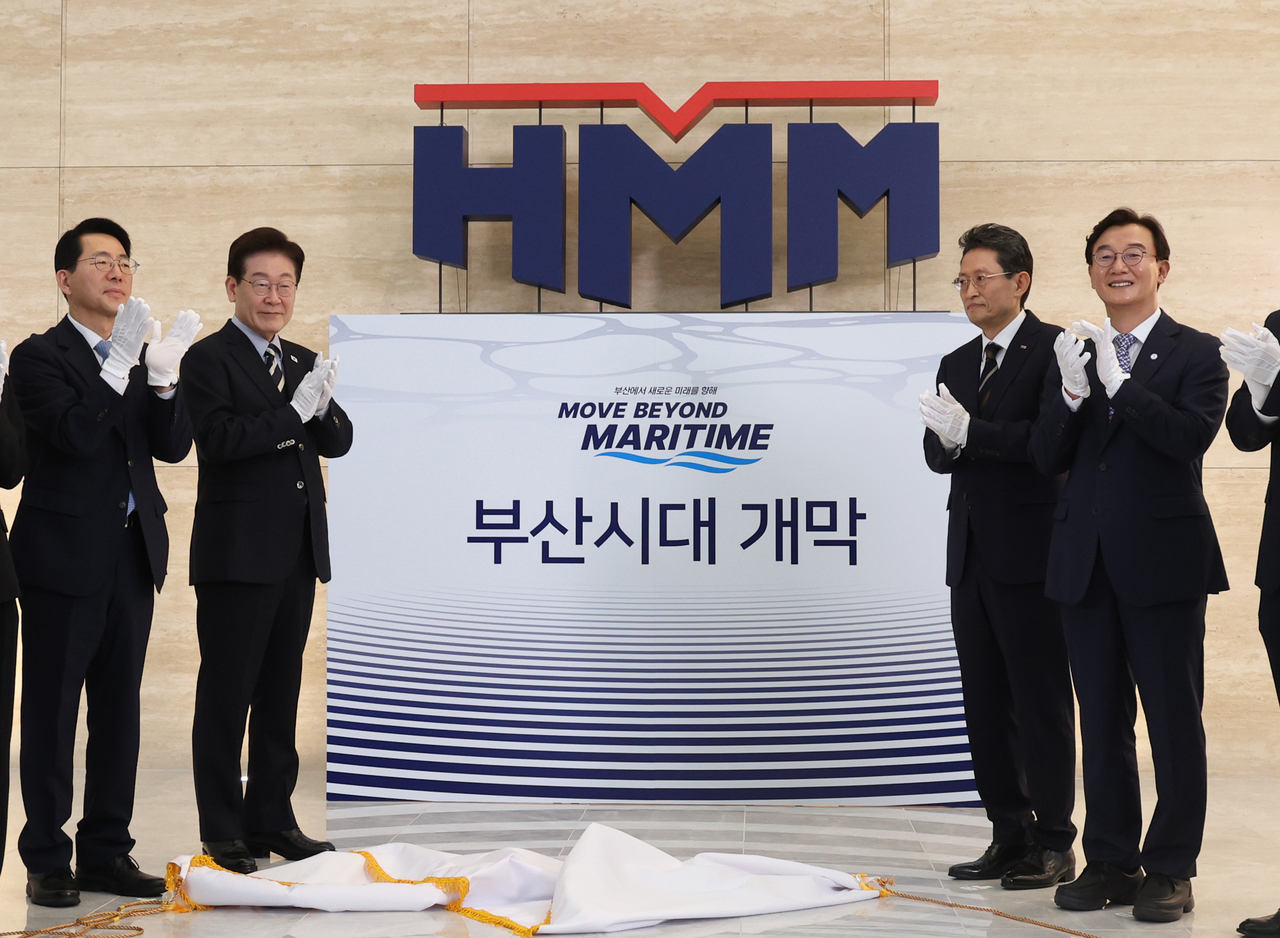
In the first half of this year, the ministry helped relocate four shipping companies, including HMM, to Busan to establish a maritime hub. Amid deteriorating tensions in the Middle East, it supported the safe departure of 24 of the 26 South Korean vessels in the Strait of Hormuz and rerouted 13 crude oil tankers through the Red Sea, contributing to stable domestic petroleum supply. Seafood exports reached $1.93 billion, up 21.4 percent from the same period last year, while maritime accident deaths and disappearances fell 28 percent to 51. Cruise tourist arrivals also rose 42 percent to 770,000.
The ministry will conduct a trial voyage along the Arctic route between Busan and Europe in August and September. The round trip, expected to take 40 to 45 days, will generate logistics data and lay the groundwork for a regular express freight service linking South Korea and Europe. The ministry also plans to develop port infrastructure at Busan and Ulsan, train polar maritime officers, and establish an Arctic Route Comprehensive Support Center.
The ministry will also focus on stabilizing seafood prices. For mackerel, it will diversify import sources through a dedicated task force and cut the quota tariff rate from 10 percent to zero. It plans to boost supply of hairtail, squid and dried seaweed through expanded production, release of government stockpiles, and discount events. The ministry will also work to activate online wholesale markets and improve logistics networks between production and consumption areas.
Strengthening the export competitiveness of seafood products is another priority. The ministry will push for international standardization of dried seaweed and unify its export name as "GIM" to build brand recognition. It will also nurture next-generation export items such as oysters and abalone and expand overseas marketing tailored to individual markets.
The ministry will also accelerate an AI-based transformation of the maritime and fisheries sector. At Gwangyang Port, it will build a physical AI-based smart port testbed and begin developing core technologies for fully unmanned autonomous vessels. An AI-powered rip current accident prevention platform will be introduced, and the number of marine debris collection robots will expand from 12 to 16.
The ministry is also pushing to accelerate regionally led growth. It will select a site for a new Busan headquarters building in August and establish a 100 billion won ($67.2 million) scale-up fund to attract maritime companies. It will also pursue the completion of Saemangeum New Port, redevelopment of Piers 1 and 8 at Incheon Port, and the creation of a specialized coastal startup fund to support coastal venture companies.
Reform measures are also on the agenda. The ministry will shift coastal fisheries management from a regulation-centered approach to one based on total allowable catch, and will cut more than 1,500 fisheries regulations by half by 2030. It also plans to strengthen human rights protections for foreign fishing crew members, establish a seabed infrastructure management system, conduct a comprehensive survey of illegal occupation and use of public waters, and crack down on illegal subletting in port hinterland complexes.
Alongside these initiatives, the ministry listed six additional second-half priorities: preparations for a public ferry operating system, safety support for vessels remaining in the Strait of Hormuz, construction of an AI maritime supply chain early-warning system, expansion of nationally essential vessels, development of five youth coastal villages, and employment support for young maritime officers.
"The first half of this year was a period in which we laid the foundation for a great transformation in the maritime and fisheries sector," Hwang said. "From the second half onward, we will do our utmost to actively carry out the tasks announced in today's briefing, innovate our coasts and seas, and leap forward as a leading maritime nation with an unrivaled edge."
adastra@heraldcorp.com