Export-price-led terms of trade driving growth
AI cycle structural, not a temporary rebound
Chip earnings flowing quickly into capex
Uneven chip gains, real estate tilt remain risks
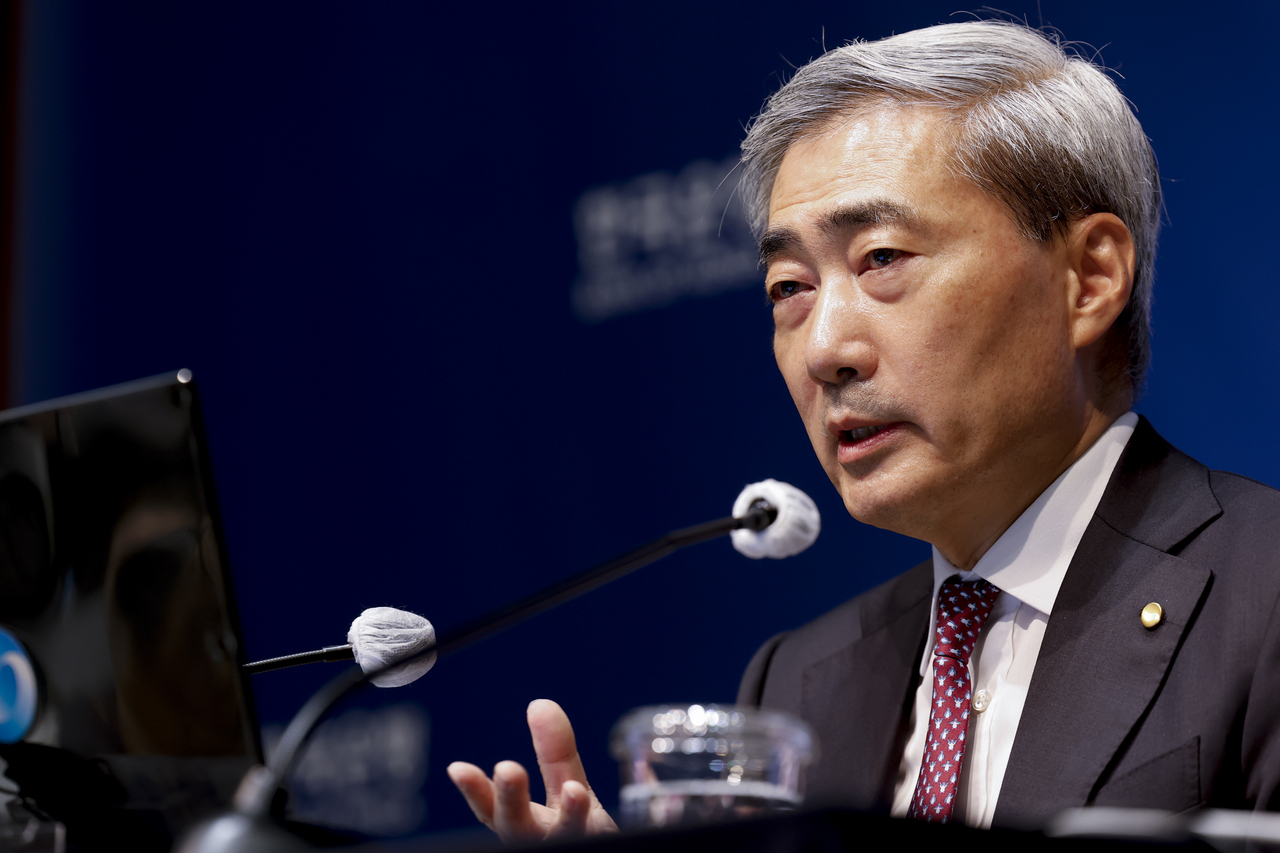
"Look at semiconductor prices themselves, not the share prices of chipmakers."
Bank of Korea Gov. Shin Hyun-song delivered an unexpected message Thursday at a press conference held immediately after the central bank raised its benchmark interest rate for the first time in about three and a half years. His point: semiconductor prices, not the share prices of Samsung Electronics and SK Hynix — the pair known colloquially as "Samjeonix" that set the tone for domestic markets — are the true gauge of the Korean economy. Shin said rising chip prices have improved the terms of trade, driving gross domestic income (GDI) up 13.2 percent, and expressed confidence that this year's growth rate will significantly exceed the 2.6 percent forecast the bank issued in May.
What, then, is behind the governor's bullish growth outlook?
An issue note the Bank of Korea released Sunday lays out the reasoning in detail. The core argument is that the current semiconductor boom differs fundamentally from past episodes of improving terms of trade, which were driven by falling import prices as global oil prices dropped. This time, the improvement is being led by rising export prices — specifically, surging chip prices fueled by the spread of AI — and that shift is pushing income (GDI) well ahead of output (GDP).
GDI is considered a key variable for gauging the Korean business cycle and for future rate decisions. While GDP measures the value added produced domestically over a given period, GDI reflects real purchasing power by incorporating the terms of trade.
With semiconductor export volumes rising and prices surging simultaneously, the Korean economy has entered a phase where income is growing faster than output. In the first quarter of this year, GDP expanded 3.8 percent year on year, but GDI surged 13.2 percent — the widest gap between the two indicators since the statistics were first compiled.
![[Bank of Korea]](https://wimg.heraldcorp.com/news/cms/2026/07/16/news-p.v1.20260716.20ce2749f2ae46e3a21b4bc49c7074d4_P1.png)
The Bank of Korea noted that the current improvement in the terms of trade differs in character from past episodes. Since 2000, there have been three periods of marked improvement: the 2009 global financial crisis, the shale boom of 2015–2016, and the COVID-19 pandemic in 2020. In each case, the driver was falling import prices stemming from lower global oil prices.
This time, the key difference is that semiconductor prices have risen by an even larger margin despite higher oil prices, meaning export prices — not import prices — are leading the improvement in the terms of trade.
The bank particularly highlighted that the current chip boom is not a simple business-cycle upturn but stems from a structural increase in demand driven by the spread of AI. Because global big-tech companies are ramping up AI infrastructure investment and AI services are proliferating, chip demand is likely to persist for an extended period — meaning the improvement in the terms of trade, and GDI growth outpacing GDP growth, should last longer than in previous cycles. Semiconductor prices in the first quarter of this year surged 92.5 percent year on year, and the IT sector accounted for 73.4 percent of the total rise in export prices.
![[Bank of Korea]](https://wimg.heraldcorp.com/news/cms/2026/07/16/news-p.v1.20260716.a3cef65ee7c44fdbb9b1f028169170f1_P1.png)
The domestic spillover effects are also expected to differ from past episodes. When terms-of-trade improvements were driven by falling oil prices, the benefit was mainly cost savings, which households tended to treat as a temporary income boost — limiting any pickup in consumption. This time, however, improved corporate earnings and rising wages are accompanying the semiconductor export boom, making it more likely that households will view the income gains as sustainable. Combined with a wealth effect from rising IT stock prices, the bank expects the consumption recovery to be stronger than in previous cycles.
The Bank of Korea also projected that corporate investment will expand more quickly than in past episodes. Previously, cost savings from lower import prices fed through to investment with a lag; this time, surging global chip demand is translating directly into higher sales and profitability, making it likely that chipmakers in particular will move swiftly to increase capital expenditure. Major forecasters project that combined capital expenditure by Samsung Electronics and SK Hynix will rise from 75 trillion won ($50.4 billion) last year to 120 trillion won this year and reach 150 trillion won next year.
A key limitation, however, is that the benefits of the chip boom are concentrated in the IT industry and among high-income earners. The semiconductor sector has relatively low production and employment multiplier effects and relies heavily on imported manufacturing equipment, which could constrain how broadly the gains spread through the wider economy. The Bank of Korea warned that "if the gains from the semiconductor boom flow into unproductive sectors such as real estate rather than productive investment, financial imbalances could widen — a risk that warrants close attention."
forest@heraldcorp.com