Over half of Coinone staking users are in their 40s and 50s
Staked assets at 4 major exchanges reach 4.69 trillion won
Products with annual rewards of 15% emerge — watch for price drops, early withdrawal limits
Ethereum, Bitcoin and Tron top preferred staking assets
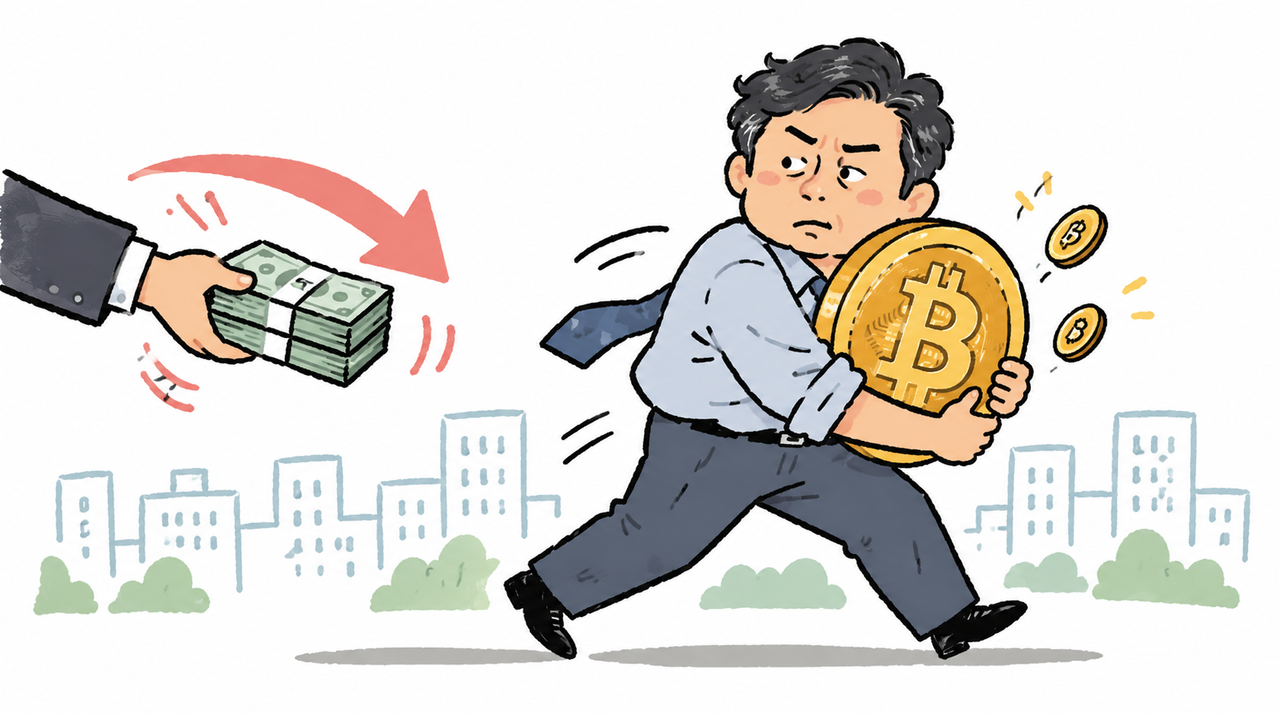
"You can make money without buying or selling coins?"
Kim, a 52-year-old office worker, recently opened his exchange app when Bitcoin recovered to the $85,000 level this year, weighing when to sell. Instead of cashing out right away, he decided to use a staking service — a deposit-style rewards product — to earn returns on the coins he already holds.
He chose to watch for further price gains while putting his assets to work during the holding period. "I think the price will rise again someday if I just hold on without selling now," Kim said. "Instead of buying and selling every time it goes up, I plan to hold and collect staking rewards."
Staking — earning rewards on virtual assets you already own rather than waiting for prices to climb — is drawing attention as a personal finance strategy. The number of staking users surpassed 1 million this year, and a survey found that people in their 40s and 50s make up a larger share than those in their 20s and 30s. Analysts say the trend reflects demand from middle-aged investors who prefer to sit out market volatility by depositing their holdings and collecting rewards.
Data compiled through Coinone, the domestic exchange that first introduced staking in South Korea, showed that as of the end of August this year, people in their 40s and 50s accounted for 52.2% of cumulative staking users — 12.9 percentage points more than those in their 20s and 30s, who made up 39.3%. Crypto investment is often seen as the domain of younger generations, but one in five staking users was in their 50s.
By age group, people in their 40s were the largest segment at 31.1%, followed by those in their 30s at 28.3%, 50s at 21.1%, 20s at 11.0% and 60 and older at 8.3%. Those under 20 accounted for 0.3%. Staking refers to a deposit service in which users lock up virtual assets such as Ethereum and Solana on a blockchain network in exchange for rewards — often compared to depositing money in a bank and earning interest.
The most popular assets among users were, in order, Ethereum, Bitcoin and Tron. Participation is relatively straightforward: users choose between a "fixed" type, which locks assets for a set period, and a "flexible" type, which allows participation while retaining the assets. Under Coinone's service as of Tuesday, fixed-type offerings include Cosmos (ATOM) and Ethereum (ETH), with annual reward rates of 15.80% and 2.19%, respectively.
Flexible-type options include Bitcoin (BTC, annual reward rate 0.001%), Tron (TRX, 1.84%) and Solana (SOL, 1.02%). Staking reward rates are recalculated in real time based on variables such as the total amount staked on the network, the number of validators participating and the volume of rewards issued, so they change constantly.
"Middle-aged investors who want to hold their assets while watching for price movements — amid uncertainty over the passage of the US crypto market structure bill known as the CLARITY Act and the direction of benchmark interest rates — are showing interest in staking," an industry official said.
The cumulative number of staking users surpassed 1 million for the first time this year as market volatility increased. According to the office of Democratic Party of Korea lawmaker Park Min-gyu of the National Assembly's Political Affairs Committee, the figure rose from 479,041 at the end of January last year to 771,568 by year-end, then reached 1,048,547 at the end of January this year. By the end of July it had climbed to 1,225,455 — a 58.8% increase since the start of the year.
Monthly rewards paid to users have averaged around 10 billion won ($7.35 million) per month. The average monthly payout from January through July came to 10.42 billion won. The total value of virtual assets staked through the four won-denominated exchanges — Upbit, Bithumb, Coinone and Korbit — reached 4.69 trillion won, with the monthly average staking volume this year running at around 4.76 trillion won.
Meanwhile, experts caution against participating based solely on high annual reward rates. Fixed-type products may make it difficult to liquidate assets during the contract period or restrict early withdrawal, while flexible-type products can also take time to return assets after a withdrawal request is submitted. There is also the possibility of losses due to network errors or problems in the validation process. Before participating, users should check the reward rate, payout cycle and withdrawal terms for each asset, and assess actual gains and losses including virtual asset price fluctuations.
forest@heraldcorp.com