A string of key economic indicators covering growth, prices, employment, and the financial health of households and businesses will be released next week (July 20-24), with particular attention on second-quarter real GDP growth — a figure that will help determine the timing and pace of further benchmark interest rate increases by the Bank of Korea.
The Bank of Korea will release the flash estimate of second-quarter real GDP growth on Thursday, according to officials. The South Korean economy expanded 1.8 percent quarter-on-quarter in the first quarter of this year — 0.1 percentage point above the April flash estimate of 1.7 percent and the highest growth rate since the third quarter of 2020 (2.3%), a span of five and a half years.
Markets are watching for signs that second-quarter growth may have slowed, as the full impact of the Middle East war begins to weigh on the economy and a high base effect from the strong first-quarter performance kicks in. However, some analysts suggest growth could come in better than expected, as key indicators — exports in particular — have continued to hold up well.
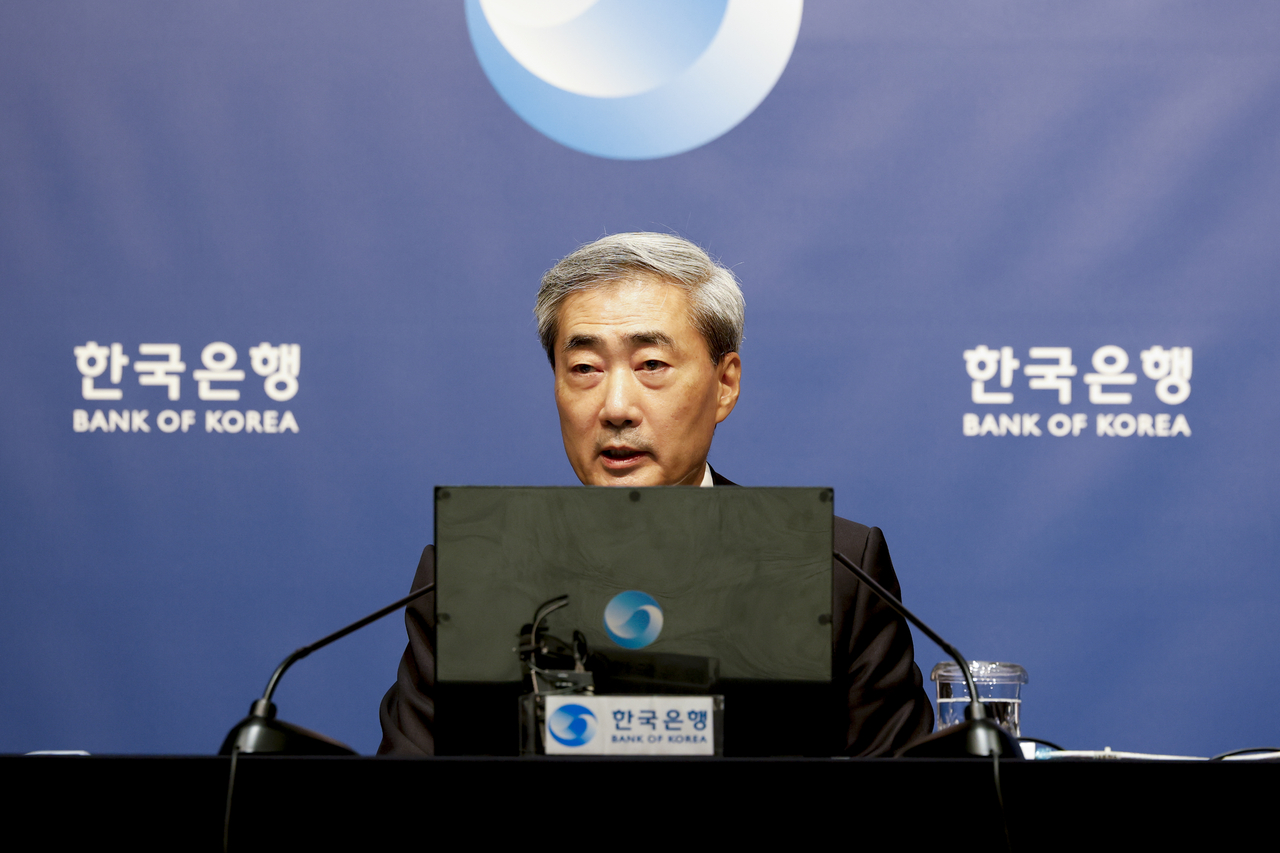
Second-quarter GDP is also seen as a pivotal variable in shaping the Bank of Korea's future monetary policy path. Governor Shin Hyun-song, at a press conference following Friday's rate decision — the first benchmark interest rate increase in three and a half years — cited second-quarter GDP as one of the key indicators that would guide the timing and pace of any further hikes.
Ahead of that, the Bank of Korea will release the preliminary producer price index for June on Wednesday. Producer prices rose for nine consecutive months through May, driven by the ripple effects of higher global oil prices and a buoyant stock market. Because producer prices feed through to consumer prices with a lag, the index serves as a leading indicator of future inflation trends.
Also on Wednesday, the Bank of Korea and the Ministry of Statistics will jointly release the preliminary results of the 2025 national balance sheet. The national balance sheet tallies the assets and liabilities held by all economic actors — households, businesses and the government — to provide a comprehensive picture of the economy's overall asset position.
In the preliminary 2024 figures released a year ago, per-capita net household assets rose more than 3 percent from the previous year, driven by higher housing prices and growth in financial assets such as deposits. Total national wealth climbed more than 5 percent, boosted by gains on overseas investments as foreign stock markets performed strongly and the won-dollar exchange rate rose.
Employment data shedding light on the job market for young people will also be released. The Ministry of Statistics will publish the results of its supplementary survey on the economically active youth population for May 2026 on Thursday.
Last year's survey found that 565,000 young people had been out of work for more than a year — down 23,000 from the previous year — but their share of all unemployed youth rose 1 percentage point to 46.6 percent. With youth unemployment persisting, the data will be closely watched for what it reveals about long-term joblessness and discouraged workers.
The Ministry of Statistics will release the results of its second-quarter livestock survey on Friday, covering the number of cattle, pigs, chickens, ducks and other livestock raised nationwide during the quarter.
In the financial sector, bank delinquency rates are drawing attention. The Financial Supervisory Service will release the won-denominated loan delinquency rate for domestic banks as of end-May on Wednesday, based on loans with principal or interest payments overdue by at least one month.
The won-loan delinquency rate at domestic banks hit a nine-month high of 0.26 percent at end-February before easing to 0.56 percent at end-March, then rising again to 0.61 percent at end-April. With high inflation and a weak won persisting in the wake of the Middle East war, and market interest rates also climbing, analysts will be watching whether the debt-servicing burden on households and businesses widened further at end-May.
The Financial Services Commission will co-host a meeting with the Ministry of Trade, Industry and Energy on Wednesday to discuss plans to channel the National Growth Fund into investment support for critical minerals. Before that, a public hearing on the operation of an ultra-long-term technology investment fund — targeting sectors requiring patient capital over extended periods, such as next-generation semiconductors and biotech drug development — is scheduled for Monday.
attom@heraldcorp.com