"Delisting (single-stock leveraged ETFs) is unimaginable. If they were delisted, that alone would deliver a massive shock to the market."
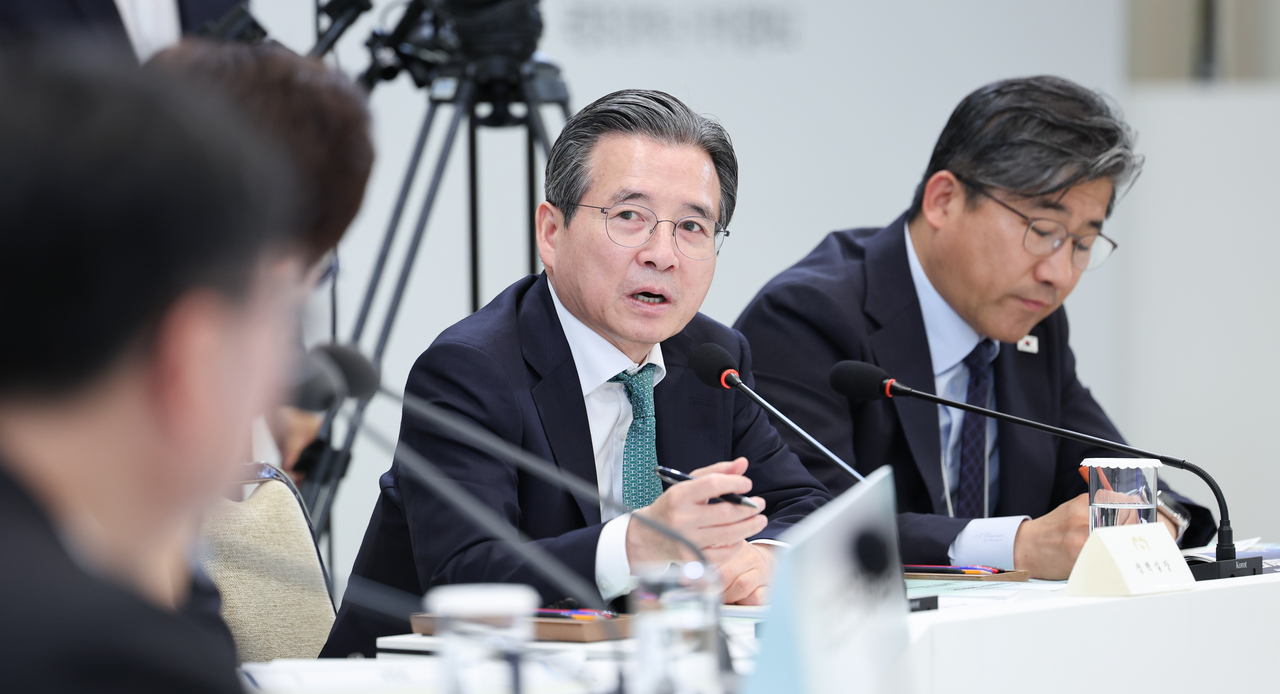
Kim Yong-beom, chief policy secretary at Cheong Wa Dae, made the remarks Sunday on KBS's "Ilyo Jindan Live," saying "investors are already invested and the product market has grown to more than 10 trillion won."
On the supplementary measures recently announced by authorities — raising the minimum deposit requirement for leveraged ETF trading to 30 million won in cash and capping transactions at 20 shares at a time — Kim said they would "resolve a significant portion of the side effects." He added, however, that "leveraged products have the aspect of doubling their impact during a downturn," and that "further discussions among the authorities, asset management companies and brokerages will be needed on how to minimize market shock."
On the premium-discount rate — the gap between an ETF's net asset value and its actual market closing price — Kim said it "must be minimized" and that "we can discuss further ways to appropriately ease selling pressure." Regarding the "triple rally" phenomenon in which real estate sale prices, jeonse and monthly rent are all rising simultaneously, he said, "I am truly sorry to so many citizens," adding that supply-demand dynamics and various conditions in the real estate market are "extremely difficult" and that he takes the situation "very seriously."
Asked about his remark last month that housing must be built "no matter what," Kim explained that "the intent was that we must mobilize every available method — such as purchasing non-apartment units for rental — that can produce results in the short term, with a sense of urgency." He added that the government would "mobilize every source of short-term housing supply, including providing non-apartment units and private officetels, and converting commercial land allocations in the third-generation new towns to residential use." On redevelopment and reconstruction, however, he cautioned that they are "not a master key" and "take at least three to five years."
On the principles guiding real estate tax reform, Kim said the government would "treat multi-homeowners and single-homeowners differently, and apply differentiated rules depending on whether the property is owner-occupied." He noted that "there are many views that even a single owner-occupied home, if it is an ultra-high-priced property, should be treated differently given the owner's ability to pay and the burden it places on the housing market." On the argument that raising property holding taxes should be paired with lower capital gains taxes to bring more listings to market, he said the government was "taking that aspect into account," while suggesting the system could be designed to "allow sellers to sell at an appropriate time, and increase the burden if that window is missed."
Meanwhile, Kim pushed back on criticism that investment projects targeting the United States are being delayed. "That is not the case. They are proceeding on an appropriate schedule," he said, adding that preparations are underway "to make the first US-bound investment project a reality." Asked when results would become visible, he said, "It should happen by August or September."
andy@heraldcorp.com