
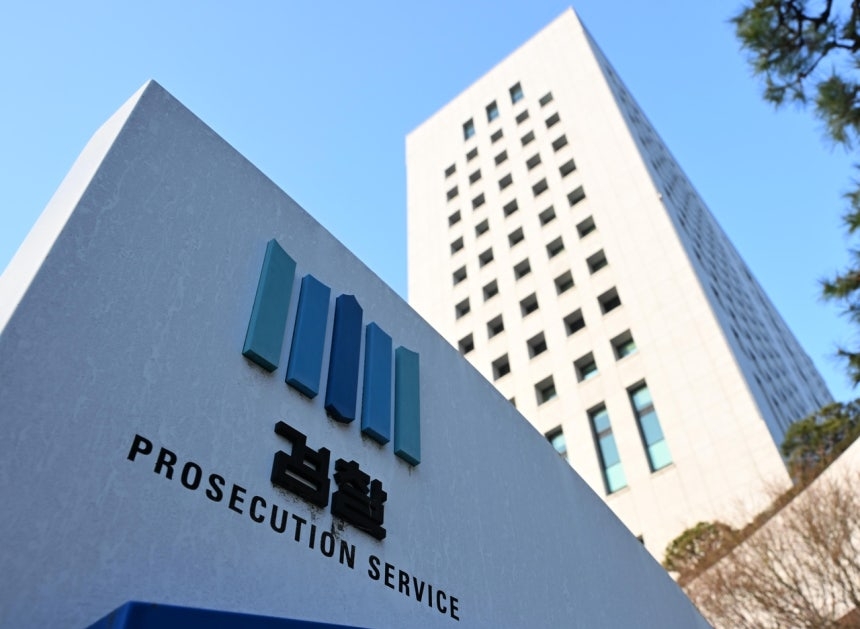
A warrant review committee established following the 2021 adjustment of investigative powers between prosecutors and police has convened 21 times nationwide through the first half of this year, with roughly 80 percent of its decisions upholding prosecutors' refusals to seek warrants requested by police. The committee, composed of outside members, was introduced to check prosecutors' exclusive authority to apply for warrants and to mediate disputes between the two agencies.
According to data obtained from the Supreme Prosecutors' Office, committees at six high prosecutors' offices across the country have convened 21 times through June to review whether warrant applications were appropriate since the warrant review committee system was introduced after the 2021 power-sharing reform. Of those reviews, five resulted in a finding of appropriate and 19 in a finding of inappropriate.
Warrants — court documents authorizing the arrest, detention, search, or seizure of a person or property — are regarded as a mechanism for verifying investigative objectivity and ensuring the legality of coercive investigative measures. The warrant review committee was introduced during the restructuring of prosecutorial and police powers to check prosecutors' warrant application authority and resolve disagreements between the two agencies over whether to seek warrants.
Under the Code of Criminal Procedure, when a prosecutor declines without justifiable cause to apply to a judge for a warrant requested by a judicial police officer, the officer may petition the high prosecutors' office with jurisdiction over the district prosecutors' office to which that prosecutor belongs to review whether the warrant should be sought.
Under Ministry of Justice rules governing the warrant review committee, a judicial police officer may request a review in three situations: when the officer has twice complied with demands for supplementary investigation on a warrant involving the same offense and basic facts and then receives a third such demand; when the assigned prosecutor declines to apply for the warrant without issuing any demand for supplementary investigation; or when the assigned prosecutor fails to decide whether to apply for the warrant within five days of receiving the application.
Each high prosecutors' office must form a warrant review committee of up to 10 outside members, including one chairperson. Judicial police officers may appear before the committee to present their views. Since the system took effect, the Seoul High Prosecutors' Office has handled the most cases — 15 by case count — while convening and reviewing cases at other regional high prosecutors' offices has been rare.
The breakdown by office is as follows: the Seoul High Prosecutors' Office handled 15 cases — two in 2021, two in 2022, one in 2023, four in 2024, five in 2025 and one in 2026; the Daejeon High Prosecutors' Office handled three — two in 2021 and one in 2023; the Suwon High Prosecutors' Office handled two — one in 2025 and one in 2026; the Busan High Prosecutors' Office handled one in 2023; and the Gwangju High Prosecutors' Office handled one in 2021. The Daegu High Prosecutors' Office has not convened a single session.
Nationwide, the committee found warrant applications appropriate in 20.8 percent of cases and inappropriate in 79.2 percent. One case at the Seoul High Prosecutors' Office last year involved a single session that produced different outcomes by suspect — one appropriate and two inappropriate — and was counted once in each category. One case at the Seoul High Prosecutors' Office this year involved a single session that produced different outcomes by warrant — two appropriate and one inappropriate — and was similarly counted once in each category.
The fact that the outside-member committee has upheld prosecutors' judgments in a substantial share of cases suggests considerable weight has been given to prosecutors' assessments that further supplementary investigation is needed. Within the prosecution, there are voices saying police repeatedly reapply for warrants without conducting adequate supplementary investigation.
Police, however, argue that prosecutors use their warrant application authority to exert excessive control over cases, stalling major investigations. They also criticize the committee as ineffective, pointing out that it is housed within the high prosecutors' offices and that the list of committee members is not made public.
Against this backdrop, Rep. Seo Young-gyo, chair of the National Assembly's Legislation and Judiciary Committee and a member of the Democratic Party of Korea, held a press conference Sunday alleging collusion between a prosecutor and a specific politician over the rejection of a communications warrant in a case involving Choi Yeong-jung, a former Cheongju city council member under police investigation on suspicion of child sex trafficking. Choi, a People Power Party member, won election in the June 3 local elections but resigned after the allegations surfaced.
The Cheongju District Prosecutors' Office rebuffed the allegations, saying the suspect's identity and occupation had not been established at the time police applied for the warrant, and that the communications warrant was rejected because evidence supporting a separate offense was insufficient and supplementary work was needed. "We reviewed whether to apply for the warrant solely on the basis of the facts and legal principles confirmed through the case record, with no other considerations whatsoever," the office said. "The allegation that the assigned prosecutor is connected to a specific politician is entirely false."
Since the 2021 power-sharing reform, prosecutors' rejection rate for police warrant applications has risen sharply. According to data obtained by People Power Party lawmaker Kim Jae-seop from the Ministry of Justice, the rate at which prosecutors rejected police applications for arrest warrants climbed from 20.4 percent in 2021 to 30.4 percent last year. The rejection rate for search and seizure warrants rose from 17.2 percent to 26.9 percent over the same period.
Prosecutors maintain they reject or demand supplementary investigation because police investigative work is inadequate, while police counter that prosecutors apply an unreasonably strict standard. The standoff has left some major cases unresolved for extended periods. The Seoul Metropolitan Police Agency's financial crimes unit applied twice for an arrest warrant for Bang Si-hyuk, chairman of Hybe, on suspicion of violating the Capital Markets Act, but prosecutors rejected both applications.
bell@heraldcorp.com





