According to the 2022 National Cancer Registry Statistics, breast cancer is the most common cancer among Korean women, accounting for 21.5 percent of all female cancer cases. National health insurance big data shows the number of patients receiving breast cancer treatment rose more than 32 percent, from 233,998 in 2020 to 309,423 in 2024.
Breast cancer often produces no noticeable symptoms until a tumor grows larger than 1 centimeter. Common warning signs include a hard, fixed lump in the breast, bloody discharge from the nipple, and changes in the shape of the nipple or breast.
Breast cancer patients are also prone to weight gain due to hormone therapy and reduced physical activity, a combination known to raise the risk of heart attack, stroke and heart failure. Research has found that breast cancer patients who gained 10 percent or more of their body weight faced a 66 percent higher risk of cardiovascular disease compared with those who maintained their weight — with the risk of heart attack rising 83 percent and heart failure 85 percent. Managing weight through dietary control, regular exercise and medication when necessary — including GLP-1 analogs — is therefore considered a key strategy for protecting long-term health after treatment.
Recent research confirms that the risk of ischemic stroke rises sharply in the early period following a breast cancer diagnosis, warranting particular caution. Patients with a history of breast cancer treatment who suddenly develop one-sided paralysis, speech difficulties, or other stroke-like symptoms should go to a hospital immediately.
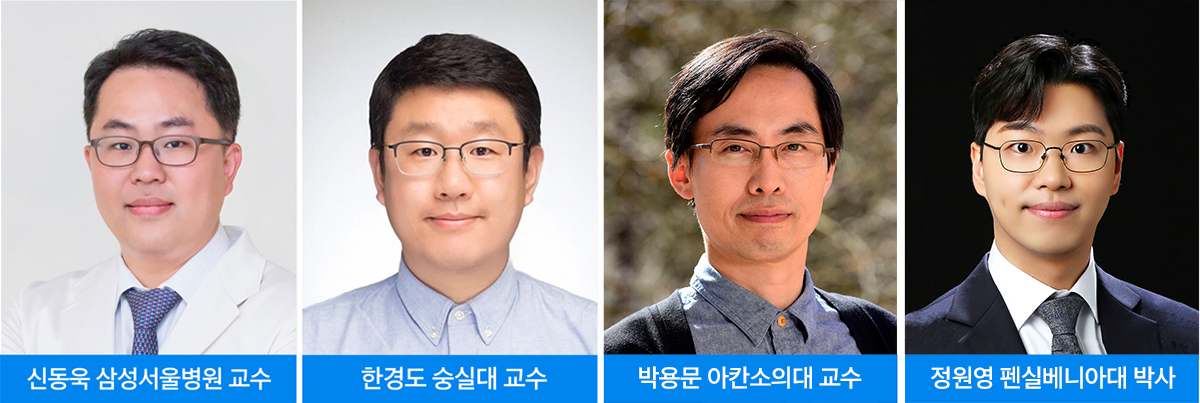
A research team led by Shin Dong-wook, a professor in the Department of Family Medicine at Samsung Medical Center, published findings comparing 107,606 breast cancer surgery patients with 322,818 cancer-free women, using National Health Insurance Service big data. The team also included Han Gyung-do, a professor of information statistics and actuarial science at Soongsil University; Park Yong-moon, a professor at the University of Arkansas for Medical Sciences; and Jeong Won-young, a researcher now at the Cleveland Clinic who was previously at the University of Pennsylvania.
The study focused on women aged 18 and older who were newly diagnosed with breast cancer and underwent surgery between 2010 and 2016, and who had no prior history of stroke. The research team matched each breast cancer patient with three cancer-free women born in the same year, in a 1:3 ratio, and followed participants for an average of 7.2 years.
The primary outcome measured was the occurrence of ischemic stroke — commonly known as cerebral infarction — a condition in which a blocked blood vessel cuts off blood supply to brain tissue. It is one of the leading causes of death and disability among cerebrovascular diseases.
Ischemic stroke occurred in 1,155 breast cancer surgery patients, or 1.07 percent of the group, compared with 3,698 cases, or 1.15 percent, in the cancer-free comparison group. Over the full follow-up period, the risk of ischemic stroke among breast cancer surgery patients showed no statistically significant difference from that of the general female population, and a tendency toward lower long-term risk was also observed.
In the period immediately following diagnosis, however, the risk was markedly elevated. Within one year of a breast cancer diagnosis, the risk of ischemic stroke was 59 percent higher than in cancer-free women. The risk peaked within the first three months at 2.90 times that of the comparison group, and remained elevated at 2.27 times within six months. The risk then declined gradually over time, falling to 17 percent above the comparison group by the three-year mark.
The research team said the findings likely reflect a combination of factors, including a hypercoagulable state induced by the cancer itself, inflammatory responses triggered during breast cancer surgery and treatment, and cardiovascular strain from chemotherapy.
Subgroup analysis also showed that breast cancer patients with underlying conditions such as hypertension or type 2 diabetes, or those who currently smoked, faced a particularly pronounced increase in ischemic stroke risk. Among breast cancer patients who smoked, the risk of ischemic stroke was 2.26 times higher than in the comparison group.
Park, the study's lead author, said the research was "a large-scale study confirming a time-dependent pattern in which the risk of ischemic stroke temporarily rises sharply immediately after breast cancer diagnosis and treatment, then gradually decreases over time." He added that an important aspect of the study was its examination of stroke risk at different points in the course of breast cancer diagnosis and treatment. "This shows that when assessing stroke risk in breast cancer patients, it is important to consider not only how high the risk is, but also when it peaks," he said.
Shin, the study's principal investigator, said patients with cardiovascular risk factors such as hypertension or diabetes, or those who smoke, "require more careful management in the early stages of treatment." He added that breast cancer patients who suddenly experience weakness in one arm or leg, drooping on one side of the face, slurred or abnormal speech, or loss of vision in one eye "should suspect ischemic stroke and seek medical care immediately."
As treatment outcomes for breast cancer continue to improve, the importance of long-term health management for cancer survivors is growing. The research team said an integrated survivor care strategy that accounts for cardiovascular and cerebrovascular disease risk throughout the course of breast cancer treatment is needed. The study was published in the latest issue of the official journal of the American Academy of Neurology.
kty@heraldcorp.com