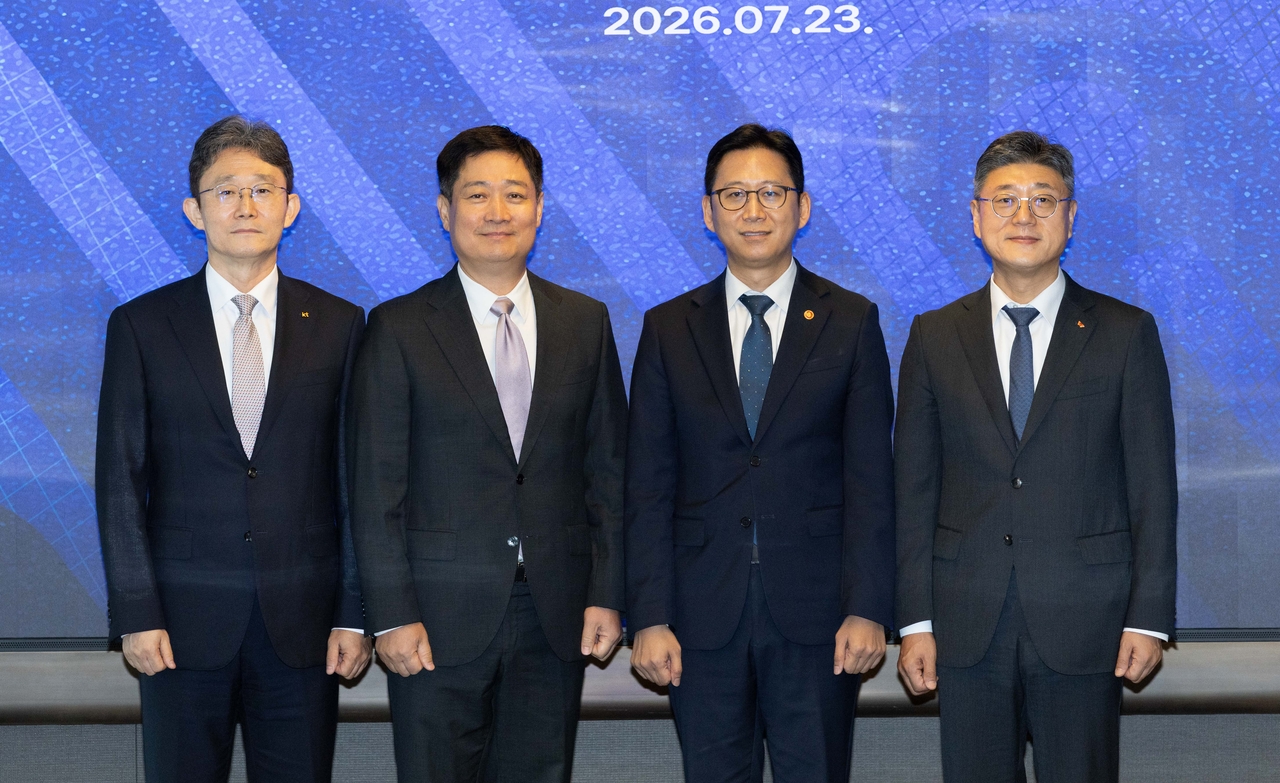
Deputy Prime Minister and Minister of Science and ICT Bae Kyung-hoon met with the CEOs of South Korea's three major telecom carriers Thursday and called for upgrading AI networks to build an "irreplaceable Korea."
Bae also said the government plans to form a public-private consultative body next month to develop concrete support measures, including investment incentives and regulatory reform.
The three carriers — SK Telecom, KT Corp and LG Uplus — agreed to announce customer benefit plans this month as part of broader efforts to ease the burden on households.
Speaking at the meeting held at SK Telecom's headquarters in Jung-gu, Seoul, Bae thanked the three carriers "for agreeing to participate in next-generation network investment and nationwide efforts to stabilize people's livelihoods."
He said telecoms have evolved beyond being mere network operators, describing them as "AI infrastructure and platform companies that keep AI running continuously and connect everyday life and industrial sites through AI infrastructure."
Bae said the government and the telecom industry must work together to advance AI-native networks, adding: "Let us keep striving so that every citizen can enjoy the benefits of telecommunications, the internet and AI — and build an irreplaceable Korea together."
The meeting focused heavily on plans to upgrade AI-based networks. All three carriers expressed their commitment to investing in next-generation network infrastructure.
SK Telecom presented its vision for future network evolution, including 6G and AI-based radio access networks (AI-RAN), as well as plans to strengthen its AI competitiveness.
KT Corp outlined plans to expand submarine cable capacity, diversify cable landing stations and secure competitiveness in low-earth-orbit satellite networks. LG Uplus shared plans to complete a standalone 5G network by year-end and build an AI-driven autonomous network.
In response, the government said it will pursue regulatory improvements and other support measures to promote investment. Starting in August, it will form and operate a public-private consultative body with the three carriers to discuss network investment and telecom regulatory reform as a comprehensive package. The body aims to release its findings before year-end.
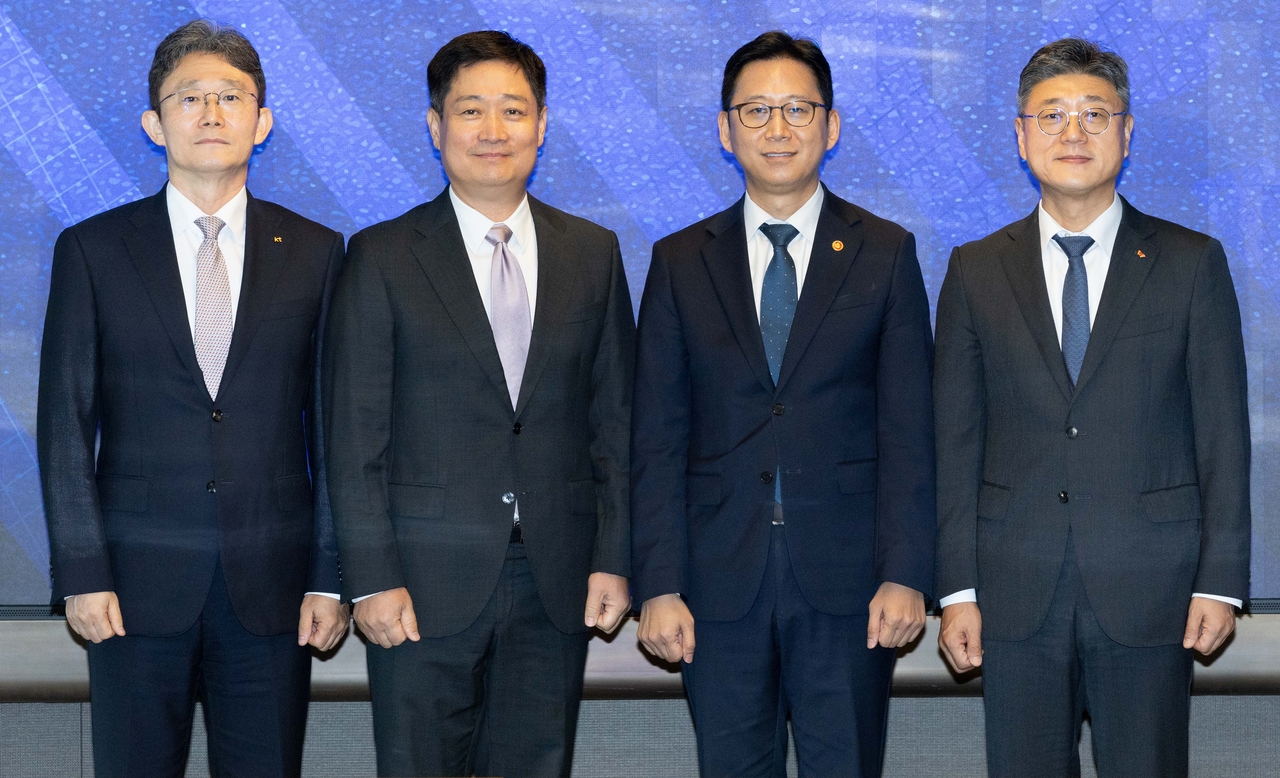
The three carriers also agreed to announce plans this month to strengthen customer benefits as part of livelihood stabilization efforts, with the benefits set to take effect in August and September.
The three carriers agreed that telecoms play a critical role in stabilizing people's livelihoods, given that telecom services are an essential part of daily life. Accordingly, they committed to rolling out a range of enhanced customer benefits as part of livelihood stabilization efforts.
Among the specific measures, the plans are expected to include expanded membership perks and partnership discounts in everyday service categories. Temporary additional benefits on rate plans will also be announced to ease the financial burden on youth and vulnerable groups.
The carriers also agreed on the need for balanced growth and mutual development with the mobile phone retail industry, mobile virtual network operators and the information and communications construction sector. They committed to fostering a healthy retail environment — including discouraging customers from being steered toward high-cost rate plans — as well as continuing to improve wholesale pricing and expand business opportunities for partners.
sjpark@heraldcorp.com