![Participants pose for a photo at the joint unveiling ceremony and workshop marking DGIST's selection for the Glocal Lab program. [DGIST]](https://wimg.heraldcorp.com/news/cms/2026/07/23/news-p.v1.20260723.2a270ddc393c411aa44458b703f7825b_P1.jpg)
The Daegu Gyeongbuk Institute of Science and Technology's Brain Engineering Convergence Research Center and Institute of Robotics and Mechatronics held a joint unveiling ceremony and workshop Wednesday to mark their selection for the government's 2025 Glocal Lab program in science and engineering academic research support.
The Glocal Lab program will receive a total of 27.9 billion won ($18.2 million) over nine years, comprising 27 billion won in government funding and 900 million won from the city of Daegu.
The event began with a plaque unveiling for both research organizations, followed by a joint workshop and panel discussion introducing key research projects and visions. Participants shared the latest research trends in brain engineering and robotics and explored ways to identify convergence research topics and broaden the reach of their findings.
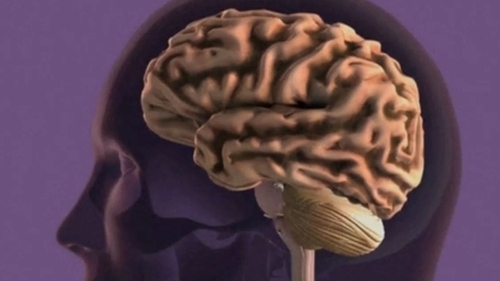
The Brain Engineering Convergence Research Center will develop neural circuit digital twin technology based on a "Neuro-Replica" framework, digitally replicating the structure and operating principles of real brain neural circuits to enable precise analysis of brain function and disease. The center plans to extend this work into AI-based brain disease prediction, personalized neurostimulation and next-generation artificial sensory technology, with the aim of driving innovation in future medicine and healthcare.
The Institute of Robotics and Mechatronics will develop next-generation robot technologies and human-robot integration platforms centered on "TransHuman Robotics," expanding human motor, sensory and cognitive capabilities. The two organizations plan to link brain engineering — which investigates how the brain works — with robotics technology that brings those principles into the real world, spreading their research outcomes across rehabilitation, healthcare, smart manufacturing, and fields such as space and marine exploration.
Choi Ji-woong, director of the Brain Engineering Convergence Research Center, said the center would "produce world-class research results that contribute to overcoming brain diseases and advancing future medicine, based on Neuro-Replica technology."
Park Seok-ho, director of the Institute of Robotics and Mechatronics, said TransHuman Robotics requires convergence across robotics, brain science, AI and medicine. "We will expand collaboration with leading research institutions at home and abroad to emerge as a global robotics research hub that meaningfully transforms human life," he said.
DGIST President Lee Geon-woo added that the institution would "actively support DGIST's rise as a world-class innovative university, centered on strategic research areas including physical AI, human digital twins and quantum sensing."
nbgkoo@heraldcorp.com