South Korea's financial regulator has signaled that it will classify digital asset custody as a separate business category and will not force exchanges to spin off their custody operations.
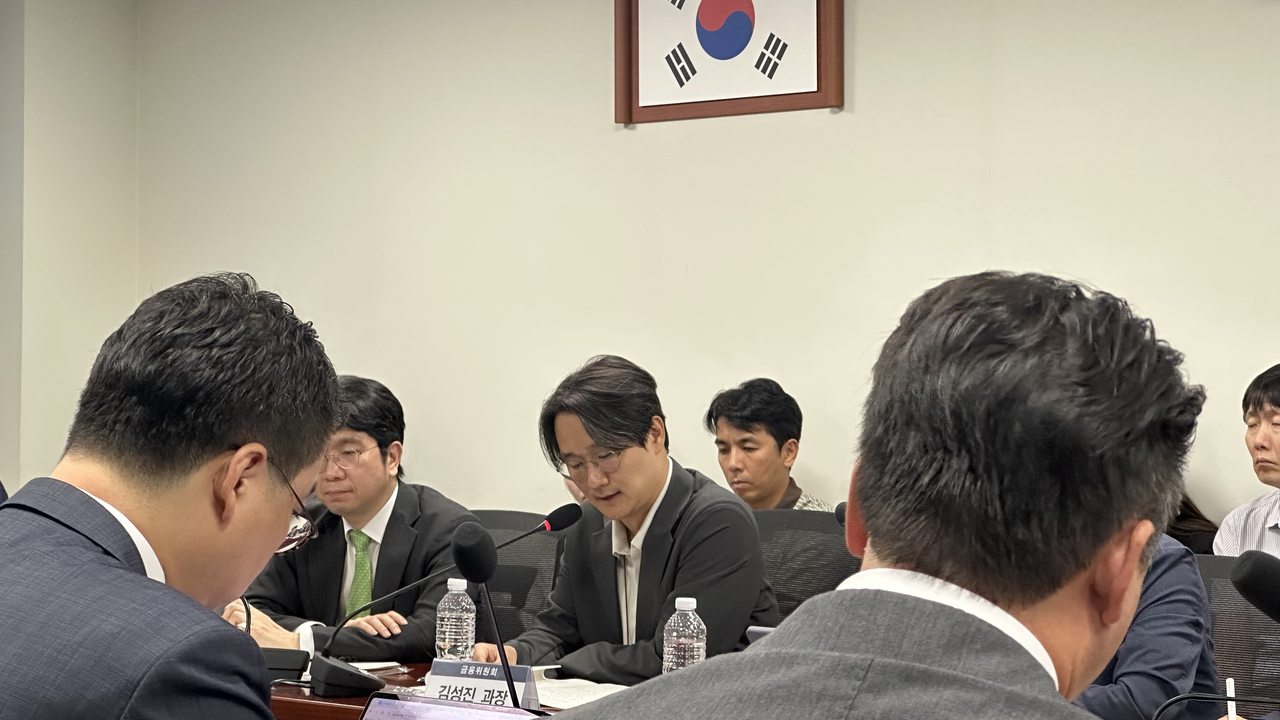
Kim Seong-jin, head of the Financial Services Commission's virtual assets division, made the remarks Thursday at an academic conference on opening the digital asset market to corporations and building a safe digital asset ecosystem, held at the National Assembly Members' Office Building in Yeouido, Seoul. He indicated that digital asset custody — widely regarded as key infrastructure for corporate market participation — would be institutionalized as a distinct business line. Custody refers to the safekeeping and management of digital assets and private keys on behalf of corporations and institutional investors. "If the safe storage and management of digital assets is not guaranteed, the various transactions built on top of that cannot proceed smoothly," Kim said. "I agree that it is important for custody to establish itself as a core piece of infrastructure."
He added that there was little room for disagreement on classifying custody as a separate business under the forthcoming Phase 2 digital asset legislation. "We are working through how to design appropriate entry regulations and conduct rules," he said.
The FSC is also examining the relationship between existing trust business operators and digital asset custody providers. Custody resembles trust business in that it holds assets on behalf of clients, but the key difference is that it manages private keys — which control access to digital assets — rather than physically holding securities or tangible assets.
The commission is also reviewing what level of licensing requirements should apply when financial firms enter the digital asset custody market. Kim cited the EU's approach of assessing functional equivalence between existing financial services and digital asset services as a basis for streamlining entry requirements, saying the FSC would "review the regime with reference to overseas cases."
On the question of fully separating custody operations from exchanges, Kim struck a cautious note. While reducing conflicts of interest is necessary, he said, no overseas jurisdiction uniformly prohibits exchanges from offering custody services, and user convenience must also be taken into account.
"We understand it is difficult to find overseas cases where custody functions have been forcibly separated from exchanges," Kim said. "I think the direction should be to complement conduct regulations in a way that balances the trading convenience of general users with the conflict-of-interest issues that can arise within exchanges."
Industry experts at the conference also recommended separating the functions of exchanges and custody providers, but said risks should be managed through mandatory external custody requirements and restrictions on related-party transactions rather than an outright ban on combined operations.
Lee Jeong-du, a researcher at the Korea Institute of Finance, said anti-money-laundering concerns remained because adequate governance systems to protect corporations and stakeholders and verify beneficial ownership had not yet been established. "We need to discuss how to design the custody regime while also improving transparency through mandatory external custody," he said.
Lee added that even a full ban on exchanges operating custody services could be circumvented through subsidiaries. "Rather than an outright ban on combined operations, it would be preferable to manage risks by requiring client assets to be held externally and restricting transactions between related parties," he said.
The FSC also noted that corporations are likely to prefer using separate third-party intermediaries over trading digital assets directly on exchanges. Kim said corporate digital asset trading resembles negotiated trades rather than competitive order-matching on stock markets, adding that "there is a need to allow, to some extent, various forms of trading defined through separate intermediaries." The remark was interpreted as an acknowledgment that demand for over-the-counter transactions — where corporations agree on price and volume with a counterparty in advance rather than matching orders on a public exchange order book — could grow significantly.
Meanwhile, the FSC is preparing guidelines for digital asset trading by general corporations, beyond non-profit entities. The timing of the guidelines' release will be coordinated with relevant agencies, as it is tied to the Phase 2 digital asset legislation.

kyoung@heraldcorp.com