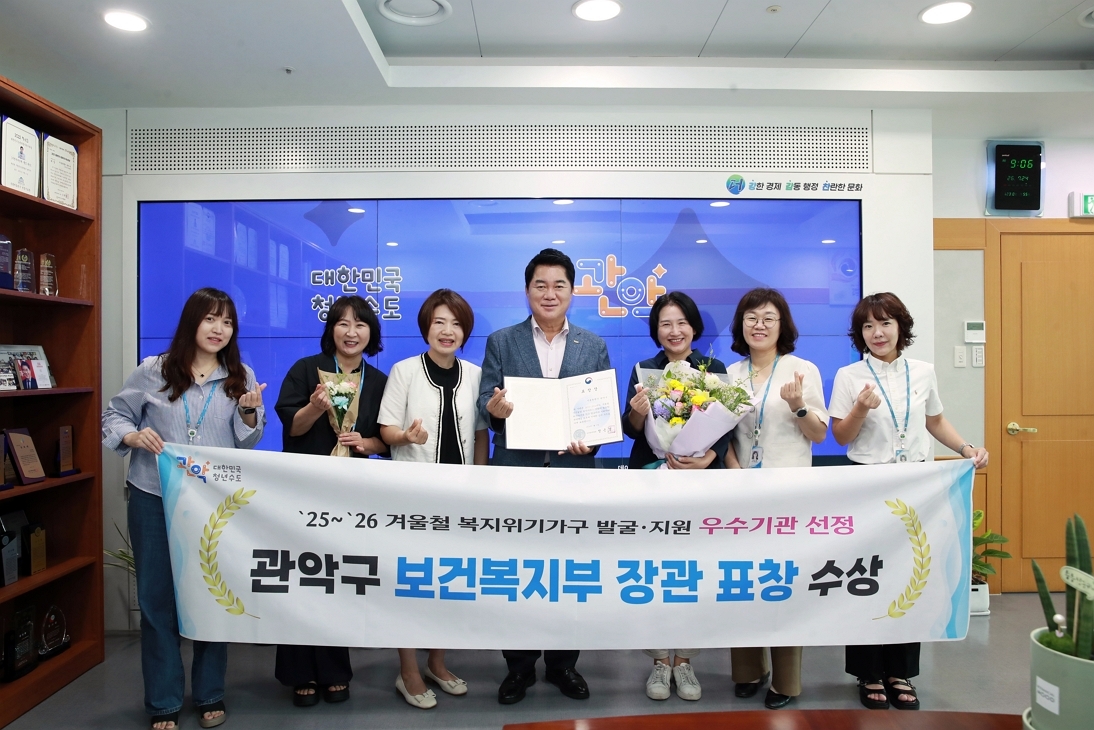
Gwanak-gu, led by District Mayor Park Jun-hee, has received the Ministry of Health and Welfare minister's award in recognition of its efforts to proactively identify households in welfare blind spots during winter and connect them with tailored welfare services — an initiative carried out in partnership with local residents.
The award is particularly meaningful because it recognizes not merely routine welfare check-ins or after-the-fact support, but a resident-driven system in which community members spot warning signs on the ground and the district administration immediately links those households to welfare services.
From November 2025 through February 2026, the district ran an intensive winter campaign to identify and support households in welfare crisis, finding a total of 1,782 households and connecting them to 2,384 cases of support — including public benefits, private resources and care services.
Gwanak-gu placed particular emphasis on field-based, resident-led outreach to reach households that administrative data alone would struggle to flag.
One flagship initiative is "Woori Dongne Juju Day," in which neighborhood block leaders patrol their communities and look for everyday warning signs — accumulated mail, unpaid utility notices left unattended or prolonged absences — then refer anyone who may need help to the local community center or welfare office. The program's core strength lies in enabling residents closest to their neighbors to notice changes and ensure those signals translate into real welfare support.
The "Sintongbangtong Welfare Platform," operated jointly with the Gwanak-gu chapter of the Korea Licensed Real Estate Agents Association, has also helped expand the community-based outreach network. Licensed real estate agents, who know local conditions well, are positioned to spot at-risk households that conventional administrative channels may miss — such as unregistered move-ins or residents living off the grid — and refer them to the district for welfare counseling and support.
The district has also lowered the barrier to reporting by making it easy for any resident to flag a struggling neighbor through its website, welfare counseling center and a KakaoTalk crisis-household reporting channel. The move shifts the model away from relying solely on individuals to apply for help themselves, toward a structure in which the wider community shares responsibility for identifying those in need.
In addition, the district has built an integrated support system with Gwanak Police Station, Gwanak Fire Station and local community welfare centers, ensuring that at-risk households discovered during emergency calls or field responses are connected to welfare services. Households identified in the field are managed systematically through initial counseling, crisis assessment, service referral and follow-up monitoring.
Reflecting the district's high proportion of single-person households, Gwanak-gu operates a dedicated single-person household support center at each of its 21 neighborhood community centers. The district plans to continue linking resident-led outreach with its single-person household support system to cast an ever-tighter net over welfare blind spots.
"Identifying households in welfare blind spots often begins not with administrative data, but with a neighbor's attention," District Mayor Park said. "The participation of residents who did not overlook small signals was the greatest force behind these results." He added that the district would continue working with residents to find at-risk households early and strengthen a community-centered welfare safety net so that every warning sign leads swiftly to support.
seouldream01@heraldcorp.com