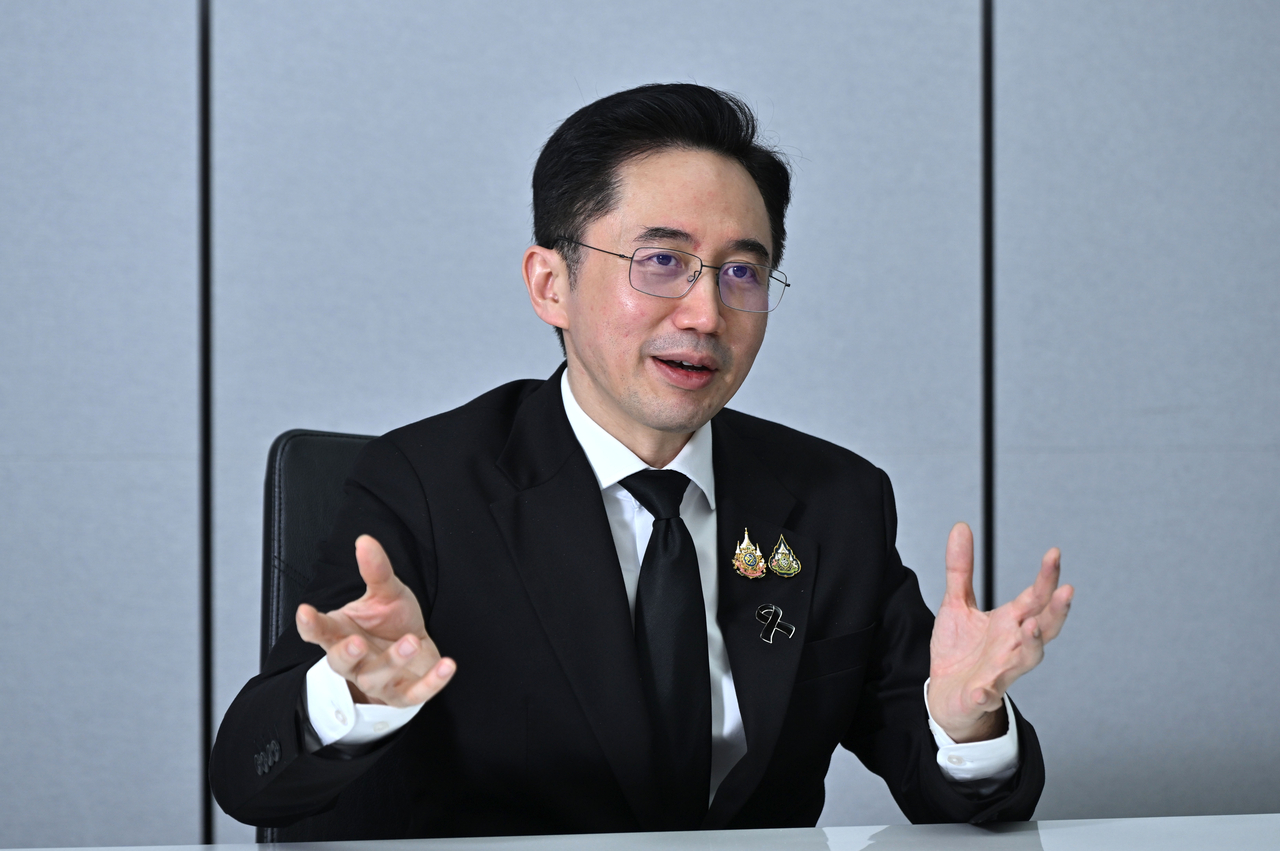
"We should not stop at attracting individual Korean companies one by one — we need to build a collaborative ecosystem that covers everything from talent development to research, technology commercialization and investment."
Thai Deputy Prime Minister and Minister of Higher Education, Science, Research and Innovation (MHESI) Yotsanan Wongsakul visited South Korea for the Thailand-Korea Business Forum held in Seoul and sat down for an exclusive interview on Wednesday. He said he intends to build a comprehensive biotech industry cooperation ecosystem connecting universities, startups and large companies in the two countries.
"We want to systematically manage talent in both countries and connect them to the right fields," Yotsanan said. "Researchers, engineers and medical professionals from Korea and Thailand can jointly develop medical technologies and grow them into startups or joint ventures that can enter the Thai market and other overseas markets."
He said major Korean universities — including Seoul National University, KAIST and Pohang University of Science and Technology — could play a central role in building such a cooperation framework.
The Thai government is also reviewing a joint startup incubation program that would involve government agencies and private accelerators from both countries. Under the plan, Thai startups would gain access to overseas investment and global markets through Korean partners, while Korean investors could identify high-growth technologies and products in Southeast Asia through collaboration with Thai companies.
The Thai government also pledged to ease the regulatory and administrative hurdles Korean companies may face when entering the local market. "Various regulations and administrative paperwork can become barriers for investors," Yotsanan said, "but government agencies including Thailand's National Innovation Agency will actively support business-to-business cooperation and the market entry of new products."
He also highlighted Thailand's diverse patient population and medical and clinical data as strengths that could complement Korea's biotech and medical technology capabilities. Joint clinical trials, he said, would allow the two countries to share disease cases and data that are difficult to secure in a single country alone, accelerating the development of medical devices and healthcare products.
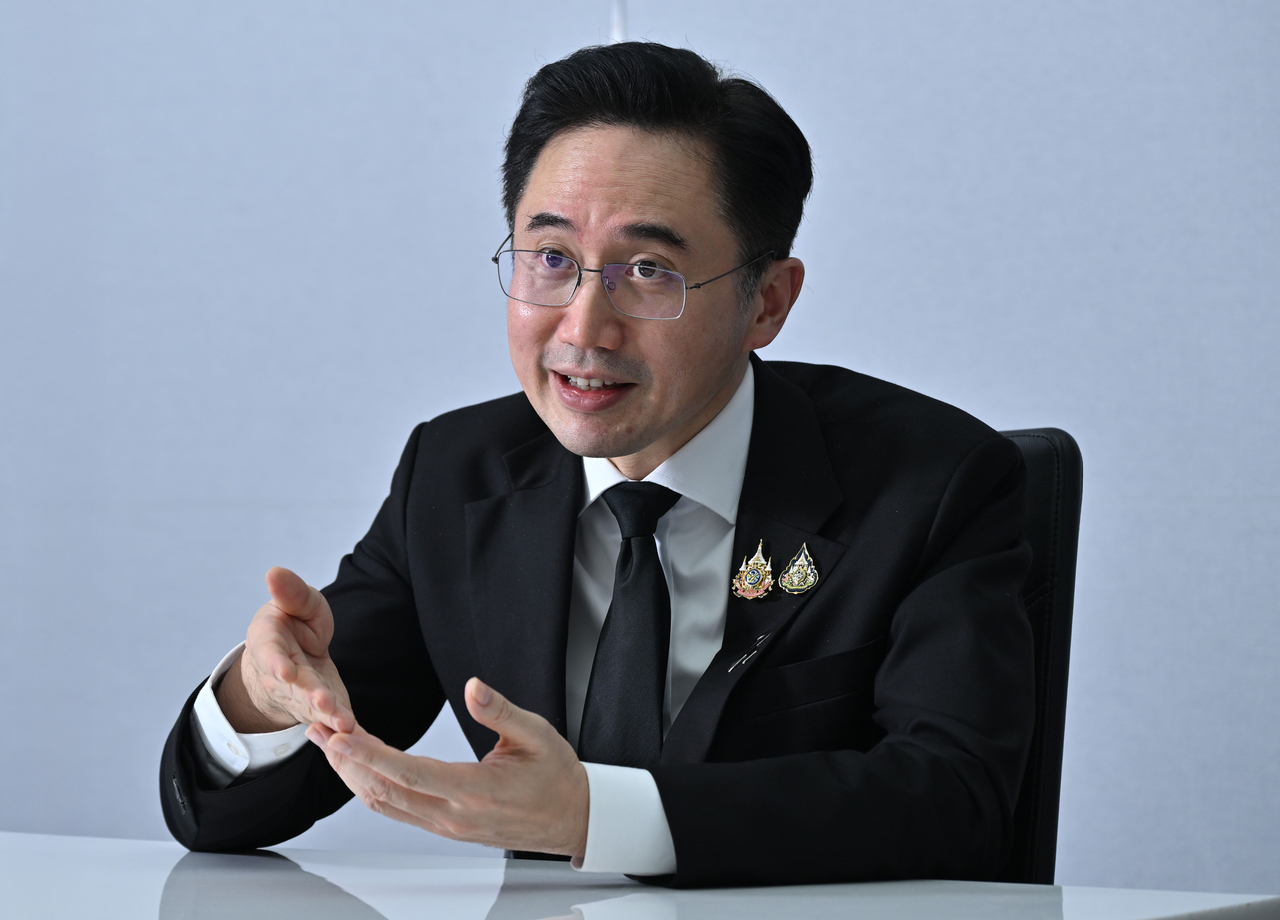
During his visit, Yotsanan also discussed with Seoul National University the possibility of sharing a database for clinical research. He said Thailand holds strong capabilities in medical services, tropical medicine, biodiversity and genomics, noting that the country attracts patients not only from within Thailand but also from neighboring countries and other regions seeking treatment, giving it access to a broad range of medical data.
He said Thailand's accumulated data on tropical diseases and its national genomics initiative, Genomics Thailand, could also serve as a foundation for joint research between the two countries. Genomics Thailand is a national strategic medical project the Thai government has pursued since 2019, with a budget of 4.5 billion baht (about $136 million). It aims to analyze the genomes of 50,000 Thai citizens to build a genetic information database and apply it to the precision medicine industry.
Yotsanan said education cooperation should be the starting point of the two countries' biotech partnership. He proposed expanding dual-degree programs between Thai and Korean universities and establishing programs in which graduate students carry out thesis research and projects under the joint supervision of institutions from both countries.
He also said Thailand intends to actively learn from Korea's experience in extending university-based cooperation through to the technology commercialization stage.

Yotsanan pointed to Korean universities' technology licensing offices and university technology holding companies as prime examples. He said these institutions provide early-stage funding to startups, helping researchers validate the commercial potential of their technologies before attracting private investment. "Korea has a domestic innovation ecosystem that connects research, technology validation, clinical trials and commercialization," he said. "It is a very impressive system."
Meanwhile, the Thai government delegation also discussed with KT Corp during the visit plans to cooperate on AI capability training and physical AI, as well as ways for Thailand's manufacturing sector to participate in robot, semiconductor and electronic components supply chains.
Yotsanan said he also plans to visit SK Bioscience to discuss biotech industry cooperation and the possibility of launching pilot projects. "The ultimate goal is not to pursue individual projects in isolation, but to connect companies, universities and investment institutions in both countries," he said. "Once those relationships are in place, we can more quickly improve the chances of success for new technologies by leveraging the strengths and markets of both countries."
realbighead@heraldcorp.com