Korea Customs Service detects 7.2 trillion won in illegal forex deals in first half of 2026, forms virtual-asset tax-evasion task force
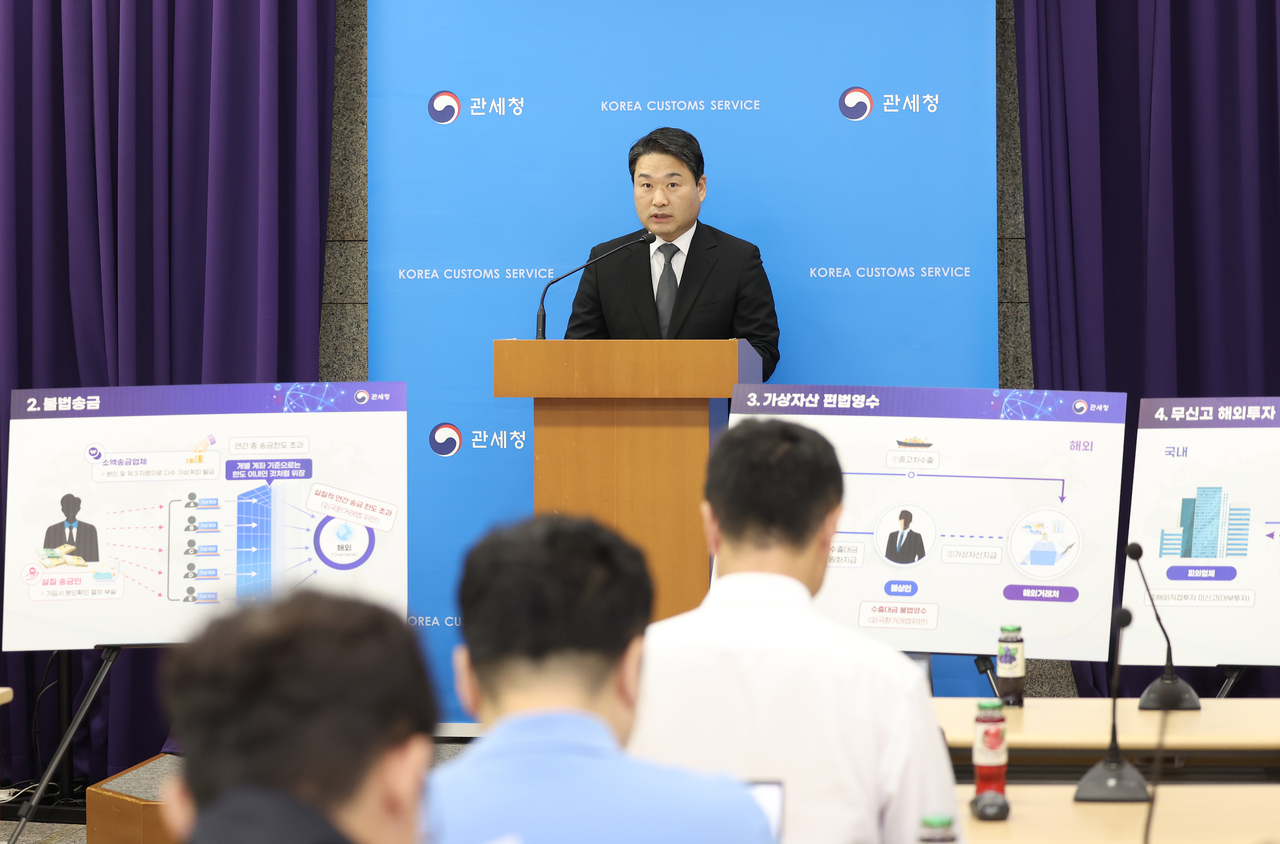
Customs authorities have caught illegal foreign-currency transactions worth trillions of won carried out by operators exploiting the high exchange rate environment.
The Korea Customs Service said it detected 792 cases of illegal foreign-exchange transactions totaling 7.2 trillion won ($4.91 billion) in the first half of 2026.
The agency had designated illegal forex dealings — which harm foreign-currency liquidity amid persistently high exchange rates — as a priority enforcement area, concentrating investigative resources on capital flight and illicit remittances while also conducting active foreign-exchange inspections.
The crackdown covered capital flight, which directly drains foreign currency overseas, as well as irregular illegal remittances using "hwanchigi" (informal currency swaps) and virtual assets, the collection of export proceeds in virtual assets, and unreported overseas investment.
▶ Capital flight refers to the illegal practice of investing in overseas real estate with funds borrowed from domestic credit institutions, then concealing the resulting profits abroad rather than repatriating them as required by law at the time of the transaction.
▶ Illegal remittance refers to cases in which small-scale overseas remittance operators sent funds exceeding the legally permitted ceiling through methods not allowed under the Foreign Exchange Transactions Act.
▶ Collecting export proceeds in virtual assets refers to the practice of receiving export payments in virtual assets — rather than in legal tender such as US dollars — thereby preventing foreign currency that should be repatriated from entering the country.
▶ Unreported overseas investment refers to cases in which overseas accounts receivable were not repatriated to Korea but instead invested abroad without declaration, causing foreign currency to flow out of the country.
The Korea Customs Service recognized two teams for outstanding performance in detecting these types of illegal transactions: Investigation Team 2 of the Foreign Exchange Investigation Division 2 at Seoul Customs, and the Foreign Exchange Inspection Team of Investigation Division 3 at Incheon Customs.
Investigation Team 2 at Seoul Customs uncovered a small-scale overseas remittance operator that had sent a total of 2.5 trillion won abroad through illegal methods not permitted under the Foreign Exchange Transactions Act.
The investigation also confirmed that the illegally remitted funds included proceeds from crimes such as voice phishing and illegal gambling.
The Foreign Exchange Inspection Team at Incheon Customs detected numerous cases in which export proceeds of about 90 billion won were received either in virtual assets — rather than in legal external means of payment such as US dollars — or in Korean won through hwanchigi, ultimately preventing foreign currency that should have been repatriated from entering the country.
Korea Customs Service Commissioner Lee Jong-wook thanked staff for their efforts to crack down on illegal foreign-exchange transactions that undermine exchange-rate stability despite difficult working conditions, and called on them to continue responding firmly to illegal outflows of foreign currency that destabilize the exchange rate.
Lee added that the agency would work with relevant government agencies and private-sector experts to establish a task force tentatively named the "Virtual Asset Tax Evasion Investigation TF" to thoroughly crack down on illegal foreign-exchange transactions involving virtual assets, which are difficult to detect, as illicit foreign-currency outflows grow increasingly serious.
kwonhl@heraldcorp.com