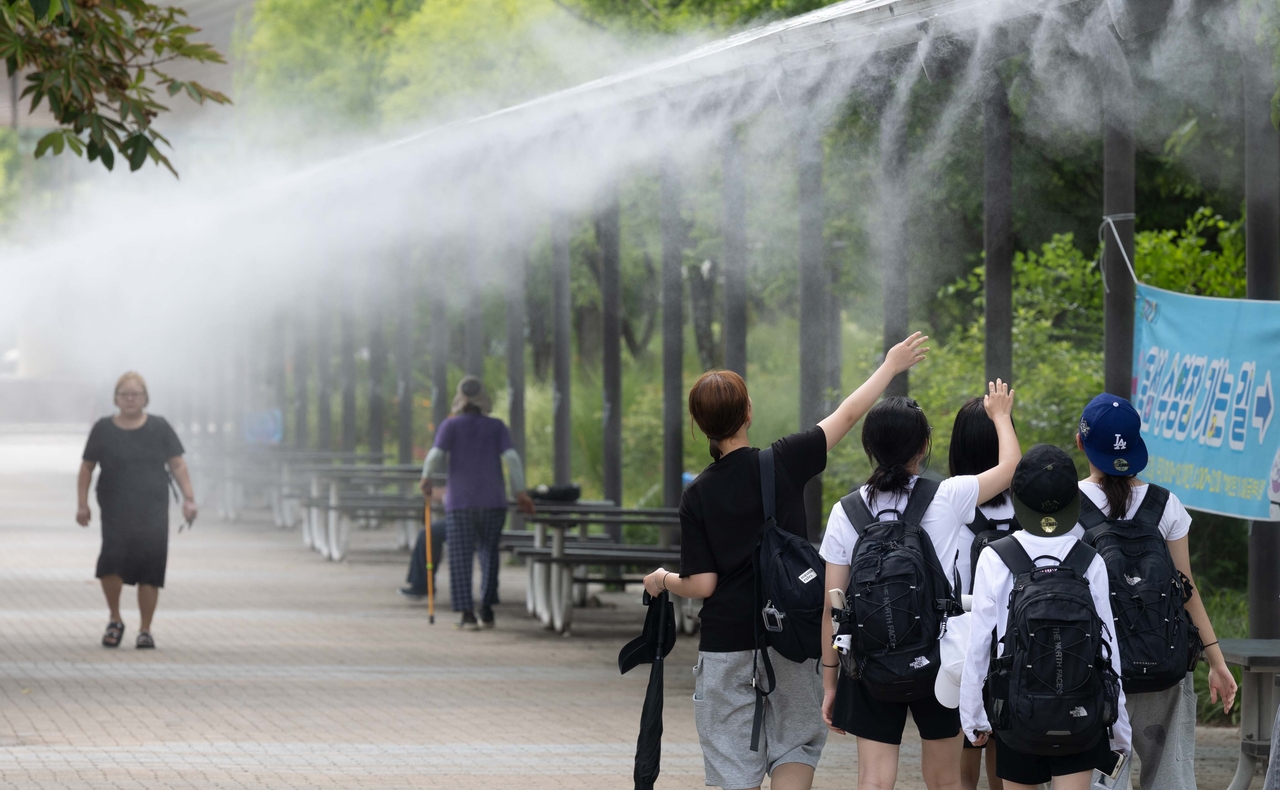
Seoul has been under a heat wave advisory since July 23, and as of 11 a.m. Wednesday the city upgraded the alert to a full heat wave warning for its southeastern, northeastern and southwestern zones. It is the second heat wave warning issued in Seoul this summer and the first since July 11 — an 18-day gap.
The warning covers 19 autonomous districts across three zones: the southeastern zone (Gangdong-gu, Songpa-gu, Gangnam-gu and Seocho-gu), the northeastern zone (Jungnang-gu, Seongdong-gu, Gwangjin-gu, Dobong-gu, Nowon-gu, Gangbuk-gu, Seongbuk-gu and Dongdaemun-gu) and the southwestern zone (Gangseo-gu, Yangcheon-gu, Guro-gu, Yeongdeungpo-gu, Dongjak-gu, Gwanak-gu and Geumcheon-gu). A heat wave warning is issued when the daily maximum apparent temperature is forecast to exceed 35 degrees Celsius for two or more consecutive days.
With the heat wave showing no sign of easing and concerns growing over heat-related illness, the Seoul Metropolitan Government has reinforced emergency duty rosters and is directing all efforts toward heat countermeasures — including protecting vulnerable residents, operating cooling shelters and managing the safety of outdoor workers.
Following the warning's issuance, Seoul upgraded its heat wave crisis response level from "Caution (Level 1)" to "Alert (Level 2)" and expanded its integrated heat wave support operations center from five units to eight.
Earlier, on Tuesday, the city's disaster and safety director convened a joint inspection meeting with relevant departments to review the status of key measures across disaster safety, welfare, health, homeless services, construction, transportation and energy. The meeting covered emergency response systems for a prolonged heat wave, updates on heat-related illness cases, and the status of cooling shelters, vulnerable-resident protection, outdoor worker safety management and heat-reduction facilities.
To prevent casualties, the city is calling vulnerable elderly residents who need care to check on their wellbeing and dispatching staff for in-person visits when phone contact cannot be made. The city has also expanded management personnel in areas with high concentrations of homeless people and stepped up counseling and patrol activities.
To help residents who have difficulty accessing air-conditioned spaces avoid heat-related illness, the city is operating 24-hour cooling shelters at the district offices of all 24 autonomous districts throughout the heat wave special advisory period.
For construction sites commissioned by the Seoul Metropolitan Government, outdoor work is suspended between 2 p.m. and 5 p.m. except in cases involving urgent safety-related tasks.
"As the heat wave drags on, the risk of harm to residents from heat-related illness is rising, so we will keep our response systems fully operational on the ground to protect lives and safety above all else," said Choe Jin-seok, the city's director of disaster and safety. "We ask residents to refrain from outdoor activities as much as possible and to pay close attention to their health by staying well hydrated and getting adequate rest."
ikson@heraldcorp.com