A growing trend in senior welfare has elderly people who once received support turning around to care for their neighbors — a model sometimes called "senior-to-senior care." A cooking-sharing program run by the Life Insurance Social Contribution Foundation, known as "Hallo Silver Chef," is drawing attention as a self-sustaining welfare model that channels the independence of elderly people living alone into community giving.
According to the Ministry of Health and Welfare, as of late April this year, 30,675 seniors nationwide are taking part in community care activities through an integrated care senior employment project. Of those, 86.1 percent are responsible for checking on the well-being and health of vulnerable elderly neighbors. In low-income self-sufficiency programs as well, participants who have built a foundation for economic independence are stepping up to donate and volunteer.
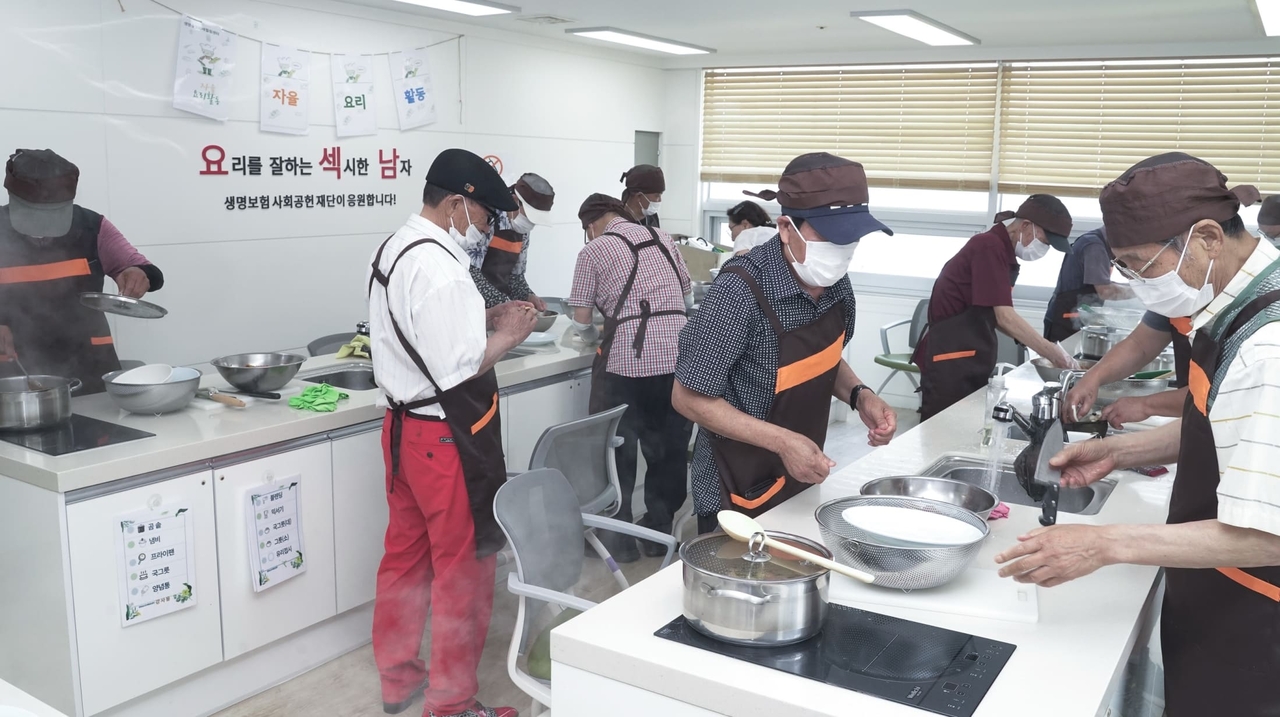
The Hallo Silver Chef program has seniors prepare food at their centers and deliver it to vulnerable members of the local community. It runs monthly from May through November, excluding August, and currently operates in partnership with 18 institutions nationwide — seven child welfare facilities, eight senior welfare facilities, one facility for people with disabilities, and two organizations supporting low-income households. Participants handle every step themselves, from cooking and packaging to delivery.
The program is built on the Life Insurance Foundation's flagship senior lifestyle initiative, the "Life Forest 100-Year Healing Center." Designed to help low-income elderly men living alone rebuild daily independence and social connections, it operates at 15 centers across the country. A cumulative total of 6,434 people have taken part, with 477 enrolled this year. Centers offer daily life independence programs such as cooking classes and home organization, along with programs for social engagement, health promotion and cognitive rehabilitation.
At the Dongducheon Senior Welfare Center, more seniors have gained the confidence to prepare their own meals through repeated cooking activities, and a sense of social isolation has eased as participants have begun checking in on one another. At the Seongnam Jungwon Senior Comprehensive Welfare Center, participants pack meals they have cooked themselves and deliver them to a residential welfare facility for elderly people living alone in the area.
Yu Sang-yeol, a participant in the Hwamok class, said delivering food directly to fellow seniors living alone had reminded him again that he, too, is a valued member of society.
The Life Insurance Foundation was established in 2007 through joint contributions from domestic life insurance companies and works to address welfare blind spots across all stages of life. Last year, its SOS Life Phone crisis counseling service handled 376 consultations and assisted in the emergency rescue of 130 people. Its counseling services "Madeuran" and "Da Deureojulgae" conducted 39,647 and 40,837 sessions, respectively. Its youth mental health platform "Emotion Store" was used by 408,365 people last year.
Lee Ji-young, head of the foundation's project promotion division, said the activities of people who once received help now passing on words of care and practicing generosity with their neighbors mark "a new turning point for senior social contribution." She added that the foundation would continue working through lifecycle-based social contribution programs to build a community where every generation looks out for one another.
psj@heraldcorp.com