
CPI data due Tuesday; Monetary Policy Board meeting set for Aug. 27
Markets watch for slowdown in core, everyday-price inflation
Foreign reserves and current account balance also due
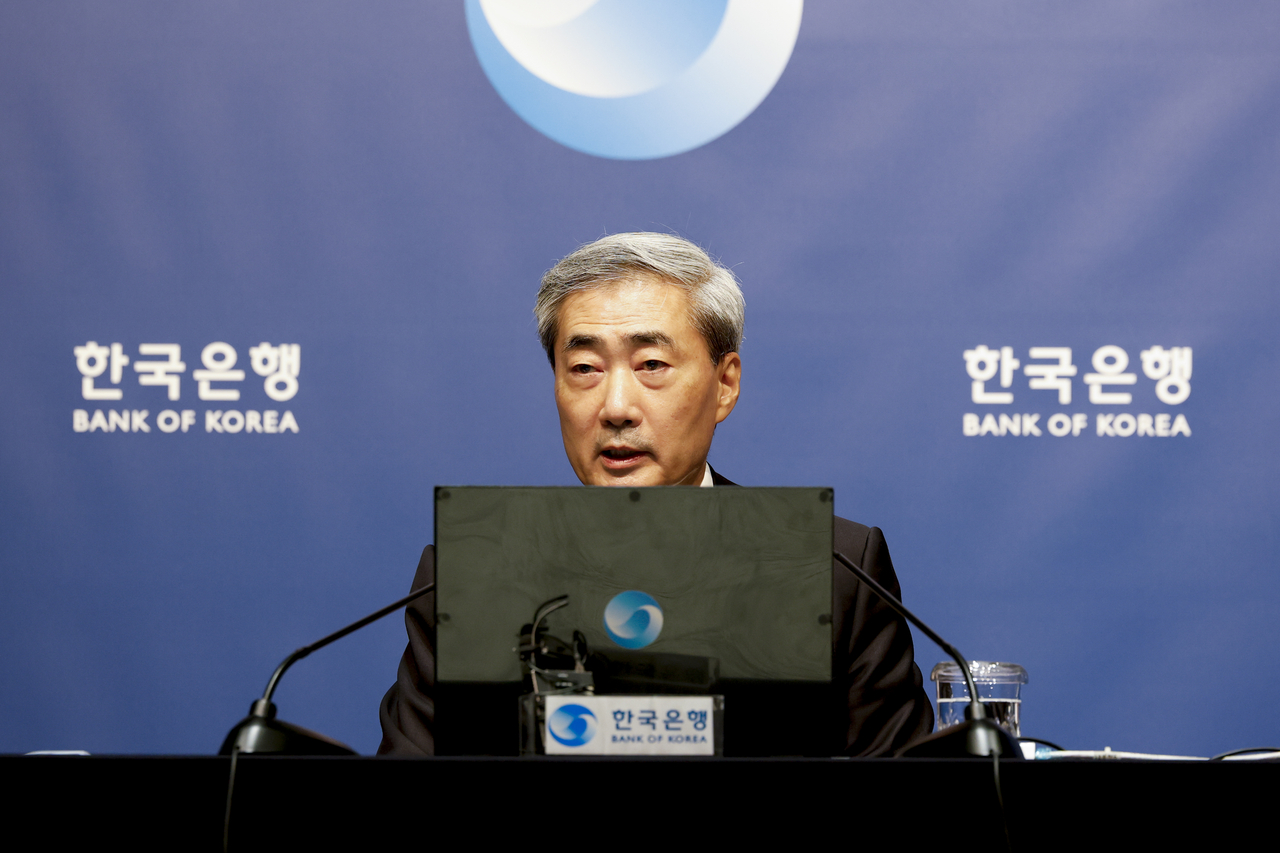
July consumer price data, due out next week, has emerged as the key variable determining whether the Bank of Korea will raise its benchmark interest rate again in August. Having lifted rates for the first time in three and a half years last month, the central bank now faces the question of whether it will follow up with a back-to-back hike at its Aug. 27 Monetary Policy Board meeting. Major external soundness indicators — including end-July foreign reserves and June balance of payments figures — are also set for release in the coming days.
July inflation data to determine August rate move
The Ministry of Statistics will release the July consumer price index report on Tuesday. June consumer prices rose 3.2 percent from a year earlier — the fastest pace since December 2023 — following a 3.1 percent gain in May, marking two consecutive months above the 3 percent threshold. Rising global oil prices driven by the Middle East war have been the main upward force.
The Ministry of Economy and Finance estimated that the government's oil price cap held June consumer inflation down by 0.4 percentage points. With President Lee Jae Myung having ordered the cap maintained until energy-price instability subsides, attention is now focused on whether July inflation will come in below 3 percent.
Bank of Korea Deputy Governor Lee Ji-ho said on July 2 that July consumer inflation was likely to ease somewhat from June, citing falling international oil prices and the government's price-stabilization measures.
However, a sub-3 percent reading would not automatically translate into a rate hold in August. The Bank of Korea said it will also monitor core inflation — which strips out volatile energy prices — and the everyday price index, which reflects households' actual cost-of-living pressures.
The Monetary Policy Board raised the benchmark interest rate by 25 basis points on July 16, lifting it from 2.50 percent to 2.75 percent. Gov. Shin Hyun-song left the door open to further increases, saying the tightening bias needed to continue.
Economic growth has also come in stronger than expected: second-quarter real GDP expanded 0.6 percent from the previous quarter, while real gross domestic income rose 3.6 percent. If July inflation fails to slow as anticipated, or if core and everyday price pressures remain elevated, the case for a consecutive August hike will strengthen. Conversely, if headline inflation falls below 3 percent and underlying price pressures also ease, the Bank of Korea may have more room to delay its next move until October or later.
Foreign reserves and current account balance also due
The Ministry of Statistics will release results of its supplementary survey on economic activity among older adults aged 55 to 79 on Wednesday, covering employment, job-seeking behavior and future work intentions.
The Bank of Korea will also publish end-July foreign reserves on Wednesday. End-June reserves stood at $427.36 billion, up $370 million from end-May. However, South Korea's ranking by country as of end-May slipped one place to 13th, falling behind Singapore.
Preliminary June balance of payments data will follow on Thursday. The cumulative current account surplus for January through May reached $141.28 billion. May alone posted a surplus of $38.61 billion, surpassing the previous record of $37.93 billion set in March. A similarly large surplus is expected for June, supported by strong semiconductor exports.
Derivatives rules and voice phishing regime to be overhauled
The Financial Supervisory Service will hold a roundtable on Wednesday with representatives from 10 major brokerages and the Korea Financial Investment Association to discuss reforms to the derivatives-linked product regime.
The FSS spent the past three months running a task force with the industry to develop stronger investor protections. The session is expected to cover measures including pre-sale risk screening by product development teams, improved post-sale disclosure, and tighter internal controls at brokerages.
An amended law and enforcement decree allowing financial, telecommunications and investigative agencies to share suspected voice phishing information takes effect Tuesday.
The FSS will also activate its "burner phone zero" system, designed to rapidly neutralize phones used in illegal lending and debt collection. The system works by automatically placing repeated warning calls at intervals of a few seconds to numbers the FSS has flagged for suspension, making it difficult to conduct illegal operations.
attom@heraldcorp.com





