
"We're just dying out here."
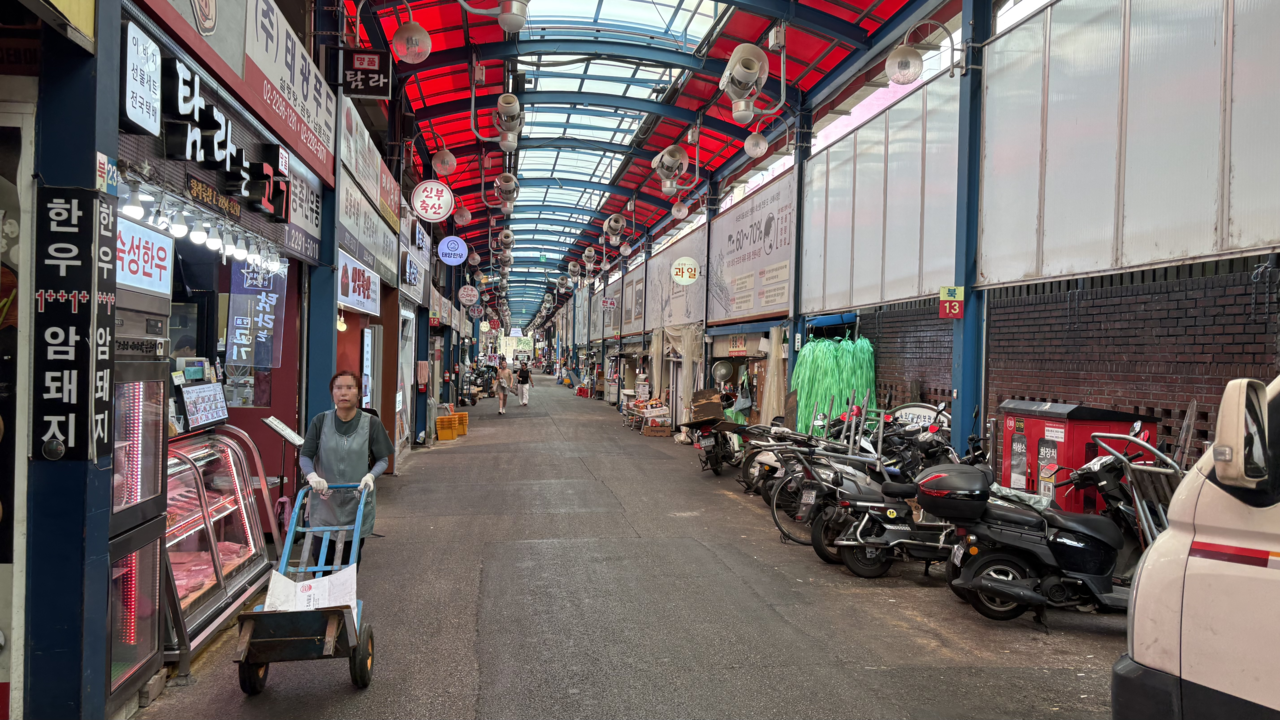
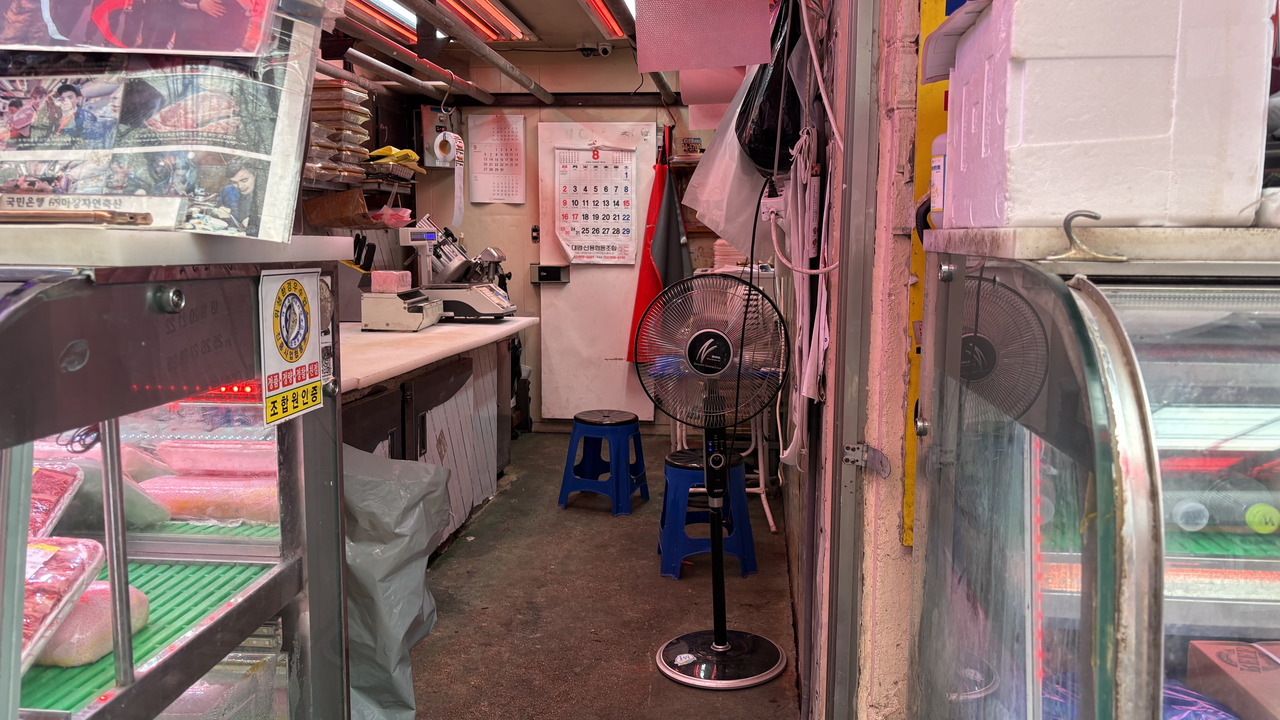
Temperatures hit 38 degrees Celsius at the Majang-dong livestock market in Seongdong-gu, Seoul, on Tuesday afternoon, and vendors were locked in a battle against the heat. Merchants fanned themselves relentlessly, leaning on small desktop fans for relief. Those trimming cuts of meat wore sleeveless shirts and draped ice packs around their necks. Frozen plastic bottles were laid across displayed cuts, and ice was packed into plastic tubs holding offal.
With the heat wave coinciding with the summer vacation season, the market was nearly deserted. Only one or two foreign tourists wandered the stalls while vendors passed the time on their phones or chatting among themselves. Jeon, 83, who has run a stall at Majang-dong for 15 years, said business was terrible. "I'm planning to close up at 3 today," he said. A neighboring vendor, Kim, said fewer people were eating meat because of the heat. "Even the customers who do show up are all just here for takeout," he said.
Suppliers were feeling the same pain. With the restaurant industry already sluggish, the heat wave has sharply cut into meat orders. "Restaurants have to place orders before we can prepare and deliver the meat, but the orders just aren't coming in," said an official at one wholesale distributor. "Some places haven't placed a single order in three months."
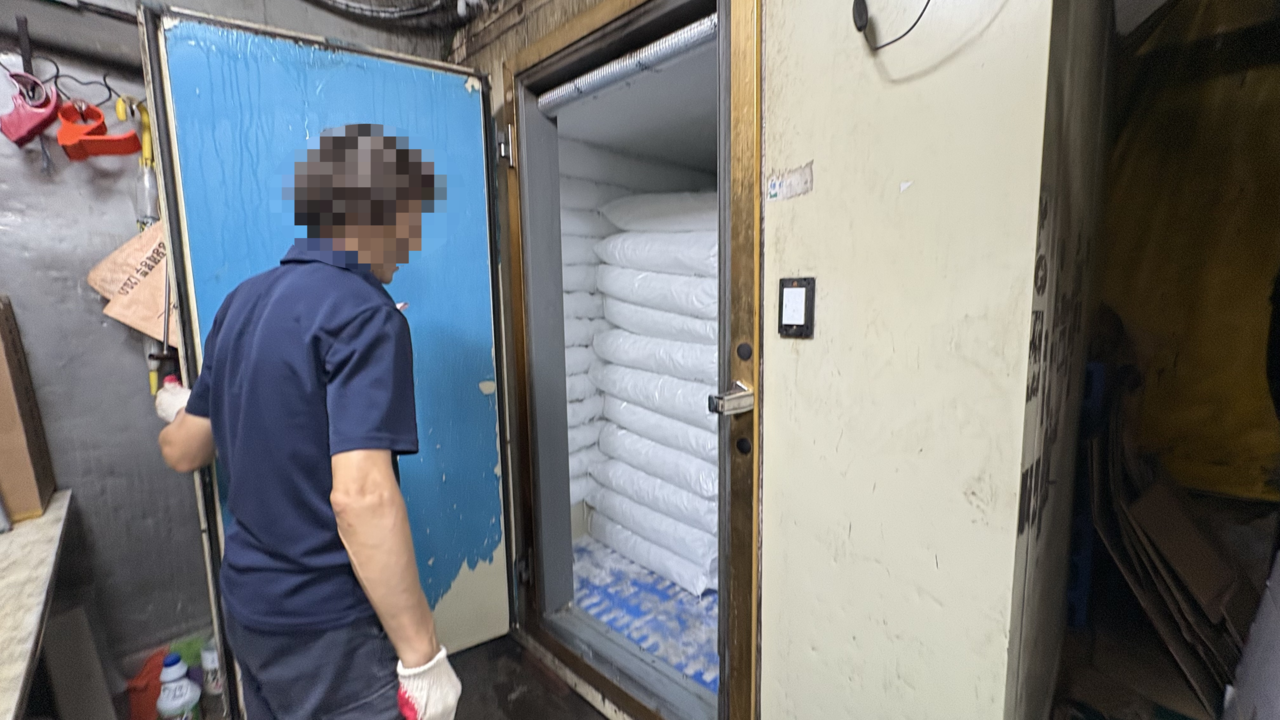
The slump in meat sales has also hurt the market's ice vendors. Cho Ju-il, 67, who has run an ice stall at the market since the early 2000s, said sales have been falling 10 percent every year. "By this time of day, more than half should be gone," he said, pulling open a freezer still stacked with more than 90 bags of ice.
Livestock prices, meanwhile, remain elevated. According to the Korea Agricultural Marketing Information Service (KAMIS) under the Korea Agro-Fisheries and Food Trade Corporation, the average price of beef tenderloin this month stands at 14,673 won ($10) per 100 grams, up 14.2 percent from 12,853 won in the same month last year. Prices edged down from the mid-15,000-won range recorded last month but remain high. Sirloin also rose 7.1 percent year-on-year, to 10,221 won per 100 grams.
Rising production costs have played a direct role. Because South Korea's livestock industry relies heavily on imported feed, it is highly sensitive to fluctuations in global grain prices and exchange rates. The import price index for feed grains in the second quarter of this year stood at 135.4, up 4.0 percent from the same period last year.
Chicken and egg prices continue to climb on the back of highly pathogenic avian influenza. The average price of chicken this month is 6,195 won per 100 grams, up 1.5 percent from 6,104 won in the same month last year. A tray of 30 eggs costs 7,360 won, up 3.8 percent from 7,088 won a year earlier.
The outlook is even more concerning as hanwoo supply is expected to shrink. The Agricultural Outlook Center at the Korea Rural Economic Institute projected that the number of hanwoo cattle raised in September will fall 3.5 percent year-on-year to about 3.213 million head. The number of hanwoo slaughtered this year is also forecast to drop 9.0 percent from last year to 862,000 head. Pork slaughter figures are similarly expected to decline 0.6 percent from last year's 18.71 million head to about 18.46 million head.
The ongoing heat wave is adding to price concerns. Pigs and poultry, which are vulnerable to high temperatures, face reduced productivity in extreme heat. According to the Ministry of Agriculture, Food and Rural Affairs, a total of 493,497 livestock had died from heat-related causes as of 9 a.m. Monday — 33,759 pigs and 459,738 poultry including chickens and ducks.
"If the heat wave drags on, livestock could experience delayed weight gain," a Korea Rural Economic Institute official said. "The three weeks leading up to Chuseok — which falls in late September — are the peak season for livestock products, so supply and prices will depend heavily on how long the heat lasts."
siuu@heraldcorp.com





