
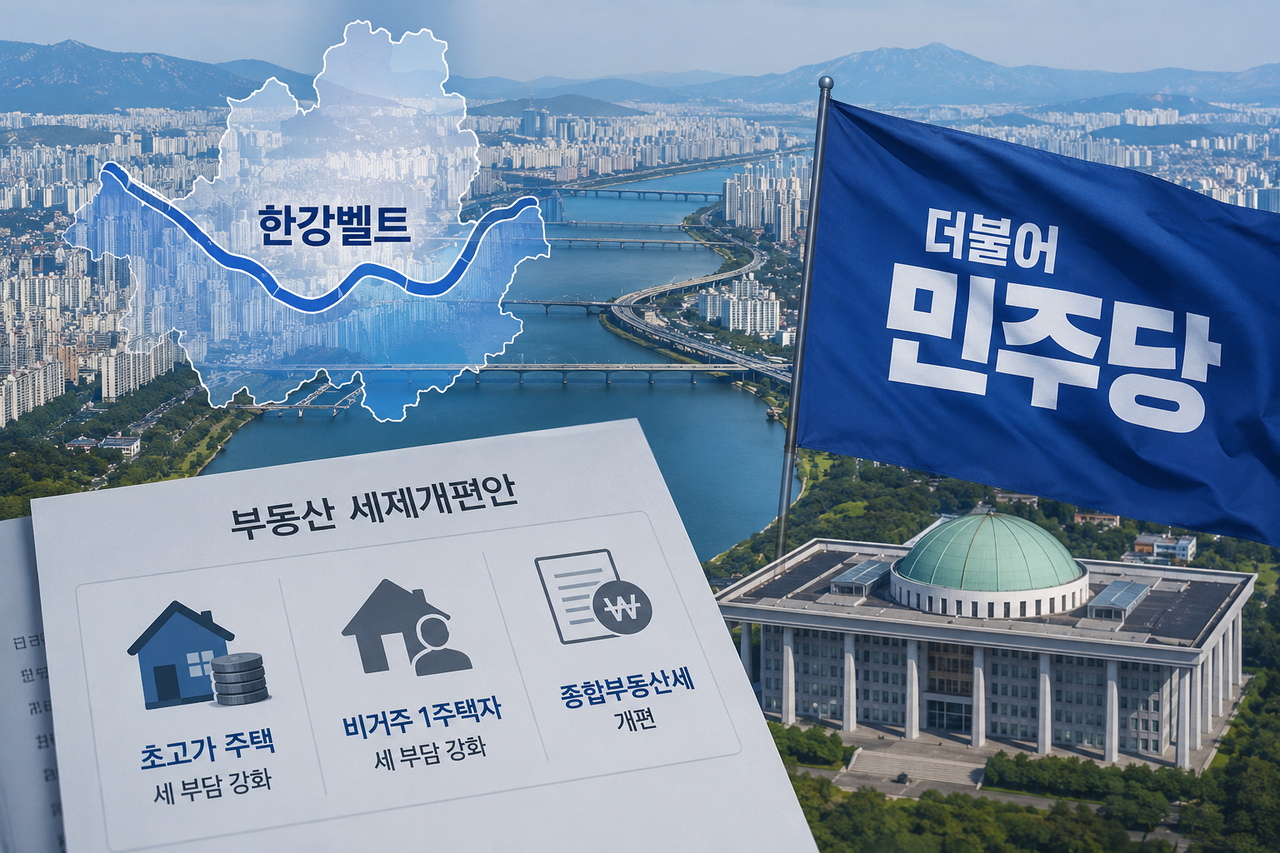
Diverging views are emerging within the Democratic Party of Korea over the government's proposed real estate tax reform, with concerns particularly pronounced among lawmakers representing the so-called "Han River belt" districts, where ultra-high-priced apartments are concentrated.
The government and party leadership maintain that the overhaul targets "tax normalization" rather than curbing home prices, but a clear temperature gap is emerging across Seoul districts depending on their character.
Some Democratic Party lawmakers representing Han River belt constituencies said Wednesday they broadly agree with the intent to increase the tax burden on ultra-high-priced homes and non-resident single-property owners, but believe "the impact on the market needs to be addressed." One lawmaker from the greater Seoul area said revisions would be "inevitable" once the reform bill reaches the National Assembly.
One lawmaker with a Han River belt constituency said in a phone interview that apartments in the 3 billion to 3.5 billion won ($2.45 million) range are common in the district, meaning the comprehensive real estate tax burden is not immediately severe. Still, the lawmaker expressed concern, saying residents tend to expect their home values to keep rising and are therefore reluctant to support any increase in the comprehensive real estate tax burden.
The lawmaker added that if the tax burden on non-resident single-property owners rises sharply, those owners will likely move back into their homes, which could reduce the supply of jeonse and monthly rent listings. "Ultimately, once the government's bill comes to the National Assembly, what needs to be revised will have to be revised," the lawmaker said.
Some also raised concerns about the psychological burden taxes can place on residents regardless of whether they are subject to the comprehensive real estate tax. A three-term lawmaker from a Seoul district said that while few constituents actually fall under the tax, "taxation is a tremendous burden on citizens." Even those not directly affected may develop a psychological resistance — a sense that they will eventually be subject to it — and the lawmaker stressed the need to listen closely to public opinion.
However, a two-term lawmaker representing a Seoul district where ultra-high-priced homes are less concentrated said the reform package should be viewed as "tax normalization," not a real estate measure.
"The government has officially explained that this overhaul is tax normalization, not a real estate policy," the lawmaker said, warning that framing it as a tool to rein in home prices risks blurring the policy's original intent.
The same lawmaker nonetheless called for supplementary measures, saying the government's jeonse and monthly rent policies are "in effect nonexistent." Supply measures and steps to stabilize the jeonse and monthly rent markets should accompany the tax reform, the lawmaker said.
Some within the party have also argued that the government should have announced housing supply measures and financial policy steps before unveiling the tax reform package. Plans for greater Seoul housing supply and eased loan regulations for young adults and newlyweds had reportedly been under consideration for a July announcement but were pushed back.
Amid the debate, Democratic Party lawmakers from Seoul constituencies are set to hold a separate meeting at the National Assembly on Thursday to discuss issues facing the capital. One lawmaker expected to attend said the gathering was not convened specifically over the real estate tax, but suggested that related discussions would "naturally come up."
thanks@heraldcorp.com
addressh@heraldcorp.com





