
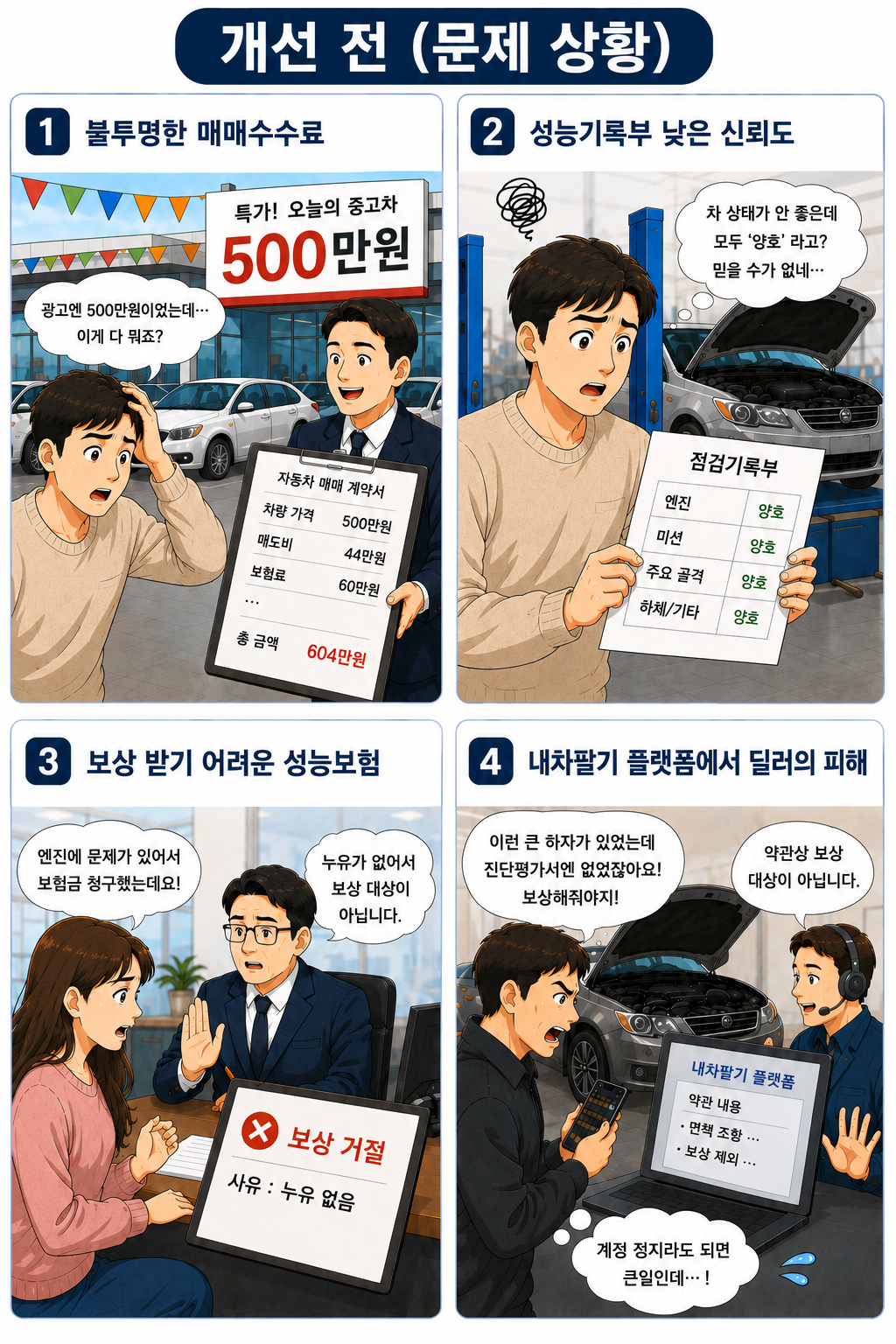
The government has unveiled a package of measures to protect used-car buyers from excessive fees and fraudulent vehicle inspection records.
Dealers will be required to display the total price — including all fees on top of the vehicle price — when advertising online, and the government will establish detailed vehicle inspection guidelines. Dealers who file inaccurate inspection reports on key items such as flood damage or accident history will face penalties including business suspension, regardless of intent.
The Ministry of Land, Infrastructure and Transport said Thursday it finalized the used-car consumer protection measures following deliberations at a national policy coordination meeting chaired by the prime minister, aimed at improving transparency and fairness in the used-car market.
The government noted that while the used-car market is significant — with about 2.5 million vehicles traded and 880,000 exported annually — public trust remains low. It cited the fact that 80 percent of used-car complaints center on poor vehicle condition and inspection records. Inadequate inspection standards and insufficient legal grounds for penalizing inspection errors were also cited as reasons for the new measures.
The ministry also took into account what it described as unfair practices by some popular car-selling platforms, which have shifted the cost of inspection errors onto small dealers or restricted their access to services over complaints. The industry has raised concerns that such cost burdens could ultimately be passed on to end consumers.
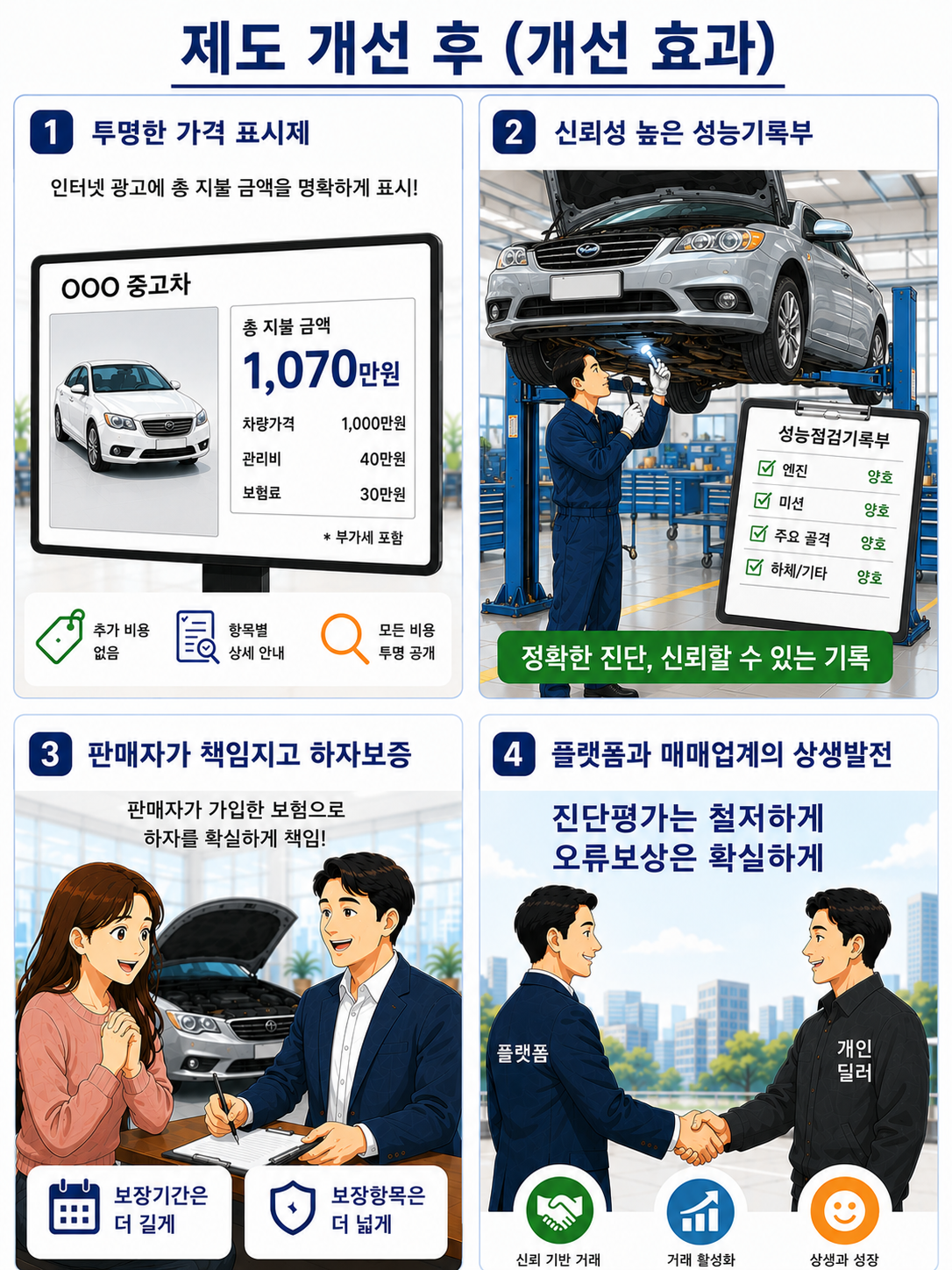
In response, the ministry will require dealers advertising used cars on online platforms to display the total price inclusive of all fees, not just the vehicle price.
To strengthen the reliability of vehicle condition information, the ministry will overhaul inspection record forms to reflect current realities and establish detailed inspection guidelines to improve quality. Inspection errors involving key items such as flood damage and accident history will be subject to penalties including business suspension, regardless of whether the error was intentional. The ministry will also pursue industry support measures, including adjusting inspection fees to more realistic levels.
The government will also strengthen seller warranty obligations. Dealers will be assigned warranty liability in line with civil law provisions and practices in major OECD countries. The existing performance insurance — previously taken out by inspectors — will be consolidated into a mandatory insurance policy for dealers, with expanded coverage periods and items, while premiums are expected to fall below current levels.
Reliability data — including defect rates for dealers and vehicle inspectors — will be disclosed publicly each year, and top-performing businesses will be designated based on that information. The aim is to encourage dealers to manage vehicle quality and defects more rigorously.
Consumers will also gain the right to cancel a purchase within seven days if a major component such as the engine develops a defect requiring excessive repair costs or time. Qualifying cases include repair bills of 3 million won ($2,100) or more, repair costs exceeding 30 percent of the sale price, or a repair period of 30 days or longer.
When a car-selling platform's diagnostic error causes losses for users such as dealers or vehicle owners, the platform will be required to establish compensation standards commensurate with actual damages. Platforms will also be barred from restricting users' access to services for reasons not attributable to the users themselves. Legal grounds for imposing fines on platform companies will be introduced, and the Land Ministry minister will be added alongside district mayors as an authority empowered to issue administrative penalties.
Once these improvements take effect, consumers will be able to pay only the price listed in online advertisements with no additional fees, trust vehicle inspection records when buying a used car, and demand repairs from the seller if a defect arises within the warranty period.
The ministry plans to submit related legislative amendments by the end of September and form separate task forces to work through the details of each area, including vehicle inspections and insurance.
"The used-car market is a major industry closely tied to people's daily lives, yet consumers and honest industry workers alike have long struggled with opaque transactions and unfair practices," Land Minister Kim Yun-deok said. "We will correct outdated practices and inadequate systems to build a fair and transparent used-car market where consumers can buy with confidence and businesses are evaluated on their merits."
smh@heraldcorp.com





