Egg and chicken prices, which surged throughout this year, have hit an inflection point: a record-breaking heat wave. With livestock deaths mounting from the extreme heat, the prospect of a second-half price decline has grown uncertain.
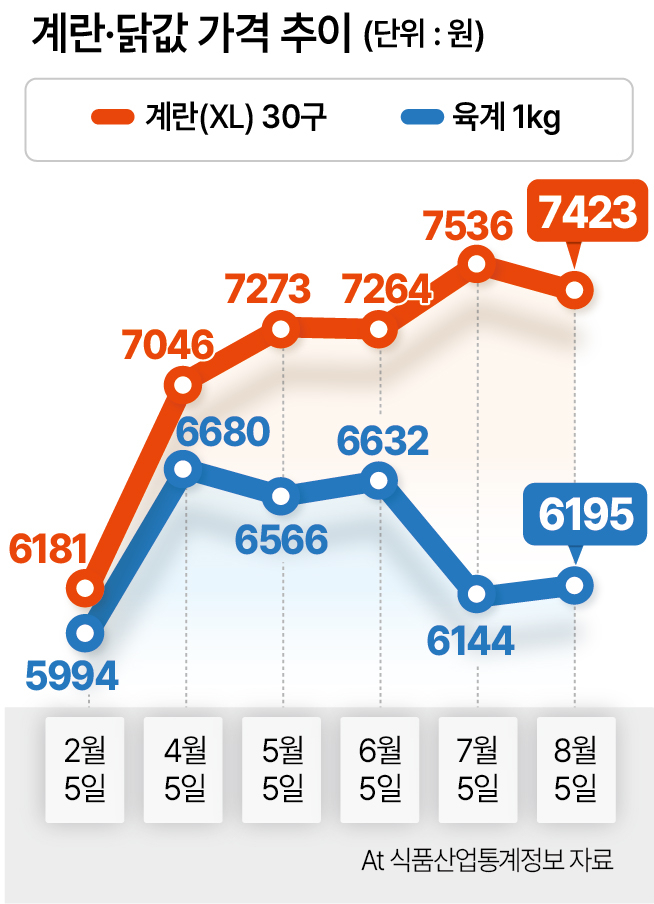
According to data from the Korea Agro-Fisheries and Food Trade Corporation (aT) released Thursday, the average retail price of domestic eggs (XL grade, 30-count) stood at 7,423 won as of Wednesday, up 2.4 percent from a year earlier. Domestic broiler chicken (per kilogram) averaged 6,195 won, a 1.6 percent increase year on year. Poultry farms took a heavy hit from the spread of highly pathogenic avian influenza last winter, keeping prices elevated throughout the first half of the year. Egg and broiler prices at one point climbed to around 7,700 won and 6,700 won, respectively, before edging down in the second half.
The industry expects broiler prices to fall in the second half as demand typically softens after the first of the three hottest days of the lunar calendar in early July. Government price-stabilization measures from the first half — including imports of foreign breeding eggs for broilers — are also beginning to take effect.
According to a report by the Korea Rural Economic Institute, the daily average number of broilers slaughtered this month is forecast to rise about 4 percent from a year ago to between 2.85 million and 2.9 million. The live broiler distribution price in August is also expected to settle around 1,800 won per kilogram, down from a year earlier. Egg prices are likewise projected to fall from July levels as the number of laying hens older than six months continues to grow. Daily average egg output this month is forecast at about 49.31 million, roughly 1 percent more than a year ago — also above the average of about 46.91 million.
"Demand typically begins to taper from August, and broiler prices have historically trended downward," an industry official said. A hypermarket official added that egg supply is recovering as more laying-hen chicks are being raised. "From early August, school cafeterias are on summer break, so volumes that were going to schools are now flowing into the open market, helping stabilize prices," the official said.
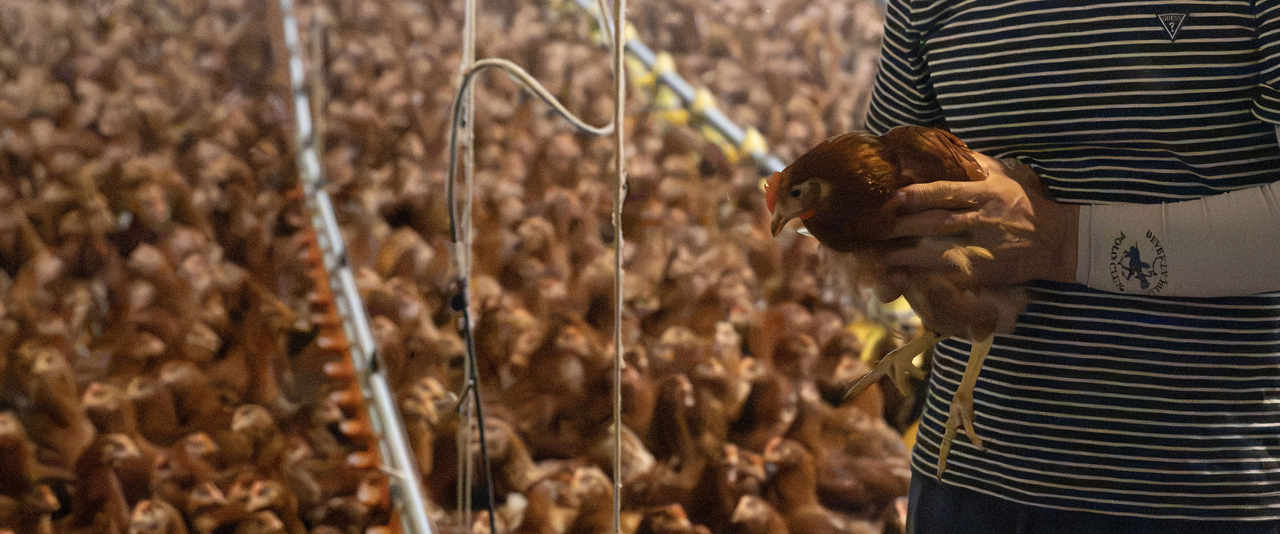
The wild card is an unprecedented heat wave. Chickens are especially vulnerable to heat: their body temperature runs as high as 41 degrees Celsius and they have no sweat glands. The Ministry of Agriculture, Food and Rural Affairs said it would step in with emergency measures — including water spraying and supply support — as concerns over heat-related livestock deaths grew. As of Monday, heat-related livestock deaths stood at about 493,497 — roughly 31 percent of the toll recorded in the same period last year — with 459,738 of those being poultry such as chickens and ducks.
The industry is closely watching the heat wave's impact. "Most farms, except for a small number of poultry operations, have completed vertical integration and are equipped with temperature-control systems," one industry official said. "We are supplying cool water and paying close attention to ventilation." Another official said sustained extreme heat could keep demand for stamina foods elevated well past the last of the three hottest days in late August and into September. "Conditions are not favorable for a rapid drop in chicken prices," the official said.
soho0902@heraldcorp.com