![Vessel traffic information in the Strait of Hormuz [AFP]](https://wimg.heraldcorp.com/news/cms/2026/08/07/rcv.YNA.20260804.PAF20260804075001009_P1.jpg)
Middle East tensions are flaring again after Iran moved to ban US and Israeli vessels from the Strait of Hormuz, sending international oil prices sharply higher. Markets appear to be pricing in the risk of supply disruptions at the strait — a critical chokepoint for global crude shipments — as uncertainty over US-Iran negotiations deepens.
Iran's parliamentary National Security Committee is reviewing a draft bill that would bar US and Israeli ships from transiting the Strait of Hormuz, the semi-official Fars News Agency reported Thursday.
The draft would prohibit the passage of cargo linked to the United States or Israel, whether military or civilian. Vessels and cargo associated with activities deemed contrary to the so-called "Axis of Resistance" would also be subject to the ban.
The bill would further restrict passage through the strait for Israeli cargo ships and related vessels, as well as ships belonging to countries or individuals that have caused harm to Iran, until damages are compensated. Violations would carry fines of up to 20 percent of the cargo's value.
Fars News said the bill is currently undergoing expert review, with parliament soliciting specialist input to refine the legislation. The draft also calls on the government to work with the military to manage navigational guidance, vessel traffic, Persian Gulf security and marine environmental protection.
The United States pushed back immediately. A US government official told CNBC that transit routes "will operate without any impediment — whether approval, permits or tolls" and that "the Strait of Hormuz is an international waterway and no one can control the routes or transit rights."
The bill's review came shortly after President Donald Trump and Treasury Secretary Scott Bessent both suggested a US-Iran deal could be reached soon. The emergence of a hardline legislative push while deal expectations remain alive appears to have reignited market anxiety.
Oil prices rose across the board Thursday. Brent crude futures for October delivery settled up 3.8 percent at $82.49 a barrel on the ICE Futures Exchange, while West Texas Intermediate futures for September delivery closed up 2.8 percent at $77.29 a barrel on the New York Mercantile Exchange.
"Crude traders are still on edge about the possibility of a US-Iran deal," said Dennis Kissler, senior vice president at BOK Financial. "The longer negotiations drag on, the more likely oil prices are to face renewed upward pressure."
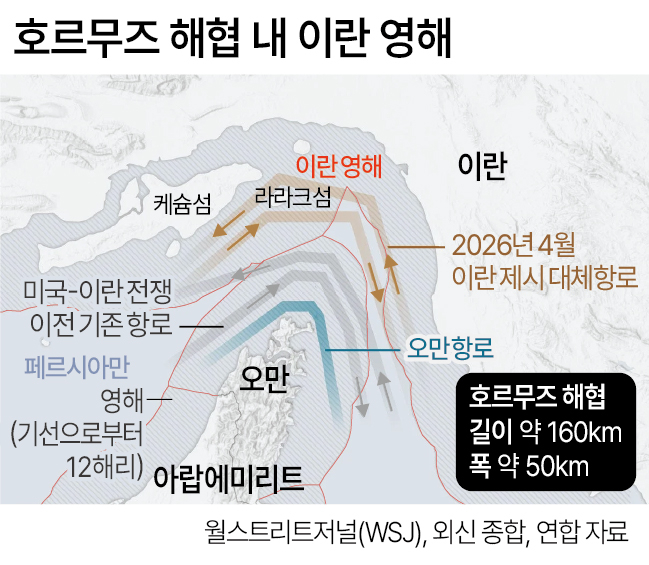
Meanwhile, Iran and Oman are also pursuing a new transit framework for the Strait of Hormuz.
According to sources at Iran's Foreign Ministry, under the proposed arrangement ships would enter the strait via a northern lane close to the Iranian coast and exit through a southern lane near Oman's coast, before eventually being restricted to a central lane only.
Fars News said Iran would manage inbound vessels unilaterally while outbound vessels would be jointly managed by Iran and Oman. Transit fees would be charged as payment for services such as navigational support, Iran said, adding that reports suggesting a flat percentage of cargo value would be applied uniformly are inaccurate. The fees would instead reflect multiple factors, including the level of service provided.
The Wall Street Journal earlier reported obtaining a draft of the Iran-Oman agreement, under which ships entering the Persian Gulf through the strait would use an Iranian-side lane coordinated with Tehran, while outbound vessels would use a lane within Omani waters coordinated with Muscat. Under the draft, Iran would gain control over vessels entering the Persian Gulf through the strait but could not impose tolls or service fees. Sources added, however, that the arrangement may not prevent Iran from receiving voluntary payments ostensibly to cover security and search-and-rescue costs.
However, a senior Iranian official cited by Reuters said Iran is seeking fees equivalent to 5 to 7 percent of the cargo value of ships using the strait. Oman is reportedly discussing a fee of around 3 percent, while the United States does not accept the imposition of any fees at all.
mokiya@heraldcorp.com