![[123RF]](https://wimg.heraldcorp.com/news/cms/2026/08/11/news-p.v1.20260811.78e67084c52642bb9177942a6178a080_P1.jpg)
The government will waive on-site verification for emergency welfare applicants identified as high-risk for suicide, allowing living expenses to be disbursed more quickly. It will also link financial crisis data — including excessive debt and illegal private lending — to the welfare blind-spot detection system to proactively identify households at elevated suicide risk. Households facing serious financial crises will be swiftly connected to needed welfare services through a referral network between financial institutions and local governments.
The measures aim to stop growing isolation and caregiving burdens on individuals and families — driven by an aging population and rising numbers of single-person households — from escalating into suicide risk. The government plans to finalize suicide prevention strategies across nine policy areas, including measures targeting "isolated and at-risk households" and "caregiving and nursing burden," by September.
The Ministry of Health and Welfare reported the measures — developed jointly with related ministries — to the Cabinet on Tuesday, covering suicide prevention strategies for isolated and at-risk households as well as those burdened by caregiving responsibilities.
The government will use crisis data — including self-harm and suicide attempt records linked to the solitary-death risk response system — to prioritize screening of individuals at suicide risk and pursue targeted outreach by isolation type. Financial crisis information closely linked to suicide, such as excessive debt and illegal private lending victimization, will be integrated into the welfare blind-spot detection system by December.
When reports submitted through the welfare crisis alert app contain expressions related to suicide, 24-hour emergency counseling will be provided. The government will also strengthen the civilian safety network so that community workers active in daily-life settings — such as local residents — can identify people at suicide risk and request support.
To prevent suicide among low-income groups, economic support will be reinforced. Emergency welfare assistance will be disbursed promptly for those identified as high-risk for suicide, bypassing on-site verification, and local community offices will be empowered to provide small amounts of support at their own discretion as an immediate measure.
Starting in September, Youth Future Centers — which provide tailored programs for isolated and reclusive young people at high suicide risk — will expand nationwide. Support will be delivered through capable local organizations within the areas where young people live.
The government will also build an integrated at-risk household detection platform to consolidate crisis information currently scattered across multiple agencies. Using AI and information and communications technology, it will unify crisis data from the welfare blind-spot detection system and the solitary-death risk response system, and build individual-level databases to support high-risk screening and field response.
A pan-government framework for addressing social isolation will also be established. The Ministry of Health and Welfare's first vice minister will be designated as the dedicated vice minister for social isolation response, and an inter-agency cooperation plan will be drawn up.
The government will also support families with heavy caregiving responsibilities following cases in which family members died by suicide while caring for relatives with severe conditions such as dementia or serious disabilities. Measures will focus on easing the caregiving burden and preventing burnout among family caregivers.
Starting in the second half of this year, the government will use social security data to intensively identify and investigate high-risk households — particularly those caring for people with severe dementia or developmental disabilities — where the caregiving burden is expected to be especially high.
Identified high-risk households will be prioritized for 72-hour emergency care support and professional counseling through mental health welfare centers. Integrated case management will be provided to address complex family crises, and community-integrated care will be prioritized for care-dependent individuals who are at high suicide risk.
To ease the caregiving burden on families, the government will continue expanding visiting care support for severe and dementia-grade long-term care recipients. New services — including visiting rehabilitation, nutritional guidance and hospital accompaniment — will also be developed and introduced, with the goal of doubling in-home elderly care services from the current 30 types to 60.
Family leave programs will be promoted to help families caring for severe and dementia-grade recipients rest and prevent burnout, and related infrastructure such as day and night care facilities will continue to expand. For families facing financial hardship due to nursing costs, out-of-pocket nursing expenses at long-term care hospitals will be reduced starting in the first half of next year, and emergency welfare living support payments will also be increased.
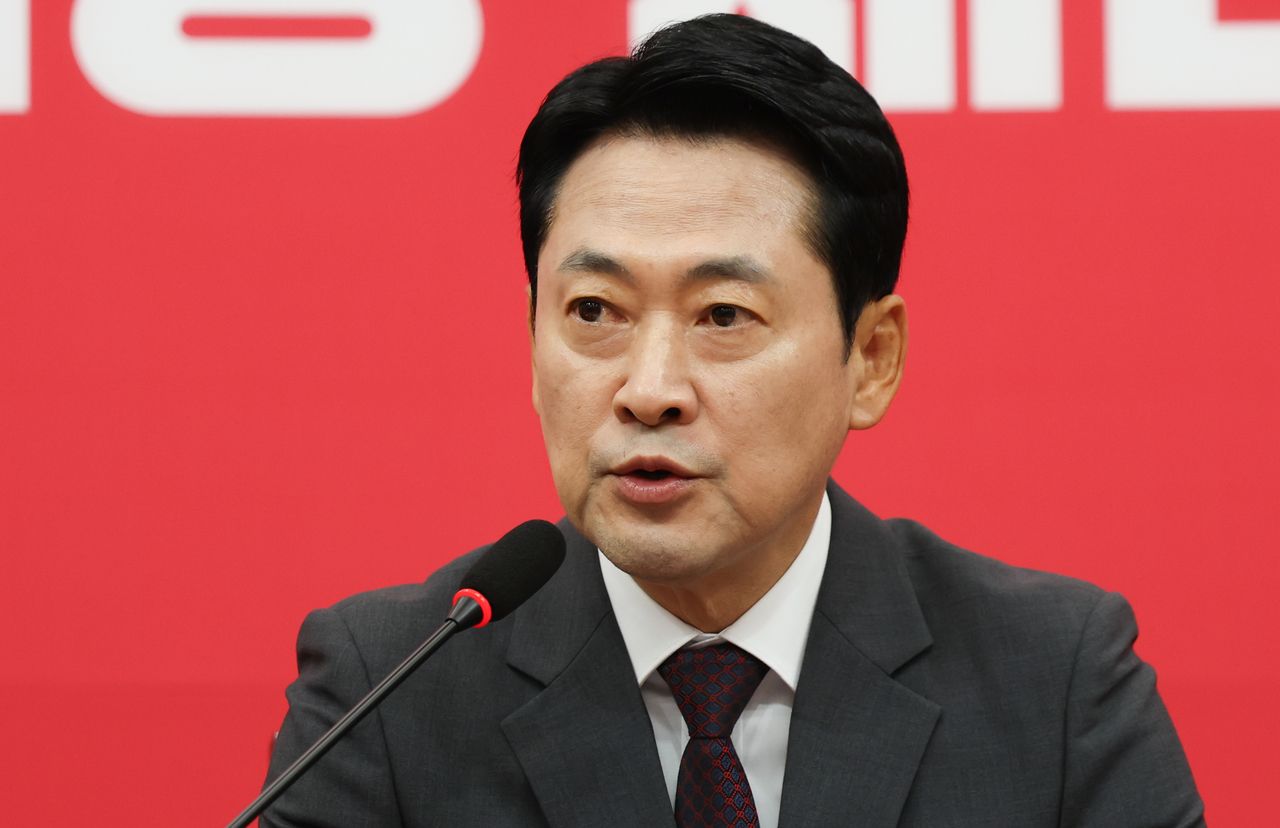
"A crisis can strike anyone at any point in life, but if you are connected to your neighbors and to society, there is always a way to get back on your feet," Minister of Health and Welfare Jeong Eun-kyeong said. "The government will build a stronger social safety net to fundamentally sever the link between social isolation and caregiving burden on one side and suicide on the other, and related ministries will work together with full commitment to ensure that not a single citizen is left behind and that everyone is swiftly connected to the welfare services they need."
If you're thinking about self-harm or suicide, contact the Ministry of Health and Welfare's helpline 1393, available 24/7. Please request a translator for English-language services.
![[123RF]](https://wimg.heraldcorp.com/news/cms/2026/08/11/news-p.v1.20260811.e65be7c318944b7e91dfaf69d917e684_P1.jpg)
thlee@heraldcorp.com