The ruling and opposition parties have staked out starkly different positions on the government's ambitious mega special zone project. The People Power Party backs sweeping exemptions under the proposed mega special zone act — including an opt-out from the 52-hour workweek limit — to help attract large-scale investment. The Democratic Party of Korea, by contrast, is calling for a full review, arguing that site selection and infrastructure issues such as power supply and workforce availability must be addressed first.
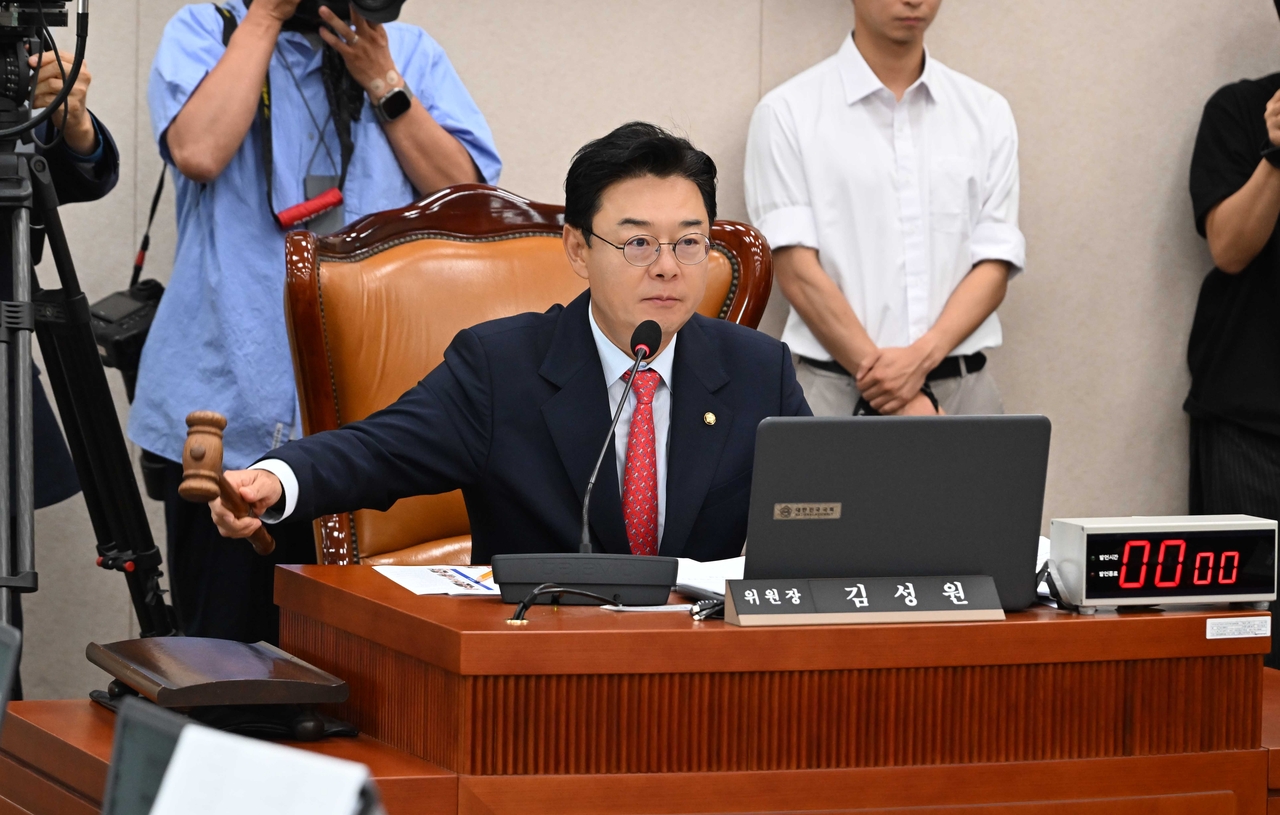
The Ministry of Employment and Labor, at a plenary session of the National Assembly's Climate, Energy, Environment and Labor Committee on Wednesday, said it would draw up and implement collective bargaining guidelines — incorporating detailed criteria for bargaining subjects — to help the revised Trade Union Act, known as the Yellow Envelope Act, take root in workplaces and minimize disruption in industrial settings.
The government is also expected to clarify the standards for the scope of industrial disputes under the Yellow Envelope Act as part of the mega special zone legislation process. President Lee Jae Myung directed Employment and Labor Minister Kim Young-hoon at a Cabinet meeting on Tuesday to spell out clear criteria for what constitutes a legitimate subject of industrial dispute under the act.
Political opinion remains divided over how broadly the special exemptions should apply. A Democratic Party lawmaker on the climate and labor committee said the mega special zone act must not undermine the principle that exemptions are exceptional. "Excluding workers from the 52-hour limit is something that needs to go through discussions among the relevant ministries," the lawmaker said.
A People Power Party lawmaker on the same committee countered that the Yellow Envelope Act leaves the definition of employer status ambiguous and the scope of legitimate disputes problematic. "Granting exemptions on a regional basis also risks discrimination complaints, so specific amendments to the relevant laws are needed," the lawmaker said.
The Ministry of Trade, Industry and Energy said it would move aggressively to strip away regulations standing in the way of large-scale investment. At a plenary session of the National Assembly's Trade, Industry, SMEs and Energy Committee on the same day, the ministry said it would "actively and boldly work with related ministries to remove obstacles to large-scale investment in step with companies' willingness to invest."
The ministry also plans to focus on attracting regional talent and localizing materials, parts and equipment. It aims to train 110,000 workers in the semiconductor and robotics sectors to strengthen the industrial ecosystem, and to channel large-scale investment into youth employment and regional growth.
Some voices in the opposition, however, say the site selection process needs to be revisited before any discussion of working-hour exemptions. A People Power Party lawmaker on the trade and industry committee said the review should cover not just the 52-hour exemption but also "the site selection process itself, taking into account infrastructure such as workforce and power supply."
Another People Power Party lawmaker was more direct, calling the project "a political event that was not properly prepared and did not take companies into account." The lawmaker said it was necessary to examine whether companies' autonomous management decisions were guaranteed and whether they faced any resulting legal liability.
A Democratic Party lawmaker on the trade and industry committee took a different view, arguing that because the legislation is a special act, working-hour restrictions should be lifted for research personnel — provided they consent and have no health concerns. Another Democratic Party lawmaker said the 52-hour exemption "is meant to respond to the special circumstances of companies."
mp1256@heraldcorp.com
addressh@heraldcorp.com
raining@heraldcorp.com