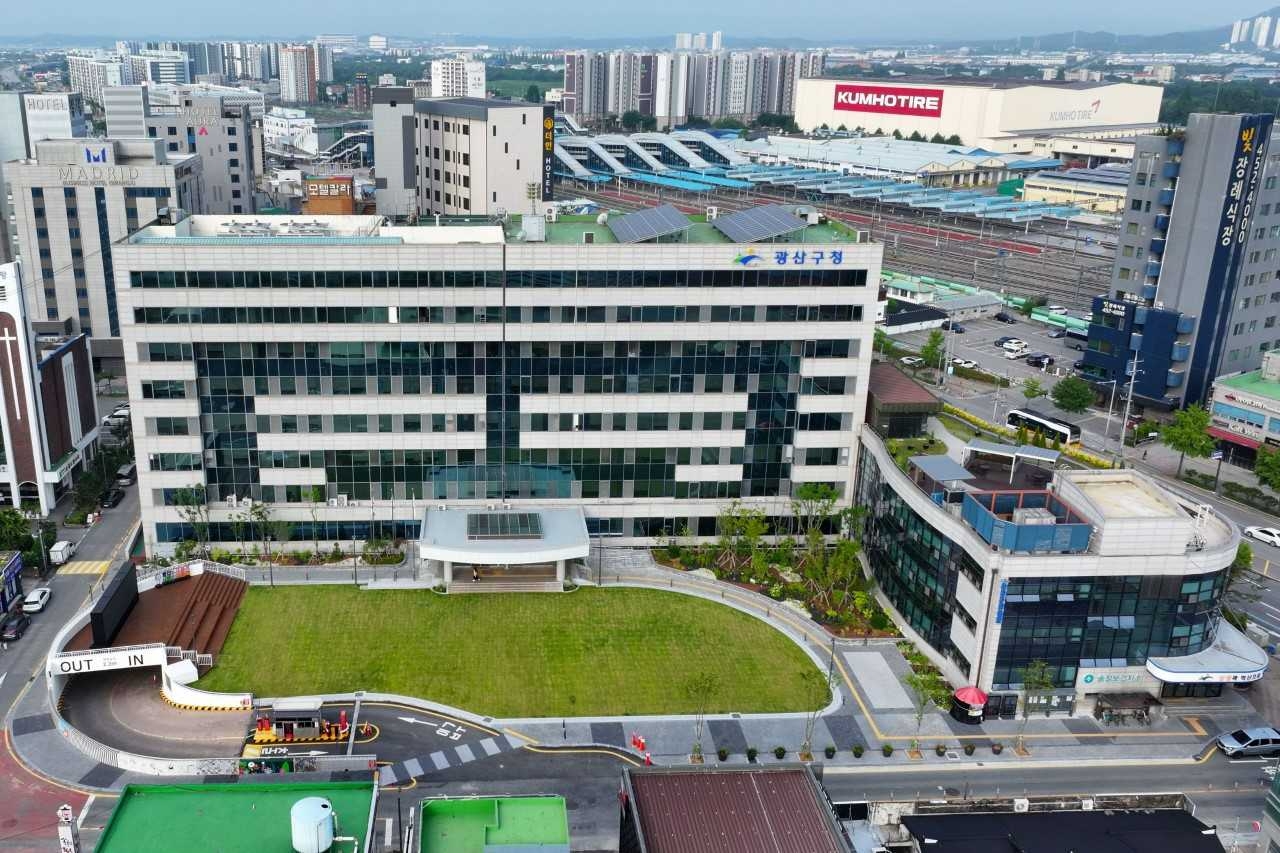
Gwangsan-gu, a district of the South Jeolla Province-Gwangju integrated special city, is moving to develop a comprehensive urban strategy aimed at creating a "livable future city" that goes beyond the 800 trillion won ($565 billion) Honam semiconductor cluster project.
The district said it will commission a master plan study for urban regeneration to get ahead of anticipated changes in the urban environment.
Now in its ninth elected term, Gwangsan-gu finds itself at the center of a major transformation — following the launch of the South Jeolla Province-Gwangju integrated special city and the securing of the Honam semiconductor cluster.
The study aims to develop urban regeneration strategies for building a future city where advanced industry and residents' quality of life grow together, and where young people want to stay and put down roots.
Gwangsan-gu will focus on changes to the industrial and residential environment driven by the strengthening of Gwangju Songjeong Station and the redevelopment of the former military airport site as a hub for future industries. From there, it will establish the direction for urban regeneration, zone-by-zone strategies and a phased action plan.
Key tasks include designating strategic zones that account for future spatial changes, identifying core projects aligned with the urban regeneration direction, and developing plans to link transportation, industry, lifestyle and cultural hubs.
The study is set to begin in September and is expected to take about eight months.
Based on the completed master plan, Gwangsan-gu plans to secure a foundation for implementing urban regeneration, including by tying the plan to government grant programs.
"Since the announcement of the semiconductor cluster project, Gwangsan-gu has been working with residents to map out a future vision with the goal of becoming the most livable city in South Korea," district mayor Park Byeong-gyu said. "We will accelerate the design of a sustainable future for Gwangsan — one that leads the semiconductor era — by giving concrete shape to the 'Connected City Gwangsan' vision and developing urban regeneration strategies that reflect the region's unique characteristics."
sij@heraldcorp.com