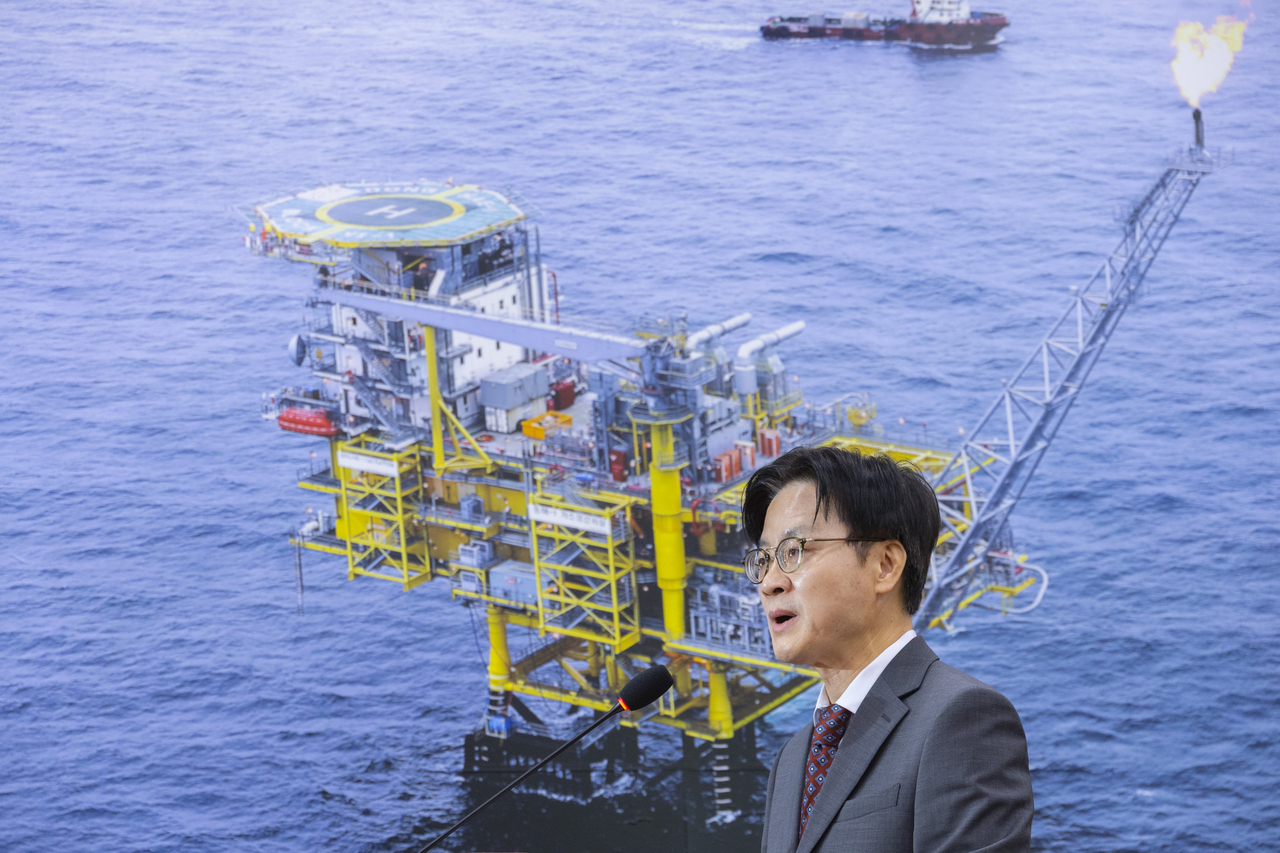
![Noh Yong-seok, first vice minister of SMEs and Startups, delivers opening remarks at a nationwide roadshow forum for the Startup for All project held at the North Chungcheong Creative Economy Innovation Center in Cheongju, North Chungcheong Province, on July 8. [Ministry of SMEs and Startups]](https://wimg.heraldcorp.com/news/cms/2026/08/13/rcv.YNA.20260708.PYH2026070816430001300_P1.jpg)
The Ministry of SMEs and Startups will begin recruiting participants for the second phase of its "Startup for All" project Thursday, aiming to identify 10,000 innovative entrepreneurs — twice the number selected in the first round.
The ministry announced the second-phase implementation plan Thursday in a joint release with relevant government agencies. The second phase will open applications Thursday, announce successful candidates in early October, and run initial mentoring sessions through November.
Startup for All is a government initiative designed to broaden public participation in entrepreneurship by covering the costs of early-stage challenges and failures. The first phase, launched in March, drew more than 63,000 applicants — the largest turnout ever for a government startup or idea competition. Some 68 percent of applicants were aged 39 or younger.
Phase 2 launches after rocky first round
The second phase will select 10,000 participants — double the first phase's 5,000 — with 8,000 slots in the general and technology tracks and 2,000 in the local track. Of the 10,000 who receive initial mentoring, 2,200 will advance through regional auditions, and a final 400 will compete in a national public contest.
Eligibility requirements will also be broadened. Previously, only prospective entrepreneurs and those who had re-entered the startup scene within three years were eligible; the second phase extends that window to seven years. To preserve the program's original intent, however, at least 80 percent of all selections must be first-time prospective entrepreneurs. At least 70 percent of participants will also be drawn from outside the Greater Seoul metropolitan area to promote regional startup activity.
Participants eliminated in the first phase will be able to try again. Those who complete online and offline re-entry mentoring and refine their startup ideas will receive bonus points. The top 100 finishers in the Korea Intellectual Property Office's "Idea for All" competition and teams that reach the finals of the ministry's "Startup for All University League" will be connected to the second phase through a fast track.
The number of incubating institutions will grow from 119 in the first phase to roughly 170 in the second. In addition to existing universities, accelerators, venture capital firms and public institutions, large and mid-sized companies — including Shinhan Square Bridge Daegu and Hana Bank — will join for the first time. Qualification standards for mentors will be codified, and each mentor will be limited to working with a maximum of two institutions.
![Prime Minister Han Seong-sook, then serving as minister of SMEs and Startups, delivers opening remarks at the 2026 Startup for All Campus Tour Talk Concert held at Chung-Ang University in Dongjak-gu, Seoul, on May 13. [Ministry of SMEs and Startups]](https://wimg.heraldcorp.com/news/cms/2026/08/13/rcv.YNA.20260513.PYH2026051319200001300_P1.jpg)
Participation tracks expand, 'Global League' added
The program will also expand its participation tracks. A "University League" will bring together 550 startup club teams centered on universities designated as national startup hubs, while a "Youth League" for 280 middle and high school teams will also be introduced. Two new tracks round out the lineup: a "Social Innovation Social Venture League" focused on solving social problems, and a "Global League" to support overseas startups.
The evaluation system will be revamped as well. A panel of three mentors will conduct joint assessments alongside a review committee at each incubating institution. AI-generation rate checks and plagiarism screening using external data — including academic papers and competition records — will be introduced. Submission of supporting video materials will be made mandatory, and evaluators will be required to provide written feedback of at least 200 characters. Application forms will be expanded from three sections to as many as six, adding fields to assess applicants' competencies and separate criteria for existing entrepreneurs and re-applicants.
Support programs will be expanded as well. The permitted uses of startup activity funds will be broadened to include online payment gateway services, allowing participants to access overseas AI solutions. The roster of AI solution providers will be streamlined from 283 companies in the first phase to about 50 in the second, tightening quality control. Participants who advance to regional auditions will gain access to advanced GPU support from the Ministry of Science and ICT, as well as export education and trade statistics programs from Korea Customs Service.
Regional startup communities will be established to foster networking among entrepreneurs and support their continued growth. In four regions — Seoul, Daejeon, Busan and Gwangju — the program will run "Startup Clubs," where experienced entrepreneurs share their knowledge with newer challengers, alongside self-organized "Co-creation Clubs" for participants. Regular "Community Day" events will also be held in each region, bringing together entrepreneurs, investors and support organizations.
Through a nationwide "Challenge IR" linked to TIPS operators, the ministry plans to connect participants with a pipeline running from initial investment pitches all the way to TIPS program participation. The ministry said it intends to transform Startup for All from a simple entrepreneur-selection program into a full startup ecosystem supporting ongoing exchange and growth.
![An overview of the Startup for All project. [Ministry of SMEs and Startups]](https://wimg.heraldcorp.com/news/cms/2026/08/13/news-p.v1.20260813.b6191283a3ed4c4da9bd6c124d90ec50_P1.jpg)
Platform security overhauled after personal data breach
The platform's security framework will be completely overhauled following a personal data breach that occurred during the first phase. The ministry will minimize the information included in application programming interfaces, strengthen anomaly detection and blocking functions, and enhance encryption. Standards for retaining and destroying personal data will be revised, startup idea management procedures will be reorganized, and access permissions will be redesigned.
The platform will also undergo all procedures required of public information systems — a security review by the National Intelligence Service, prior consultation with the Ministry of Interior and Safety, a personal information impact assessment by the Personal Information Protection Commission, and a software impact assessment by the Ministry of Science and ICT. A continuous security monitoring system will be established through an external security firm, and regional hub institutions will be designated to oversee local incubating organizations.
"In the second phase of Startup for All, we will open up more opportunities for people to take on the challenge of entrepreneurship, actively support re-entry and startups across diverse fields, and build a foundation for continued growth within the startup ecosystem even after the initial challenge," said Noh Yong-seok, first vice minister of SMEs and Startups.
boo@heraldcorp.com