![Noh Yong-seok, first vice minister of SMEs and Startups, delivers opening remarks at the LP Growth Fund launch ceremony held Thursday afternoon at SVC Seoul in Mapo-gu, Seoul. [Ministry of SMEs and Startups]](https://wimg.heraldcorp.com/news/cms/2026/08/13/news-p.v1.20260813.03bb6ae7340d46fe832b3ff9696edf04_P1.jpg)
"As a public institution, we had been relatively passive about venture funds and alternative investments. But as the fund's size kept growing, we shifted direction toward expanding venture investment as a medium- to long-term strategy."
The Korea Sports Promotion Foundation, which manages the National Sports Promotion Fund worth about 4 trillion won ($2.83 billion), is making its first foray into venture fund investment. With the fund growing by 400 billion to 500 billion won each year, the foundation has turned its attention to alternative investments such as venture capital, moving away from a portfolio centered on traditional assets. Kim Chan, a division head at the foundation, said at the LP Growth Fund launch ceremony held Thursday afternoon at Startup Venture Campus (SVC) in Mapo-gu, Seoul, that the organization had concluded "the sweeping industrial changes of the AI era will ultimately translate into returns from venture investment." He added that the foundation would support the government's productive finance policy.
1 trillion won LP Growth Fund launches; Export-Import Bank joins as first-time investor
The Ministry of SMEs and Startups has launched the LP Growth Fund to channel capital from pension funds, financial institutions and the corporate sector into the venture market. The ministry envisions the fund as a "next-generation venture investment platform" connecting long-term private capital with the venture ecosystem — going beyond the existing Korea Fund of Funds, which has relied on government fiscal resources to seed venture investment.
The LP Growth Fund is designed as a customized investment platform that allows a diverse range of institutions — pension funds, financial firms and corporations — to participate in venture investment with ease. The government structured the program as a two-track vehicle offering both direct sub-fund and fund-of-funds options, and provides incentives such as first-loss coverage, put options, excess-return transfers and call options to reduce downside risk and improve returns for private investors.
A total of 20 institutions are expected to participate in the LP Growth Fund this year, with 18 already confirmed. Among them, five — the National Sports Promotion Fund, the Supply Chain Stabilization Fund, the Export-Import Bank of Korea, KMI Korean Medical Institute and Geukdong Logistics Group — are making their first-ever investments in venture fund partnerships through this initiative.
Three pension funds have confirmed their participation: the National Sports Promotion Fund, the Industrial Accident Compensation Insurance and Prevention Fund, and the Supply Chain Stabilization Fund. According to the Ministry of SMEs and Startups, several additional pension funds are currently in the final stages of their decision-making process. If those institutions also join, pension fund contributions to venture funds are expected to exceed five times last year's level. Last year, the Korea Trade Insurance Fund became the first pension pool fund to invest in a venture fund, committing 20 billion won.
Pension funds have historically been reluctant to enter venture investment, given the pressure to prioritize stable asset management. Kim said the foundation chose to invest through the established and trusted pension investment pool "given that this is our first time in venture investment," and described the downside protection provided through the Korea Fund of Funds as another positive factor.
The Export-Import Bank of Korea and the Supply Chain Stabilization Fund are also entering venture fund investment for the first time through the LP Growth Fund. The path opened after a recent amendment to the Export-Import Bank of Korea Act allowed the bank to invest in venture fund partnerships. Lee Dong-hoon, deputy governor of the Export-Import Bank, said indirect investment through a fund "is an inevitable choice for early-stage investors with limited venture experience," and called the LP Growth Fund "a good starting point, designed so that even first-time institutions can participate easily."
The government plans to use the LP Growth Fund to leverage limited fiscal resources and draw in as much private capital as possible. Under the structure, private investors will contribute about 340 billion won, matched by 170 billion won from the Korea Fund of Funds, bringing the combined public-private commitment to about 510 billion won. Additional contributions from venture capital firms and others will be added to build a final venture fund pool of more than 1 trillion won.
Unlike the existing Korea Fund of Funds program, where government fiscal resources typically covered about 60 percent of contributions, the LP Growth Fund reduces the government's share to 20 percent. The remaining 80 percent will come from private capital, with the aim of achieving a multiplier effect — creating a venture fund up to five times the size of the government's fiscal outlay.
Investment in strategic industries — including defense, AI, beauty and biotech — will also be expanded. The Export-Import Bank and BNK Financial Group will form a consortium to create a 110 billion won defense-focused fund. Naver, Hyosung and GS Group, along with large, mid-sized and smaller companies including Sunic System, Geukdong Logistics Group and Taehwa Group, are set to establish an open-innovation fund of about 250 billion won targeting defense, AI, biotech and beauty sectors.
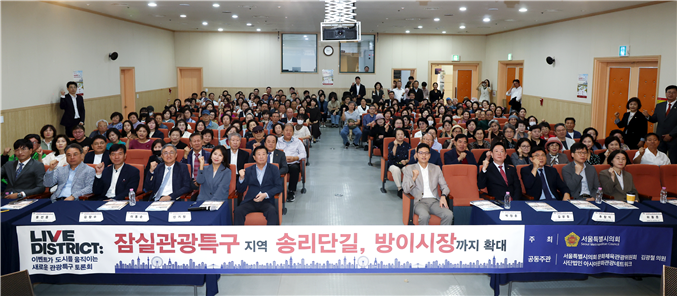
![Noh Yong-seok, first vice minister of SMEs and Startups, poses for a commemorative photo with attendees at the LP Growth Fund launch ceremony held Thursday afternoon at SVC Seoul in Mapo-gu, Seoul. [Ministry of SMEs and Startups]](https://wimg.heraldcorp.com/news/cms/2026/08/13/news-p.v1.20260813.bbb3813b3620410faaa433e3c5d903f0_P1.jpg)
Broader tax breaks needed to sustain private capital inflows
Voices at the event also stressed that sustained regulatory reform would be needed to keep private capital flowing into the venture market. Jeong Jae-young, a division head at KB Asset Management, raised the issue of risk-weighting burdens applied to financial firms' venture investments and called for extending deregulation for policy-driven investments to other financial sectors, including insurance. "The secondary market and exit market also need to be more institutionalized so that investors can recoup capital after backing early-stage companies," Jeong said.
Industry representatives called for expanded tax incentives. Wi Hee-kyung, an executive director at Hyosung, proposed raising the corporate tax deduction rate to encourage greater private venture investment. "Regulations on mergers and acquisitions and merger review standards should be applied more flexibly to facilitate smooth investment exits," Wi said.
The government plans to open applications for the LP Growth Fund investment program on Friday and complete fund selection and formation within the fourth quarter. It also intends to continue investment through the LP Growth Fund next year.
Noh Yong-seok, first vice minister of SMEs and Startups, said the government must "go beyond its role as a seed capital provider and prepare for a Fund of Funds 2.0 era — one that channels accumulated national capital into risk capital." He added that the ministry would work to build a structure bringing together policy finance, pension funds, retirement pension assets and private capital under one framework, starting with the LP Growth Fund.
boo@heraldcorp.com
snsd@heraldcorp.com