Jeon Sung-su of Seocho-gu turns a festival finale into a cleanup parade; Ryu Gyeong-gi of Jungnang-gu sweeps alleyways with residents to hear their concerns firsthand
Sanitation may be the most fundamental — and most important — task in urban governance.
Clean streets are something residents take for granted, yet keeping them that way requires someone to pick up a broom before dawn every day, haul away trash and wash down the pavement.
Anyone who has watched garbage pile up on foreign city streets during a sanitation workers' strike quickly grasps just how essential the work is.
Amid that backdrop, two of Seoul's 25 district mayors have drawn attention for personally stepping into the field and giving cleanup work a meaning beyond the routine.
They are Seocho-gu District Mayor Jeon Sung-su and Jungnang-gu District Mayor Ryu Gyeong-gi.
Their approaches differ.
Jeon stages a large-scale "cleanup parade" with sanitation workers and residents after major festivals, turning the act of tidying up into a public celebration. Ryu, from the moment he took office, has swept neighborhood alleyways alongside residents, transforming the chore into a channel for community dialogue.
Both have breathed a sense of purpose into what might be called the humblest corner of local government.
Jeon graduated from Seoul National University's College of Law and entered the Seoul Metropolitan Government through the civil service examination, serving in public relations, general administration and general affairs. He later served as a senior administrative official at Cheong Wa Dae, as spokesperson for the Ministry of Interior and Safety, and as deputy mayor for administration of Incheon. He is now serving his second term as Seocho-gu district mayor.
Ryu likewise graduated from Seoul National University — with a degree in political science — and entered public service through the civil service examination. He served as spokesperson and administrative director for the Seoul Metropolitan Government, as well as head of its planning and coordination office and first deputy mayor for administration, before being elected district mayor of Jungnang-gu, where he is now in his third term.
Both men share a background as elite career administrators who held key posts across the Seoul city government.
Yet what reveals their governing philosophy is not sweeping policy alone.
It shows up, perhaps more clearly, in their approach to the most everyday of tasks: keeping the streets clean.
Jeon Sung-su caps every festival with a cleanup parade
Jeon is the standout example.
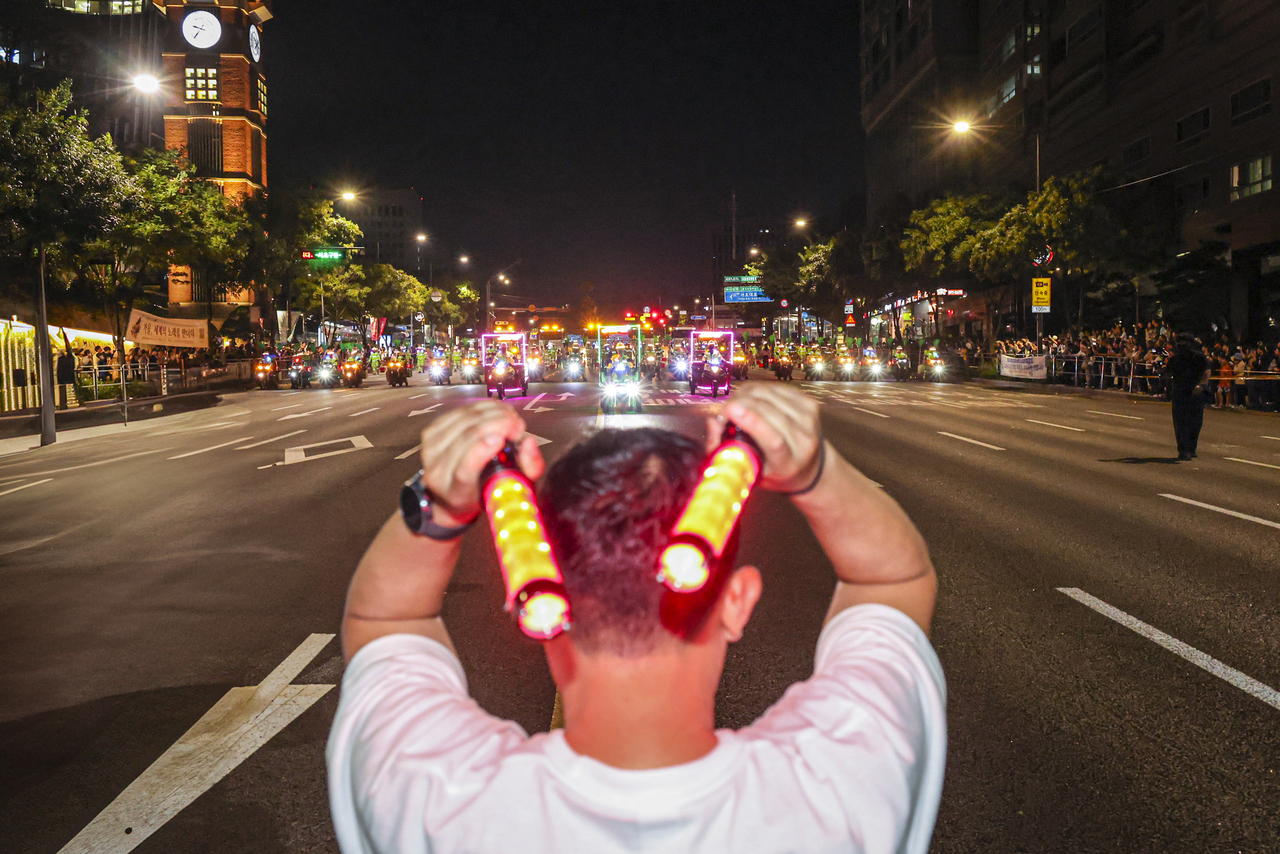
The 2026 Seoripul Music Festival, held Sept. 19 and 20 along Banpo-daero in Seocho-gu, drew about 280,000 visitors.
With an event that large, the final task is always restoring the venue to its everyday state.
Seocho-gu turned that moment into something special.
The district made the "Seoripul Cleanup Parade" the festival's official closing program.
For the second year running, the district recast cleanup not as mere post-event housekeeping but as a performance in its own right.
A Seocho-gu YouTube Shorts video of last year's cleanup parade, titled "Back to Everyday Life," racked up about 6 million views. Building on that momentum, this year's edition expanded to include direct resident participation.
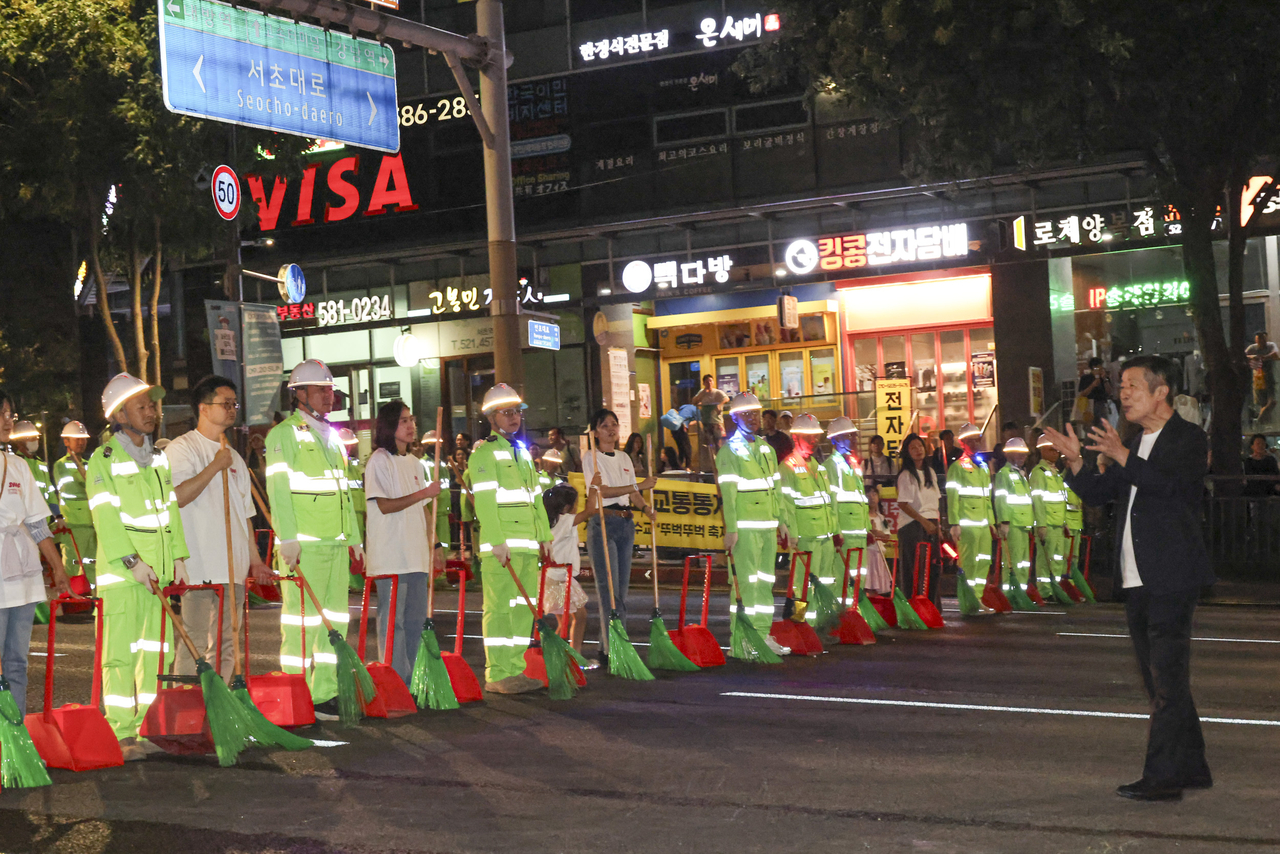
A total of 112 people took part — sanitation workers, water-truck drivers and 32 residents recruited in advance.
Five water trucks, 20 motorcycles from the Seoripul rapid-response unit and three compact street-cleaning vehicles rolled down Banpo-daero alongside the marchers.
The people who are always first to restore a street to normal after a glittering festival —
on that day, they were the stars of the show.
Speaking by phone Friday, Jeon credited others rather than himself, calling the parade "the result of the sweat of hidden heroes — the sanitation workers and residents who worked behind the scenes to make the Seoripul Festival a success."
Rather than putting himself in the spotlight, the district mayor placed the workers and residents who carried out the cleanup at center stage.
Ryu Gyeong-gi has swept alleyways with residents 187 times since 2018, drawing 6,413 participants
Ryu has gone further, turning cleanup into a standing forum for community engagement.
He calls it "morning alley cleanup."
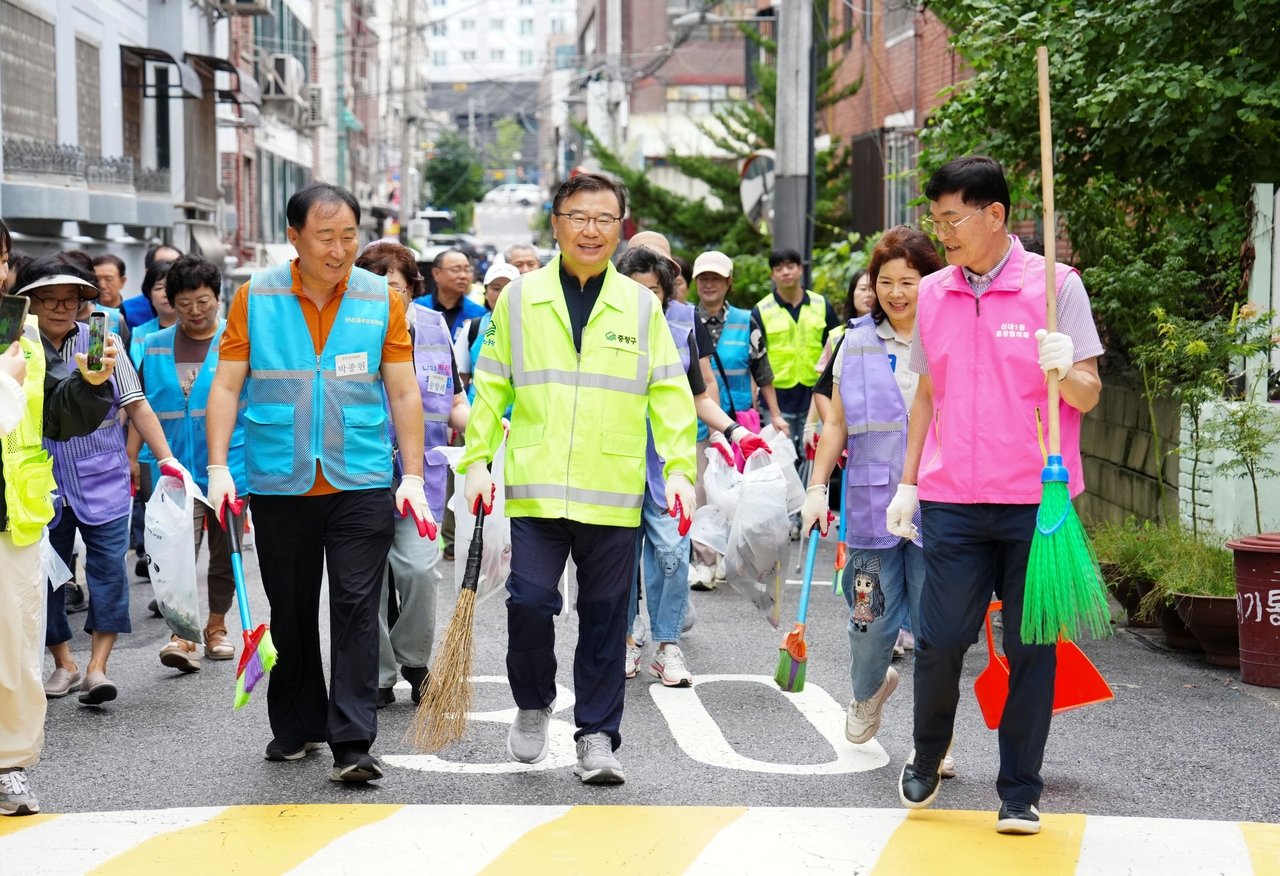
Launched in July 2018, the program has run continuously from his first term through his current third term, bringing together residents for regular neighborhood tidying sessions.
To date, 6,413 people have taken part across 187 sessions, covering about 148.8 kilometers of alleyways.
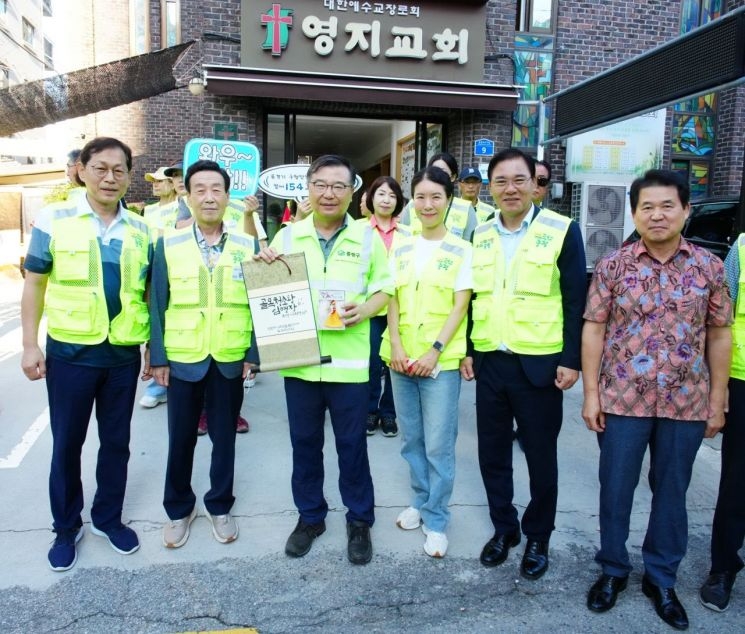
Market vendors, community organizations, volunteers and local stakeholders have all joined in, combing through neighborhoods together.
But the program's significance goes beyond clean streets.
Ryu walks the alleys broom in hand alongside residents, naturally drawing out their concerns as he goes.
Complaints about uneven roads, recurring trash buildup and chronic parking problems surface during the walks, and Ryu shares what he hears with the relevant departments to find solutions.
In effect, cleanup time becomes listening time, and the alleyway becomes a mobile complaints office for the district mayor.
"The conversations I've had while walking the alleys with more than 6,000 residents over the years mean more to me than the number 187," Ryu said. "As the broom wore down and grew shorter, I was able to hear the big and small stories of this community up close."
He added: "Morning alley cleanup is both an effort to keep our alleys clean and a time for communication — a chance to listen to residents' voices as closely as possible. Going forward, I will continue to govern with the belief that the answers are found in the field, by going where residents are, walking with them and thinking through problems together."
Governing with dignity — from the ground up
Jeon and Ryu take different approaches to cleanup, but they share a common outlook.
Both see it not as a routine chore but as governance that connects people to their city.
Jeon put sanitation workers and residents at center stage after the festival ended.
Ryu picked up a broom and walked the alleys with residents, listening to what they had to say.
Cleanup is, at its core, about removing trash — but the process can become an act of governance that deepens a leader's understanding of the city and the people who live in it.
A district mayor's record is not measured only by grand policies or large-scale projects.
It also shows in the small gestures: picking up a broom with residents on a predawn alleyway, or pausing to thank the people who quietly clean up after a festival has ended.
Perhaps what residents want most from their local government is not so far away after all.
It may be as simple as someone paying attention to their lives from the ground up.
The "cleanup governance" that Jeon and Ryu have demonstrated gives that idea fresh meaning.
seouldream01@heraldcorp.com